4
IMPORTANT SAFETY INFORMATION
IMPORTANT
CFC/HCFC Disposal
Some old refrigerators may have a cool-
ing system that used CFCs or HCFCs
(chlorofluorocarbons or hydrochloro-
fluorocarbons). CFCs and HCFCs are
believed to harm stratospheric ozone if
released to the atmosphere. Other re-
frigerants may also cause harm to the en-
vironment if released to the atmosphere.
If disposing of an old refrigerator, make
sure the refrigerant is removed for proper
disposal by a qualified technician. Inten-
tionally released refrigerant may subject
one to fines and imprisonment under
provisions of environmental legislation.
Grounding type wall receptacle
Power cord with
3-prong grounded plug
Do not, under
any circumstances,
cut, remove,
or bypass the
grounding prong.
Electrical information
• The refrigerator must be plugged
into its own dedicated 115 Volt, 60
Hz., 15 Amp, AC only electrical outlet.
The power cord of the appliance
is equipped with a three-prong
grounding plug for protection against
electrical shock hazards. It must
be plugged directly into a properly
grounded three prong receptacle.
The receptacle must be installed in
accordance with local codes and
ordinances. Consult a qualified
electrician. Avoid connecting
refrigerator to a Ground Fault
Interrupter (GFI) circuit. Do not use
an extension cord or adapter plug.
• If the power cord is damaged, it
should be replaced by an authorized
service technician to prevent any risk.
• Never unplug the refrigerator by
pulling on the power cord. Always
grip the plug firmly, and pull straight
out from the receptacle to prevent
damaging the power cord.
• Unplug the refrigerator before
cleaning and before replacing a light
bulb to avoid electrical shock.
• Performance may be aected if
the voltage varies by 10% or more.
Operating the refrigerator with
insucient power can damage the
compressor. Such damage is not
covered under the warranty.
• Do not plug the unit into an electrical
outlet controlled by a wall switch or
pull cord to prevent the refrigerator
from being turned o accidentally.
Proper Disposal of your Appliance
Risk of child entrapment
Child entrapment and suocation are not
problems of the past. Junked or abandoned
refrigerators or freezers are still dangerous
– even if they will sit for “just a few days”.
When disposing of an old refrigerator or
freezer, please follow the instructions below
to help prevent accidents.
Proper Disposal of Refrigerators/Freezers
We strongly encourage responsible
appliance recycling/disposal methods.
Check with the utility company or
visit energystar.gov/recycle for more
information on recycling an old refrigerator.
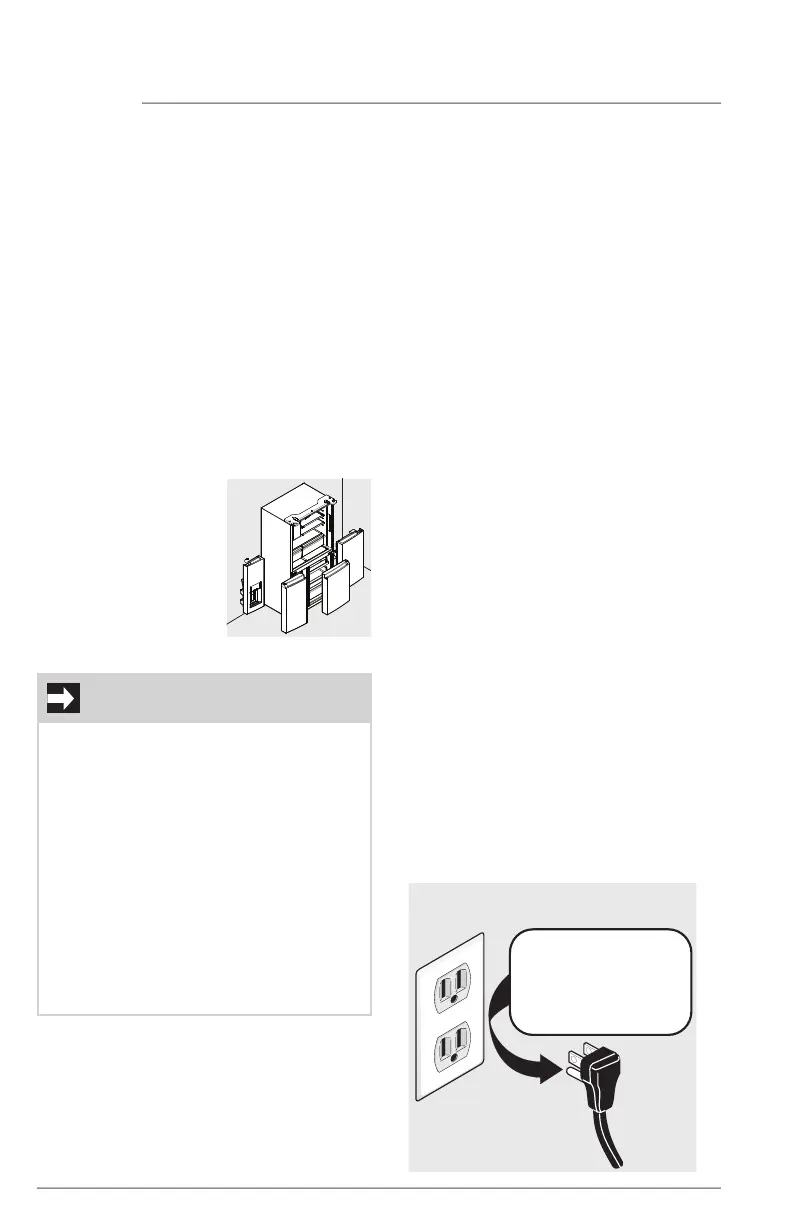
Before disposing of an old appliance:
• Remove doors.
• Leave shelves in
place so children
may not easily
climb inside.
• Have refrigerant
removed by a
qualified service
technician.



 To Next Page