AFTERSALESSUPPORT•SERVICIOPOSVENTA 5
1877 645 0384 info@wcredmon.com
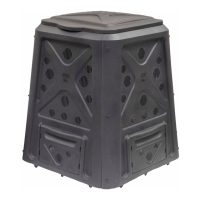
Compost Bin • Recipiente de compostaje
USA
Air
Aire
Composting microbes are aerobic – then can’t do their work well unless they
are provided with air. Without air, anaerobic (non-air needing) microbes take
over the pile and will tend to smell like putrefying garbage! Ingredients, such
as straw, don’t mat down easily and are very helpful in allowing air into the
center of a pile. Turning the pile will help air circulation.
Los microbios que producen compost son aeróbicos – no pueden hacer su trabajo bien a menos
quetenganaire.Sinaire,losmicrobiosanaeróbicos(quenonecesitanaire)seapoderandelapila
ytiendenaproducirunolorabasuraputrefacta.Ingredientes,comolapaja,noseenmarañan
fácilmenteysonmuyútilesparapermitirqueelaireingresealcentrodelapila.Voltearlapila
ayudaalacirculacióndelaire.
Water
Agua
Ideally, your pile should be moist to fit the needs of compost microbes. At this
moisture level, there is a thin film of water coating every particle in the pile,
making it very easy for microbes to live and disperse themselves throughout
the pile. If you are using dry ingredients, such as autumn leaves or straw, you’ll
need to moisten them as you add them to the pile. Kitchen fruit and vegeta-
ble waste generally have plenty of moisture, as do fresh green grass clippings.
Lo ideal es que la pila esté húmeda para cumplir con las necesidades de los microbios del com-
post.Conesteniveldehumedad,existeunafinacapadeaguaquerevistecadapartículade
lapila,loquefacilitaquelosmicrobiosvivanysedispersenenlamisma.Siutilizaingredientes
secos,comohojasdeotoñooramas,deberáhumedecerlascuandolasagregaalapila.Los
desechosdecocinacomofrutasyvegetalessuelentenerbastantehumedad,aligualquelas
matas de pasto verde.
Food
Alimentos
In broad terms, there are two major kinds of food that composting microbes
digest ‘Browns’ and ‘Greens’.
Entérminosgenerales,existendostiposprincipalesdecomidaquelosmicrobiosdecompost
digieren:‘Marrones’y‘Verdes’.
‘Browns’ are dry and dead plant materials such as straw, dry brown weeds, au-
tumn leaves, and wood chips or sawdust. These items are a source of energy for
the compost microbes but because they tend to be dry, browns often need to be
moistened before they are put into a compost system.
Los‘Marrones’sonmaterialesdeplantassecasymuertascomopajas,hierbassecas,hojasde
otoñoyastillasoaserrín.Estoselementossonunafuertedeenergíaparalosmicrobiosdecom-
post,perocomotiendenaestarsecos,losmarronessedebenhumedecerantesdecolocarlosen
un sistema de compost.


 To Next Page