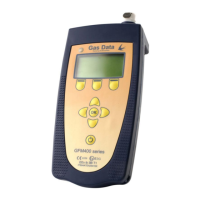
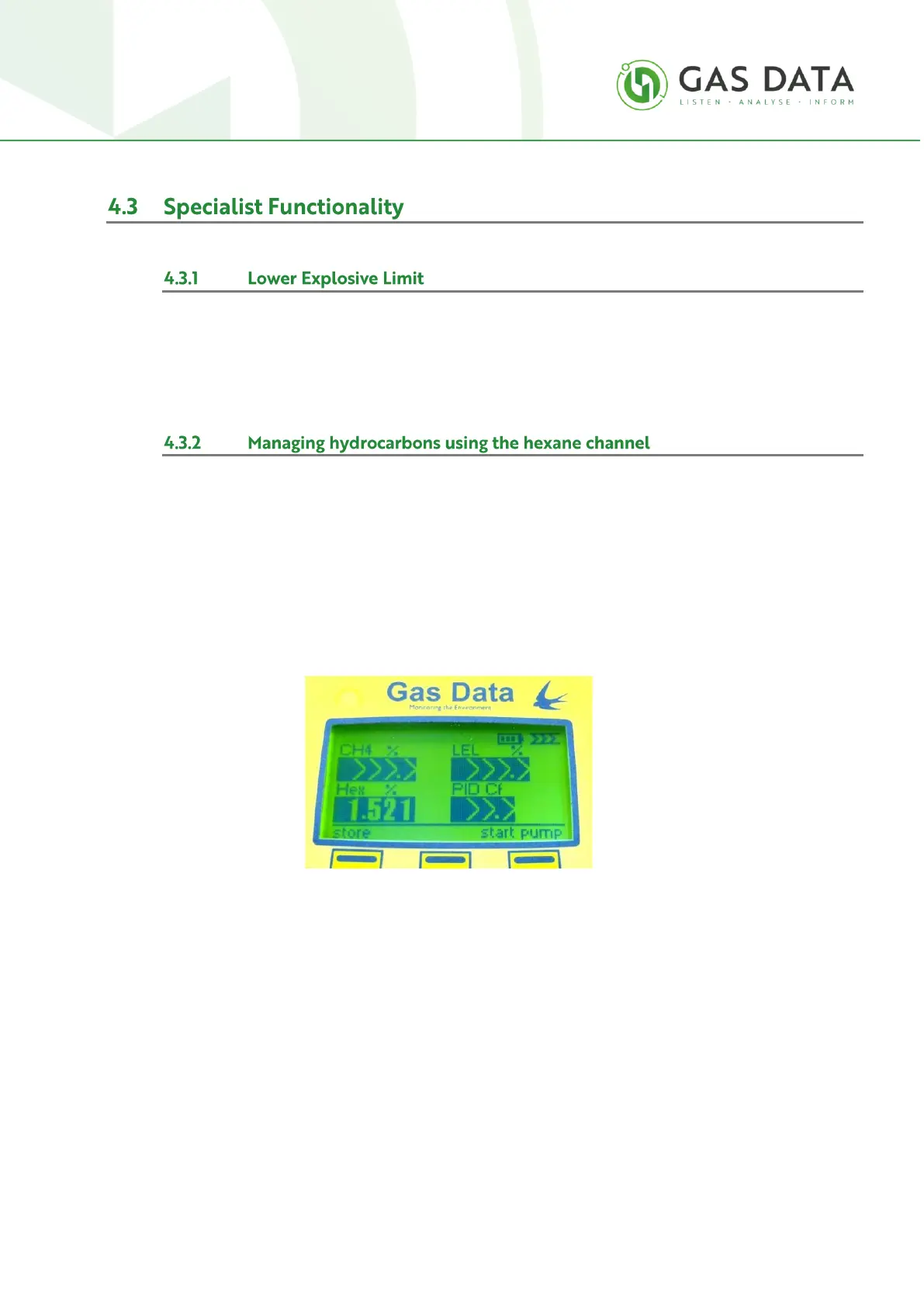
The GFM436 incorporates an additional Hexane calibration of the infra-red sensor which is used to
indicate, quantify and track hydrocarbon gases that would normally make the infra-red methane
calibration read excessively high or even over-range rendering the results meaningless. With the
GFM436 when and if the methane sensor shows an over-range signal or abnormally high methane value
(a good indicator that other hydrocarbons are present in the borehole) the hexane value will remain
valid and in range up to 2.000%.
This response range is chosen as it allows typical concentration levels of hydrocarbon vapours that
would be found in contaminated ground due to the spillage of common liquid fuels and oils to be
quantified on a standard scale as a percentage hexane vapour equivalent. The Hexane signal is taken
from the infra-red bench and processed to another output on the instrument display in the scale 0.000 –
2.000%.
It does not need additional gas calibration as the infra-red beam is normalised using the existing
methane calibration gas. At 100% Methane concentration the Hexane reading will be typically showing
0.200 – 0.300% and will continue to rise if there is a hydrocarbon problem present. Laboratory sampling
is needed to establish a baseline and identify the specific hydrocarbon compound but repeat tests with
the GFM436 will allow trends to be determined with great consistency.
Using this technique, the Hexane reading can also be used for an immediate indication that remedial
action on the borehole has been successful or not. Boreholes can be re-measured knowing that readings
The instrument calculates and displays the Lower Explosive Limit (LEL) of Methane. This function is
intended for use where methane has become mixed with air i.e. where oxygen is still present in normal
atmospheric proportions with respect to atmospheric nitrogen. This is the worst case so if the gas sample
is taken from a location where the oxygen content is depleted e.g. due to biological demand, then the LEL
indication will be higher than expected.


 To Next Page
 Loading...