General DescriptionGeneral Description
General DescriptionGeneral Description
General Description
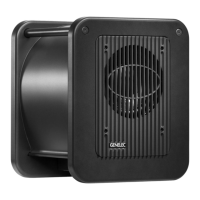
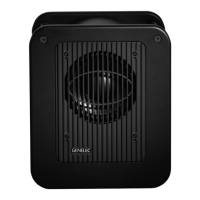
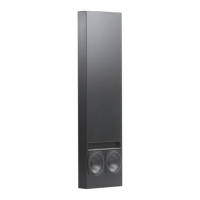
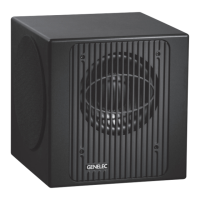
The Genelec HTS2 active subwoofer is
a powerful low frequency loudspeaker
designed specially for high quality
digital 5.1 channel Home Theater
systems.
DriversDrivers
DriversDrivers
Drivers
The HTS2 utilizes two front loaded 210
mm (8") cone drivers, housed in a 55
litre vented cabinet. A cavity over the
drivers boosts the efficiency and
acoustically attenuates possible
distortion components.
CrossoversCrossovers
CrossoversCrossovers
Crossovers
A subwoofer input connector allows for
complete compatibility with digital 5.1
channel surround sound systems.
The crossover filter also provides
calibrated ‘Bass Roll-off’ and ‘Phase’
controls, minimizing the effects of the
room on the performance of the
subwoofer.
AmplifiersAmplifiers
AmplifiersAmplifiers
Amplifiers
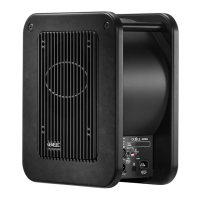
The 180 W amplifier unit is mounted in
the rear of the cabinet on quick release
vibration isolators to ensure rattle free
operation and long term reliability. The
amplifier incorporates special
protection circuitry for driver overload
protection and convenient "autostart"
and "softclip" functions.
SoftclipSoftclip
SoftclipSoftclip
Softclip
When there are extremely high signal
levels, the amplifiers will clip and
produce audible distortion. This
distortion can be minimized using the
‘softclip’ function. This reduces the
level of the peaks in the signal before
clipping can occur and hence no
unpleasant audible distortion is heard.
The ‘softclip’ function can be enabled
or disabled as required.
AutostartAutostart
AutostartAutostart
Autostart
The ‘autostart’ function turns off the
amplifier if there is no signal present for
about 5 minutes. When the signal
returns the amplifier switches on
immediately and the speaker functions
normally. This function should be
enabled when the speaker is left turned
on even when not in use; power is saved
when the amplifier is switched off. The
‘autostart’ function can be enabled or
disabled as required.
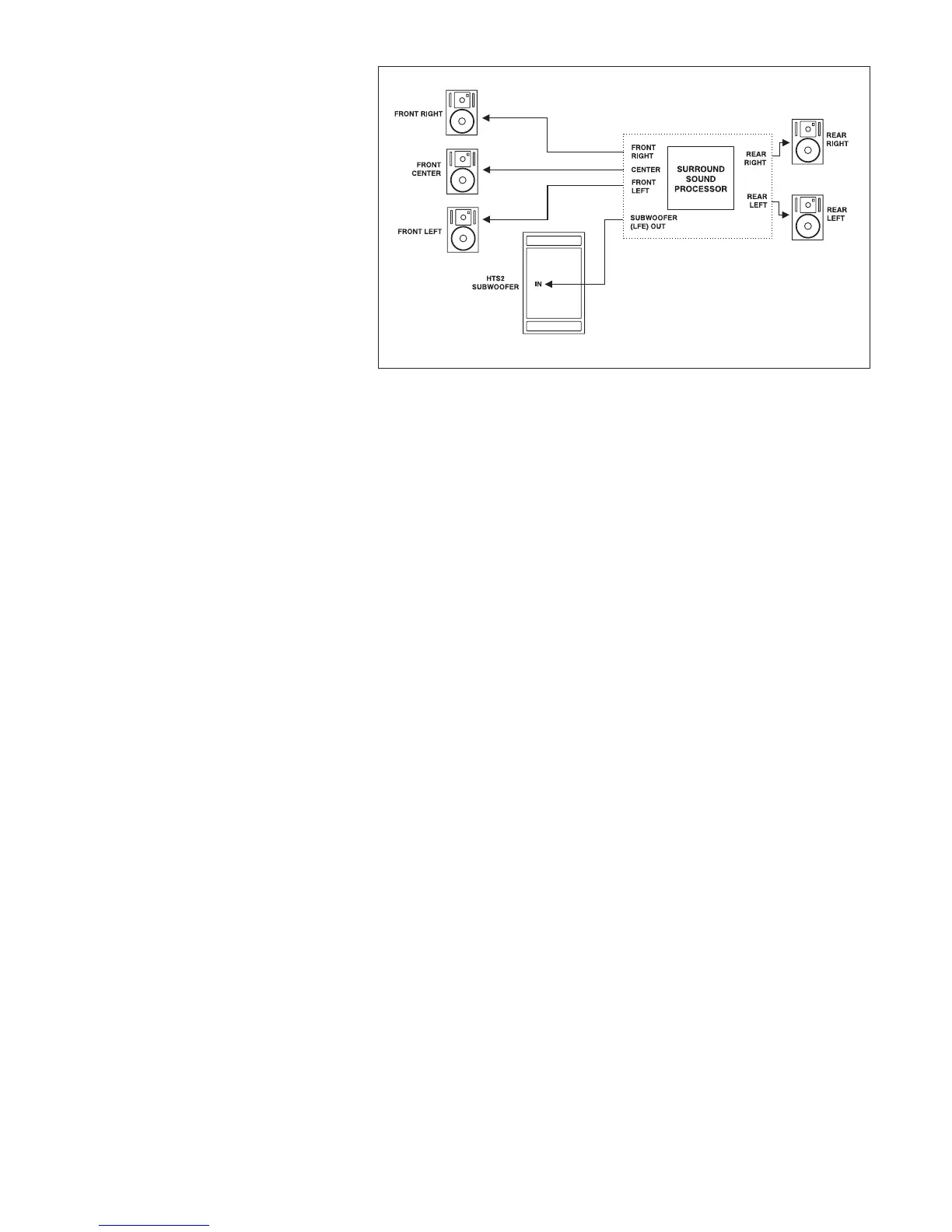
Figure 1. Connecting the HTS2 subwoofer.
InstallationInstallation
InstallationInstallation
Installation
Once unpacked, place the subwoofer
in a suitable position (for more details
see the 'Positioning' section).
Before connecting the audio signals,
ensure that both the subwoofer and the
main speakers are switched off. Check
that the subwoofer voltage selector
switch is set to the correct voltage and
that the correct fuse for that voltage is
fitted.
Connect the subwoofer to the decoder's
line level Subwoofer Out (LFE channel)
connector (See Fig. 1 above). Audio
input is made via a 10 kOhm balanced
(XLR) or unbalanced (RCA) connector.
If the signal source has suitable
balanced outputs, we recommend
using the XLR connector and balanced
interconnect cables due to their better
resistance to interference.
Input Sensitivity SettingInput Sensitivity Setting
Input Sensitivity SettingInput Sensitivity Setting
Input Sensitivity Setting
The input sensitivity control is located
on the rear panel of the subwoofer. An
input voltage of -6dBu with a -6dBu
input sensitivity setting will produce
100dB SPL @ 1m. To obtain a 110dB
SPL output an input voltage of +10dBu
is required when the input sensitivity is
set to 0dBu.
Setting the Bass Roll-OffSetting the Bass Roll-Off
Setting the Bass Roll-OffSetting the Bass Roll-Off
Setting the Bass Roll-Off
SwitchesSwitches
SwitchesSwitches
Switches
The acoustic response of the subwoofer
may have to be matched to the
characteristics of the room in which it
will be used. To adjust the subwoofer to
match these characteristics use the
''Bass Roll-off' control switches located
on the rear panel of the subwoofer. Fig.
2 overleaf provides some suggestions
for the 'Bass Roll-off' switch settings.
When both roll-off switches are 'off', a
flat anechoic response results.
Positioning in the RoomPositioning in the Room
Positioning in the RoomPositioning in the Room
Positioning in the Room
The placement of the subwoofer in the
room will affect the overall frequency
response of the system as the effects of
the room are more apparent with low
frequencies.
The subwoofer should be placed no
further than 1 m (3' 3") from the nearest
wall. The vents of the subwoofer
(amplifier side) should face the wall.
Leave at least 10 cm (4") of free space
between the amplifier panel and any
solid object to ensure sufficient cooling.
The placement will affect the phase
difference between the main speakers
and the subwoofer, and also the bass
roll-off rate. These effects can be
compensated by the use of the controls
in the amplifier unit but consideration
should be made when placing the
subwoofer.
Choose a central and symmetrical
position for the subwoofer as this will
give an even phase match between all
main channels. Positioning the
subwoofer close to a corner should be
avoided as it will boost the bass level at
lower frequencies and may cause
asymmetrical spatial imaging.
See Fig. 2 'Subwoofer Positioning'
overleaf for examples of recommended
positions within a room.


 To Next Page
 Loading...