EasyManua.ls Logo

Grizzly T32305 - User Manual

Grizzly T32305
36 pages
Print Icon
To Next Page IconTo Next Page
Loading...
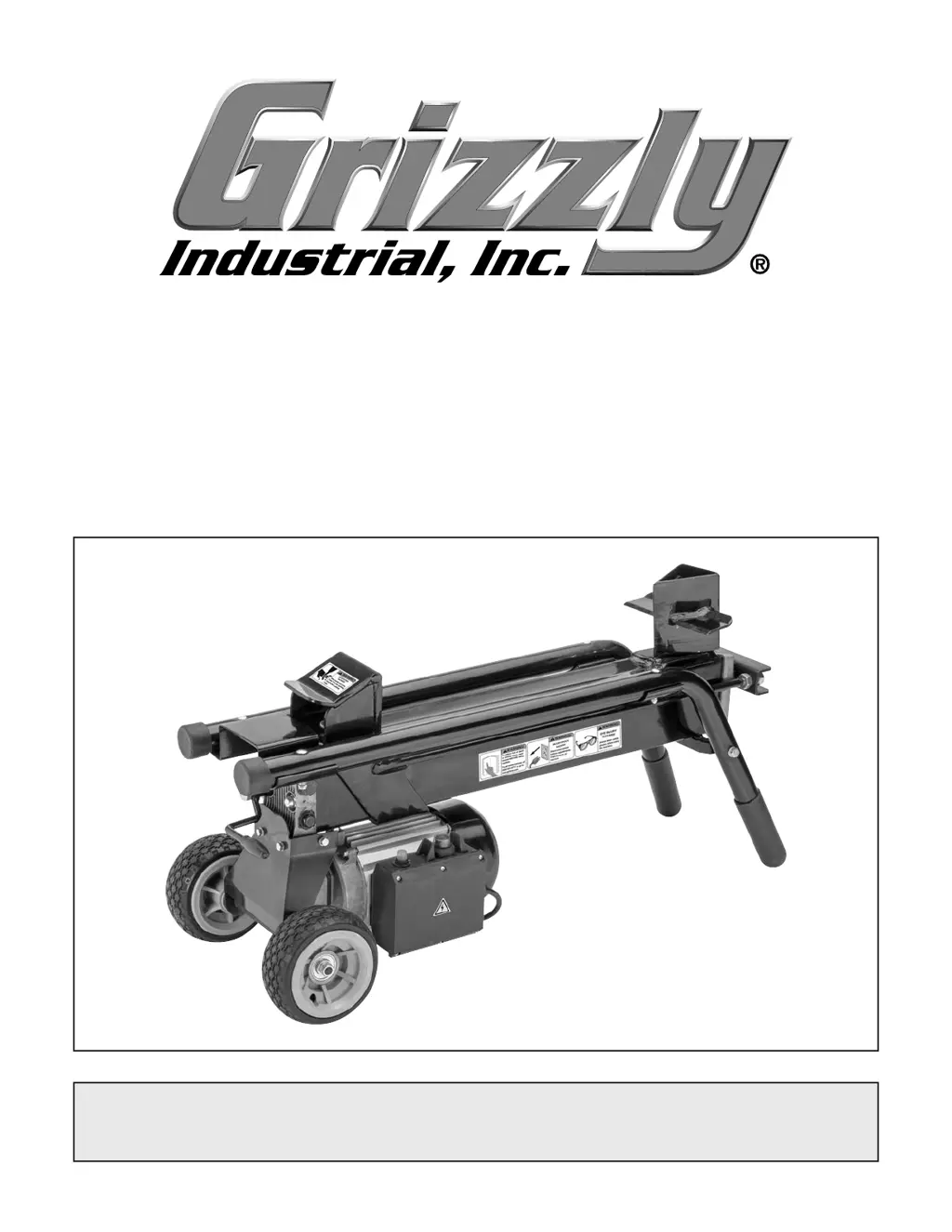
MODEL T32305
6-TON ELECTRIC LOG SPLITTER
OWNER'S MANUAL
(For models manufactured since 08/20)
COPYRIGHT © OCTOBER, 2020 BY GRIZZLY INDUSTRIAL, INC.
WARNING: NO PORTION OF THIS MANUAL MAY BE REPRODUCED IN ANY SHAPE
OR FORM WITHOUT THE WRITTEN APPROVAL OF GRIZZLY INDUSTRIAL, INC.
#MN21326 PRINTED IN CHINA
V1.10.20

Questions and Answers

  • B
    beckygonzalezJul 28, 2025
    Why does my Grizzly T32305 Log Splitter hydraulic ram move slowly or not at all?
    • T
      Timothy BradfordJul 29, 2025
      If the Grizzly Log Splitter's hydraulic ram moves forward and backward slowly, or not at all, it could be due to several reasons. The hydraulic fluid tank might be empty or low, so fill the tank to the required level. There might be air in the hydraulic system, in which case you should bleed the air out. Inspect the hydraulic control lever; if it's faulty, replace or repair it. The hydraulic control valve could also be at fault; release the pressure and consider replacing it, then flush and service the hydraulic system. Finally, damaged hydraulic ram piston seals can cause this issue, requiring you to replace the ram assembly and flush/service the hydraulic system.
  • E
    Elizabeth DodsonAug 7, 2025
    What to do if hydraulic fluid is leaking from my Grizzly Log Splitter?
    • C
      Christine PerezAug 7, 2025
      If hydraulic fluid is leaking from the hydraulic cylinder or other points on your Grizzly Log Splitter, it could be due to several reasons. First, check the air bleed screw; if it's opened too much, fully tighten it and then open it two full turns. Air in the hydraulic system can also cause leaks, so bleed the air out of the system. Ensure that the oil plug is fully tightened. Also, make sure the hydraulic control valve pressure release hex bolt is fully tightened. Finally, worn or damaged hydraulic control valve seals can lead to leaks, requiring you to replace the hydraulic control valve and flush/service the hydraulic system.
  • T
    Tanya SanfordAug 12, 2025
    How to fix a Grizzly Log Splitter that won't split wood?
    • S
      Shawn MackAug 12, 2025
      If the Grizzly Log Splitter will not split wood or splits it too slowly, it could be due to a few reasons. Make sure the log is positioned lengthwise on the bed and adheres to maximum log dimensions. Ensure you are splitting wood with the grain instead of against it. Air in the hydraulic system can also cause this issue, so bleed the air out. If the splitting wedge is dull, sharpen it.
  • M
    Melinda ParkerAug 17, 2025
    What causes a Grizzly T32305 Log Splitter hydraulic ram to retract slowly?
    • J
      jmillerAug 17, 2025
      If the hydraulic ram on your Grizzly Log Splitter retracts slowly or not at all, but moves forward correctly, there are a few potential causes. The hydraulic control lever might be faulty, so replace or repair any bent or broken lever. The hydraulic control valve could also be at fault; release the pressure and consider replacing it, then flush and service the hydraulic system. Another potential cause is damaged hydraulic ram piston seals, which would require you to replace the ram assembly and flush/service the hydraulic system.
  • F
    Frederick StephensonAug 22, 2025
    Why is the hydraulic fluid in my Grizzly Log Splitter burnt?
    • J
      Jorge EscobarAug 22, 2025
      If the hydraulic fluid in your Grizzly Log Splitter is burnt or has a tan discoloration, it is likely old or contaminated with water. You should change the hydraulic fluid.
  • B
    Beth RoweNov 1, 2025
    Why is my Grizzly Log Splitter hydraulic ram moving forward slowly?
    • W
      Wyatt MillerNov 1, 2025
      If the Grizzly Log Splitter's hydraulic ram moves forward slowly or stalls but retracts correctly, several factors could be responsible. It could be that the log exceeds the splitter's capacity, so adhere to the maximum log dimensions. The splitting wedge may be dull, or the log may be unsuitable for splitting; sharpen the splitting wedge and avoid splitting logs with twisted grain, numerous knots, or high moisture content. A faulty hydraulic control lever can also cause this; replace or repair any bent or broken lever. Check if the hydraulic fluid is too low or contaminated; fill the tank to the required level and change the hydraulic fluid if necessary. The hydraulic control valve could be at fault, so release the hydraulic pressure and consider replacing it, then flush and service the h...

Summary

Introduction to the Log Splitter Manual

Contact and Support Information

Provides contact details for customer support and manual feedback.

Manual Accuracy and Update Information

Discusses manual accuracy and how to find updated versions online.

Machine Identification and Key Components

Component Overview Diagram

Identifies major external parts of the log splitter using a diagram.

Controls and Fluid System Identification

Identifies specific controls and fluid system parts shown in the diagram.

Detailed Controls and Components

Operator Controls and Their Functions

Explains the operation of the ON button, control lever, and pressure release.

Hydraulic System Components

Details the hydraulic ram, wedge, fluid tank, and air bleed screw.

Splitting Wedge and Circuit Breaker

Describes the wedge that splits logs and the circuit breaker reset button.

Log Splitter Specifications and Data

Product, Shipping, and Electrical Specs

Details physical dimensions, shipping information, and electrical requirements.

Motor and Hydraulic System Details

Lists motor power, hydraulic capacity, pressure, and operational parameters.

Construction and Product Features

Material Composition and Other Specs

Covers materials used for components, warranty, and origin.

Key Machine Features Overview

Highlights main functional features like automatic return and heavy-duty wheels.

General Safety Instructions and Warnings

Understanding Safety Symbols and Guidelines

Explains safety symbols and general machinery safety precautions.

Electrical and Personal Safety Precautions

Warns about electrical hazards and the need for eye protection.

Apparel, Hearing, and Operational Safety Rules

Machine Stability, Maintenance, and Cord Safety

Emphasizes machine stability, maintenance, cord handling, and avoiding damaged parts.

Specific Safety for Log Splitter Operations

Safe Log Handling and Machine Location

Guidance on supporting logs, correct usage, and safe operating locations.

Hydraulic Fluid Injection and Leak Hazards

Warnings about hydraulic fluid injection and how to check for leaks safely.

Power Supply and Electrical Requirements

Power Supply Availability and Circuit Needs

Considerations for power source availability and circuit specifications.

Full-Load Current Rating Explained

Explanation of the machine's current draw and circuit sizing.

Grounding, Plug Requirements, and Extension Cords

Setup and Unpacking Procedures

Items Required for Setup

Lists necessary tools and supplies for machine setup.

Unpacking and Initial Inspection

Instructions for unpacking and checking for shipping damage.

Work Location and Clearances

Safe Lifting, Moving, and Assembly

Guidance on handling, moving, and final assembly of the log splitter.

Test Run Procedure

Verifying Machine Operation and Safety Checks

Steps to perform the test run and essential pre-operation checks.

Operating the Log Splitter

General Operation Overview and Safety

A basic understanding of the machine's use and associated safety precautions.

Typical Splitting Operation Steps

A step-by-step guide for performing a standard log splitting task.

Using the Hydraulic Control Lever

Safe Log Splitting Techniques

Detailed instructions and warnings for splitting logs correctly.

Safe Removal of Stuck Logs

Recommended Accessories

Essential Safety Gear and Gloves

Lists protective equipment such as safety glasses and work gloves.

Specialty Tools and Equipment

Maintenance and Care Schedule

Preventative Maintenance Tasks

Outlines ongoing and periodic maintenance requirements for optimal performance.

Lubrication and Cleaning Procedures

Instructions for lubricating moving parts and cleaning the log splitter.

Hydraulic Fluid Level Management

Splitting Wedge Sharpening and Care

Troubleshooting Common Issues

Diagnosing and Resolving Machine Problems

A comprehensive guide to identifying and fixing common issues with the log splitter.

Motor, Electrical, and Operational Issues

Solutions for problems related to the motor, electrical system, and machine operation.

Electrical Wiring and Safety

Wiring Safety Instructions and Best Practices

Crucial safety guidelines and connection advice for electrical wiring tasks.

Motor Wiring and Component Notes

Information on motor wiring, capacitors, and seeking technical assistance.

Wiring Diagram and Electrical Components

Replacement Parts Identification

Main Assembly Parts List

Identifies parts for the primary structure of the log splitter with an exploded view.

Additional Main Assembly Parts

Continues the detailed listing of main assembly parts.

Machine Labels and Identification

Key Labels for Operation and Safety

Describes labels for fluid capacity, machine ID, warnings, and electrical information.

Hydraulic System Schematic

Hydraulic System Component Diagram

A schematic illustrating the hydraulic system's layout and components.

Warranty and Returns Information

Product Warranty Coverage Details

Details the terms, limitations, and duration of the product warranty.

Warranty Registration and Return Process

Instructions for registering the warranty and the procedure for returning products.

Grizzly T32305 Specifications

General IconGeneral
BrandGrizzly
ModelT32305
CategoryLog Splitter
LanguageEnglish