WWW.GFWORLDWIDE.COM | +1 (208) 664-9291
2.8 FALL HAZARDS
• Equipment operators and maintenance
personnel are susceptible to falls from
equipment during repair and servicing.
Prevent falls and slips by following these
guidelines:
• ON-SITE FALL HAZARD requirements supersede all
of the guidelines listed below. Closely follow on-site
safety rules.
• Know and identify what slip, fall and trip hazards are,
and what preventative measures are required
• Survey work area on and around equipment for slip
and fall hazards and remove hazards from area
• Never jump from equipment to the ground
• Use three points of contact when climbing equipment
• Where there is a danger of falling use a FALL
PROTECTION SYSTEM per OSHA AND MSHA
requirements.
• Always follow national, state and local codes:
https://www.osha.gov/SLTC/fallprotection/
2.9 PINCH POINT HAZARDS
• Never place yourself between a piece
of heavy equipment or machinery and an
immovable object
• Never work within the swing radius of
rotating equipment
• Always work at a safe distance from equipment
• Caught-in hazards exist when workers remove or dis-
able guards. Use extra caution when removing this
safety equipment as required for servicing
• Never place your hands or body near moving parts
• Gloves, long sleeve shirts, hair, and loose tting cloth-
ing can be hazardous if caught in moving parts
• Never exceed maximum load limits according to the
equipment and machinery specications
• All workers should wear bright protective clothing.
Signs that are highly visible should be set up in a way
to warn and discourage nonworkers from entering site
• Never forget one simple rule: PARKING BRAKES. They
are easy to operate and can save lives
• Always use wheel chocks when working on or near a
vehicle
• Always verify that vehicle is clear before starting
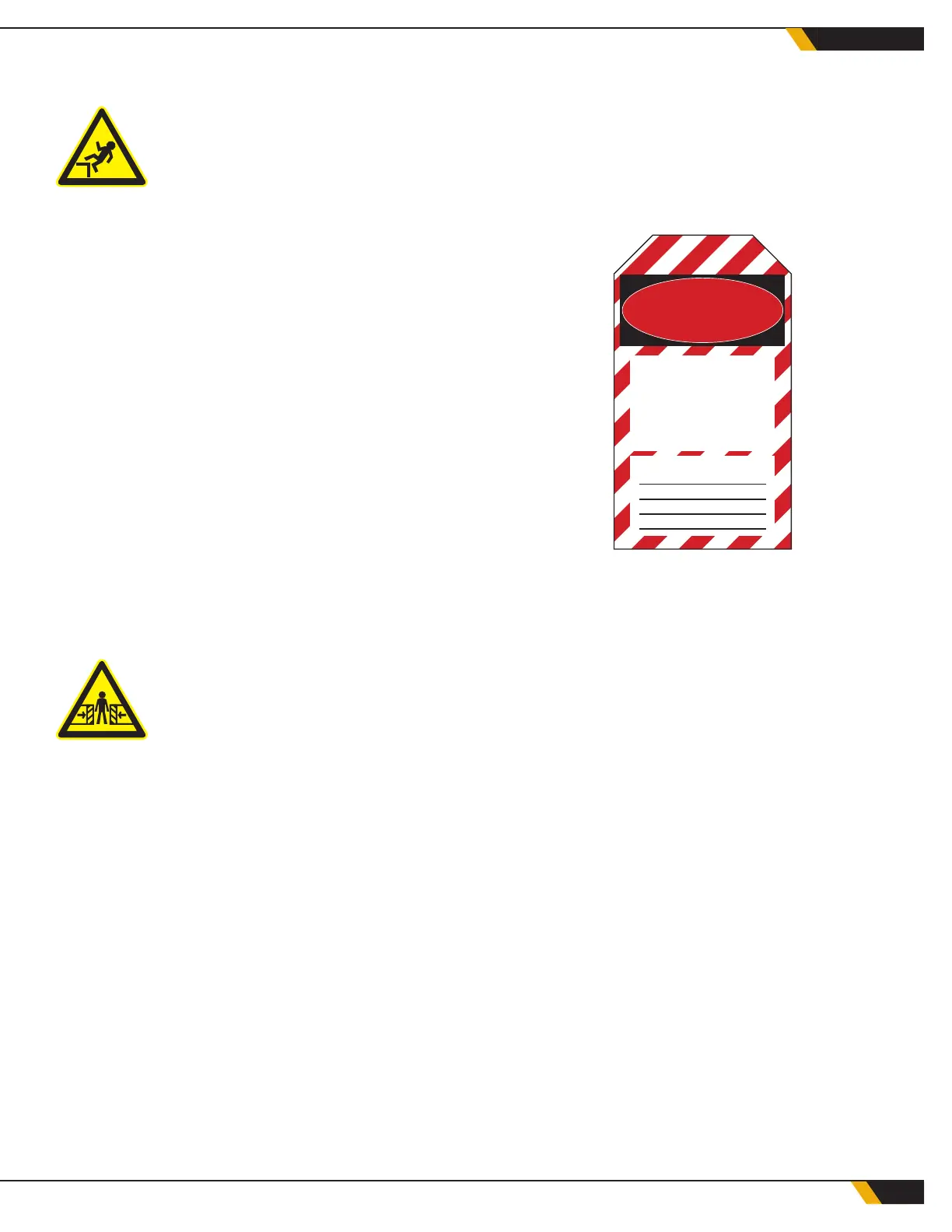
2.10 LOCK-OUT / TAG-OUT
1. IDENTIFY the types of energy sources used, potential
hazards, and control devices.
2. NOTIFY all affected employees.
3. TURN OFF all operating controls.
4. LOCATE all energy sources
5. ISOLATE all energy sources by blocking, bleeding
and ventilating stored energy as found in springs,
hydraulic systems, electrical systems and pneumatic
systems.
6. LOCK-OUT all switches and energy controls in the OFF
or SAFE position.
7. TEST operating controls. Put all controls in ON posi-
tion. Be sure no one can get hurt before testing.
8. RETURN all operating controls to the OFF position.
9. PERFORM required task.
10. REMOVE lock-out devices only after the equipment is
fully assembled and all affected employees have been
notied. Each lock-out device must be removed by the
person who put it on.
DANGERDANGER
DO NOT
OPERATE
EQUIPMENT
LOCK-OUT
TAG & LOCK ONLY TO BE REMOVED BY:
DATE:
11
SAFETY


 To Next Page
 Loading...