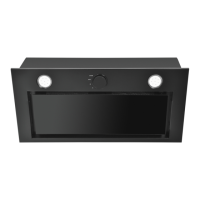
The ZRW 50/60 kitchen extractor hood is designed to remove or neutralize kitchen fumes, making it a functional and aesthetic addition to modern kitchens. Its design incorporates modern structural solutions and advanced technologies to ensure high effectiveness and a good appearance. This appliance is intended for permanent installation over a gas or electric cooker.
Function Description:
The primary function of the ZRW kitchen extractor hood is to extract or absorb kitchen fumes. It can operate in two main modes:
- Fume Removal Mode (Extractor Mode): In this mode, the hood discharges used air to the outside through a ventilation conduit. A rigid or flexible pipe with a diameter of 120 mm, not longer than 4-5 meters, is required for this setup. Carbon filters should be removed when operating in this mode.
- Odour Absorber Mode: When a special active carbon filter is installed, the hood functions as an odour absorber. In this mode, filtered air returns to the room through openings in the front of the hood, and an external ventilation conduit is not necessary.
The hood is an electrical appliance manufactured according to Class II of fire protection standards. It is equipped with its own lighting and an exhaust fan that offers three rotational speeds, allowing users to adjust the fan speed for optimal performance with minimum noise.
Important Technical Specifications:
- Power Supply Voltage: AC 230V 50 Hz
- Fan Motor: 1
- Lighting: 40 W
- Number of Grease Filters: 1
- Number of Speeds: 3
- Width (cm): 50 or 60
- Depth (cm): 50
- Height (cm): 13
- Mass (kg): 6 (for 60 cm model) / 4.8 (for 50 cm model)
- Air Outlet (ø mm): 120
- Capacity (m³/h): 320
- Power Consumption (W): Max. 135
- Noise Level (dBA): Max. 51
Usage Features:
- Installation: The hood must be installed at a safe distance of at least 650 mm between the cooker plate and the hood. Installation involves mounting the hood body to the wall and connecting it to the power supply network. A vertical line should be traced on the wall to indicate the center of the cooker plate, and the hood body should be leveled. Fixing holes are marked, drilled, and expansion plugs are used to secure the hood.
- Control Panel: Operation is controlled via switches "W" and "O".
- Switch "O": Controls lighting. Shifting to the left turns the lighting on, and shifting to the right turns it off.
- Switch "W": Controls the hood motor. Successive shifts to the left activate three fan operation speeds, allowing users to select the optimum fan speed for their needs.
- Safety Precautions:
- Do not connect the hood to any chimney, smoke, or flue-gas ducts that are in use.
- Avoid leaving open flames under the hood. When removing pots from burners, set the flame to its minimum level.
- Constantly monitor food cooked in fat, as overheated fat can ignite easily.
- Ensure proper ventilation (air supply) if other non-electric devices (e.g., liquid fuel ovens, water heaters) are used in the same room. Safe operation requires maintaining a negative pressure of not more than 0.004 millibar at the location of these devices when the hood and combustion devices are operating simultaneously (this does not apply when the hood is used as an odour absorber).
- Always pull the power cord plug from the wall socket before any filter cleaning or repair operation.
- Connect to a 230V power supply network using a working electric socket.
- The manufacturer is not responsible for any damage resulting from installation or operation not conforming to these instructions.
Maintenance Features:
Regular maintenance and cleaning are crucial for ensuring good, fault-free operation and extending the life of the device.
- Grease Filter:
- Replacement: The grease filter should be replaced at least every two months during normal operation, or more frequently with intensive use (more than 4 hours a day).
- Dismantling: To replace, release the securing studs, protecting the filter with your hand, and remove the catches that secure the filters. After replacement, reinstall the catches and the mesh.
- Cleaning: Aluminium filters should be cleaned at least every two months. Textile grease filters should be replaced.
- Carbon Filter (for Odour Absorber Mode):
- Operation: Carbon filters absorb odours until saturated. They cannot be washed or regenerated.
- Replacement: Carbon filters should be replaced at least every two months, or more frequently with very intensive use. To replace, remove the masking cover and grease filter, then replace the carbon filter situated on the textile filter. Finally, reinstall the grease filter with the carbon filter in the hood.
- Lighting:
- The lighting system uses a 40 W power light bulb.
- Replacement: To replace the bulb, remove the masking cover from the hood body, replace the bulb using a piece of cloth or paper, and then reinstall the masking cover.
- Cleaning the Hood:
- Never use solvents or alcohols, as they may dull lacquered surfaces.
- Avoid caustic or abrasive substances, especially for cleaning stainless steel surfaces.
- It is recommended to use a moist cloth and liquid neutral cleaning agents for cleaning.
By following these instructions, users can ensure the safe, efficient, and long-lasting operation of their ZRW 50/60 kitchen extractor hood.

 Need help?
 General

 To Next Page