9
Juicing Tips and Techniques
Juicing is a convenient way to add more vitamins and nutrients to
your diet. Since you are removing the fiber or bulk, you can consume
a larger volume of fruits and vegetables by drinking juice than by
eating the whole food.
Purchasing and Storing Fruits and Vegetables:
• Always wash fruits and vegetables before juicing.
• Always use fresh fruits and vegetables for juicing.
• To save money and obtain fresher produce, purchase fruits or
vegetables that are in season.
• Keep your fruits and vegetables ready for juicing by washing
them before storing.
• Most fruits and hardier-type vegetables can be stored at cool
room temperature. More delicate and perishable items such as
tomatoes, berries, leafy greens, celery, cucumbers, and herbs
should be stored in refrigerator until required.
Preparing Fruits and Vegetables:
• It is recommended that fruits or vegetables such as oranges,
melons, or mangoes are peeled before placing in Juice Extractor
to minimize impact on juice flavor.
• All fruits with pits and large seeds such as nectarines, peaches,
apricots, plums, and cherries MUST be pitted before juicing.
• When using small amounts of ginger, sandwich it between other
fruits or vegetables for best results.
Other Helpful Tips:
• Consume juice immediately for best taste and nutrition. If storing,
cover tightly and refrigerate.
• Greens and herbs work best if rolled in a tight ball and then juiced
in between a combination of ingredients.
• Peeled oranges will deliver invigorating, frothy orange juice. For
best results, refrigerate oranges before juicing.
Using the Pulp:
• Remaining pulp left after juicing fruits or vegetables is mostly fiber
and cellulose which, like juice, contain vital nutrients necessary for
daily diet and can be used in many ways. However, like juice, pulp
should be used that day to avoid loss of vitamins.
• There are a number of recipes that use pulp. You can also use pulp
to thicken casseroles or soups.
• Pulp is great used in the garden for compost.
Soy Milk, Almond Milk, and Rice Milk:
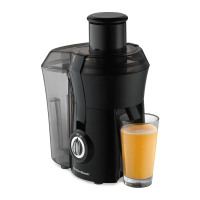
This Juice Extractor may be used to make soy milk, almond milk, and
rice milk. One cup of soybeans, almonds, or rice must be soaked in
four cups of water for 24 to 48 hours in the refrigerator. Slowly pour
one cup of the soaked mixture at a time into Feed Chute.
The liquid extracted from the soaked mixture is the “milk.”
NOTES:
• Almonds must be soaked 24 to 48 hours before juicing.
• Soy milk should be boiled to improve flavor.
• Vanilla, honey, and sugar may be added to enhance flavor of each
milk type.





 To Next Page