To use a telescoping gauge, select the correct size gauge for the bore. Compress
the movable post and. Care fully insert the gauge into the bore. Carefully move the
gauge in the bore to make sure it is centered. Tighten the knurled end of the gauge to
hold the movable post in position. Remove the gauge and measure the length of the
posts. Telescoping gauges are typically used to measure cylinder bores.
To use a small bore gauge, select the correct
size gauge for the bore. Carefully insert the gauge
into the bore. Tighten the knurled end of the gauge
to carefully expand the gauge fingers to the limit
within the bore. Do not over tighten the gauge
because there is no built-in release. Excessive
tightening can damage the bore surface and
damage the tool. Remove the gauge and measure
the outside dimension (Figure 30). Small bore
gauges are typically used to measure valve guides.
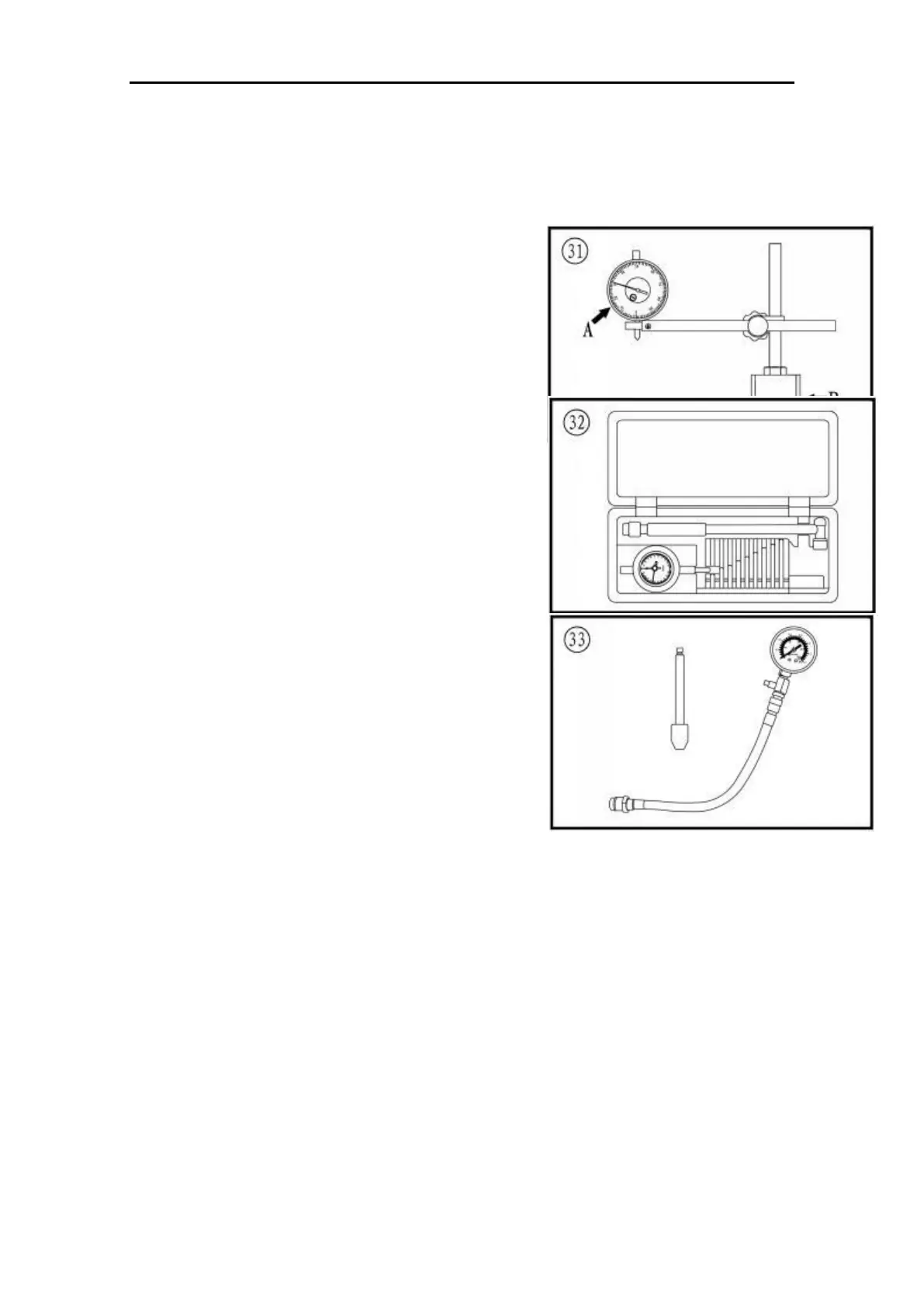
Dial Indicator:
A dial indicator (Figure 31) is a gauge with a dial
face and needle used to measure variations in
dimensions and movements. Measuring brake rotor
runout is a typical use for a dial indicator.
Dial indicators are available in various ranges and
graduations and with three basic types of mounting
bases: magnetic (B. Figure 31). Clamp, or screw-in
stud. When purchasing a dial indicator, select on with
a continuous dial (A, Figure 31).
Cylinder Bore Gauge
A cylinder bore gauge is similar to a dial indicator.
The gauge set shown in Figure 32 consists of a dial
indicator, handle, and different length adapters
(anvils) to fit the gauge to various bore sizes. The
bore gauge is used to measure bore size, taper and out-of-round. When using a bore
gauge, follow the manufacturer’s instructions.
Compression Gauge


 To Next Page
 Loading...