40 Therapy Modes
FLEX settings
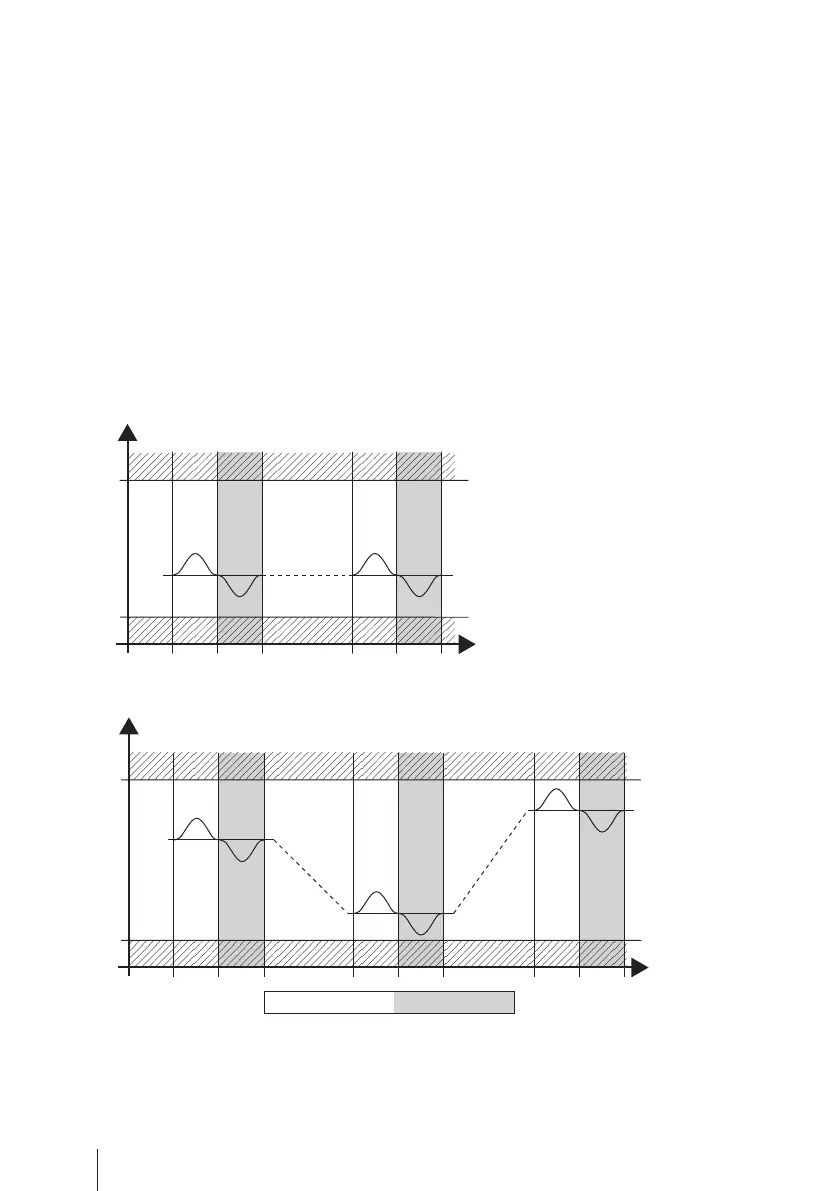
Breathing compressed air results in an increased burden for the respiratory muscles.
FLEX controls ease this burden on the respiratory muscles by reducing the effect of the
flow resistance in the airway. To this end, the therapy pressure needs to be increased
during inspiration and reduced during expiration. The degree of pressure control can
be individually selected for inspiration and expiration at four levels (0, 1, 2, 3). The
level selected is identical to the airway resistance value in hPa/(l/s) by which the effort
for the patient‘s respiratory muscles is relieved. The specified curves of the FLEX trans-
fer characteristics correspond to the prevailing pressure and flow behavior of the air-
ways. Changes in pressure are only possible within the adjustable pressure range of
the point 2 and are additionally limited to ± 3 hPa. FLEX settings are not activated until
after the third breathing period, as the point 2 takes a short period of time to calcu-
late the leakage flow.
20
[hPa]
I
Time
CPAP
pressure
4
E EI
CPAP with I-FLEX and E-FLEX
20
Pressure
[hPa]
I
Time
4
E EI
I= Inspiration E= Expiration
P-Max
P-Min
APAP with I-FLEX and E-FLEX
EI


 To Next Page