2 3
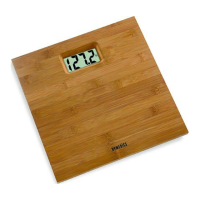
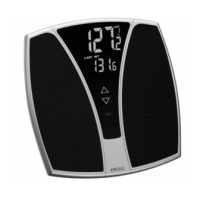
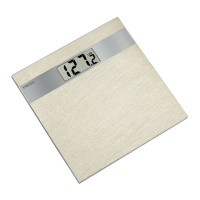
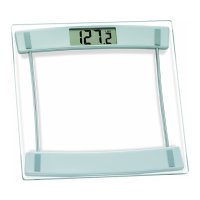
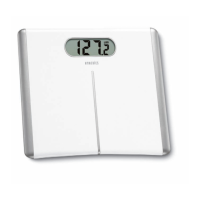
Thank you for your HoMedics Digital Scale purchase. This, like the entire HoMedics
product line, is built with high-quality craftsmanship to provide years of dependable
service. We hope you will find it to be the finest product of its kind.
First Time Setup
1. This scale operates on one lithium CR2032 battery (pre-installed). There is a plastic
strip under the lithium battery to prevent battery drain in shipping. Remove the strip
before continuing with these instructions.
2. Some models have a static cling label on the lens to prevent scratching.
Remove before use.
3. Set the “LB/KG” unit of measure switch located on the back of the scale.
Note: The switch is pre-set to pounds.
4. The scale needs to be initialized before first use or after battery replacement. Press
lightly on the scale platform. The display will turn on, and automatically turn off. The
scale is now ready for use.
Note: The scale may need to be initialized if it is moved or bumped.
General Operation
1. Place the scale on a flat, hard surface. Carpeted or uneven floors may affect accuracy.
Be careful that the floor is not wet, or the scale may move.
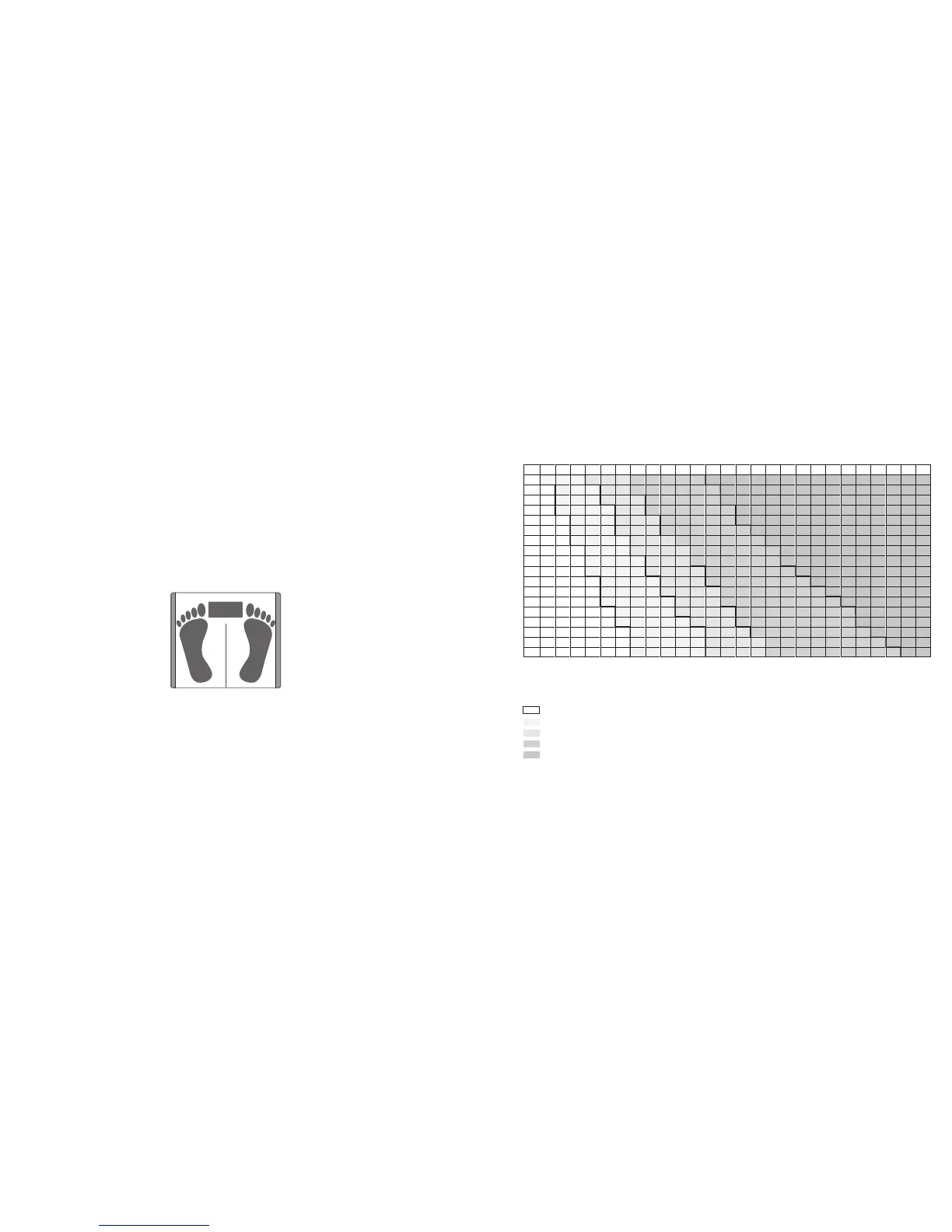
2. Step on the scale, positioning your feet evenly on the scale platform (Figure 1). Use
caution so scale will not tip.
Stand still while the scale measures your weight.
3. When your weight stabilizes, the display will show your weight. The weight reading will
remain on the screen for a few seconds. The display will turn off to conserve the
battery.
It is normal for your weight to fluctuate during the day and from one day to another. Slight
changes in your weight are normal. For best results:
1. Weigh yourself without clothing whenever possible. Clothes can vary in weight.
2. Weigh yourself at the same time of day under the same conditions.
3. Allow for weight fluctuations due to food or drink in your system.
Figure 1
Reaching Target Weight
Maintaining proper weight is essential to healthy living. The Body Mass Index (BMI) is the
most widely accepted measurement of weight according to health professionals.
Use the chart below to determine your own BMI by matching your height in the left hand
column with your weight in the top row. Your BMI is represented by the number that is a
match between your height and your weight. Remember to eat right and exercise.
Body Mass Index
BMI Ranges
(For adults 20 yrs. & older)
Underweight:
Less than 18.5
Normal: 18.5-24.9
Overweight:
25.0-29.9
Obese: 30.0-39.9
Extremely Obese:
Greater than 40.0
NOTE: BMI has some limitations. It can overestimate body fat in people who are
very muscular, and it can underestimate body fat in people who have lost muscle
mass, such as the elderly. Consult your physician to determine what is most ideal
for you.


 To Next Page
 Loading...