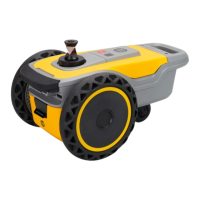
The HP SitePrint Robot is an advanced robotic system designed for automated site layout and printing, streamlining construction and surveying tasks. This device is engineered to precisely mark out complex designs on various surfaces, significantly improving efficiency and accuracy in construction projects.
Function Description:
The HP SitePrint Robot's primary function is to autonomously print digital designs directly onto construction sites. It utilizes a combination of advanced navigation, precise positioning, and specialized printing technology to transfer architectural plans, grid lines, and other critical layout information from digital models to the physical ground. This eliminates the need for manual measurement and marking, reducing human error and accelerating the pre-construction phase. The robot is equipped with a 360° prism for accurate positioning, allowing it to integrate seamlessly with total stations or other surveying equipment. It supports color printing, enabling differentiation of various layout elements. The system is controlled via a user-friendly interface accessible through a control panel, which can be connected wirelessly to the robot.
Important Technical Specifications:
While specific technical specifications like dimensions, weight, and battery life are not explicitly detailed in the provided images, several key components and features can be inferred:
- Power Source: The robot operates on a battery, which needs to be fully charged before insertion. The battery is housed in a dedicated holder that clips into the robot. A battery charger and transformer are included for recharging.
- Printing Mechanism: The robot uses ink cartridges for printing. It supports color cartridges, suggesting multi-color printing capabilities for different layout elements.
- Navigation and Positioning: A 360° prism is a crucial component for precise positioning and navigation, likely interacting with external surveying equipment to ensure accurate layout.
- Control System: The robot is controlled via a dedicated control panel, which appears to be a tablet-like device running a Windows operating system. This panel connects to the robot via Wi-Fi.
- Connectivity: Wi-Fi connectivity is essential for communication between the control panel and the robot, allowing for design uploads, control commands, and status monitoring. The Wi-Fi network name (SSID) is based on the robot's serial number, and a password is provided for secure connection.
- Software: The control panel runs a specialized HP SitePrint Control Panel application, which is the primary interface for managing layout tasks. The system requires software updates, which can be performed through the control panel's support menu.
- Sensors: The robot is equipped with sensors, particularly frontal sensors, which are critical for its operation and navigation. These sensors are identified as fragile areas requiring careful handling.
- Mobility: The robot features caster wheels for movement across the site. These wheels are also identified as fragile components.
- Durability: The robot is designed for use in construction environments, but specific warnings about handling and placement (e.g., not leaning on it, not placing it vertically) suggest a need for careful operation to prevent damage.
Usage Features:
- Easy Extraction: The robot is designed for easy extraction from its packaging using a blue handle and a rear handle, emphasizing horizontal lifting to prevent damage.
- Battery Insertion: The battery is inserted into a dedicated holder, which then clips into the robot. Users are advised to ensure the battery is fully charged before insertion.
- Ink Cartridge Insertion: Color ink cartridges are inserted into designated slots, with a specific procedure involving opening a door, pushing the cartridge in, and locking it into place.
- Prism Installation: The 360° prism is screwed into a dedicated slot on the robot after removing an extraction handle. The extraction handle should be stored in a designated prism-slot in the suitcase.
- Power On Sequence: The robot is switched on by pressing a button. LEDs turn white upon successful power-on, and four red LED signs are projected from the front and rear. Orange or red LEDs indicate an error, requiring a system reboot.
- Control Panel Operation: The control panel is a tablet-like device that needs to be turned on. It connects to the robot via Wi-Fi using a provided SSID and password. Access to the robot's control panel user interface is done through a Google Chrome browser by navigating to a specific IP address (http://192.168.10.1).
- Account Assignment and Registration: Users must sign into their HP SitePrint account on the control panel and register the robot to their company to unlock all features.
- Software Updates: The system requires regular software updates, which are managed through the control panel's support menu. This ensures the robot operates with the latest features and improvements.
- Project Management: Once set up, the robot is ready to work on projects, indicating a workflow for loading designs and initiating printing tasks.
Maintenance Features:
- Cleaning: A spray bottle for cleaning is included, suggesting that regular cleaning of certain components (likely the printhead or sensors) is part of routine maintenance.
- Software Updates: The ability to install software updates through the control panel is a key maintenance feature, ensuring the robot's firmware and software remain current for optimal performance and security.
- Careful Handling: The manual emphasizes careful handling of fragile areas such as the caster wheels, printhead, and frontal sensors. This is a critical aspect of preventative maintenance to avoid damage and ensure longevity.
- Battery Management: The battery system involves charging and proper insertion, which are routine maintenance tasks to ensure continuous operation.
- Storage of Components: The instruction to store the extraction handle in the suitcase prism-slot highlights the importance of keeping all components organized and protected when not in use.
The HP SitePrint Robot is a comprehensive solution for automated construction layout, designed for precision, efficiency, and ease of use, with clear guidelines for setup, operation, and care.

 Need help?

 To Next Page
 General