EasyManua.ls Logo

Hytera HM682 - User Manual

Hytera HM682
4 pages
Print Icon
To Next Page IconTo Next Page
Loading...
HM68
2
DIGITAL MOBILE RADIO
QUICK REFERENCE GUIDE
2023 Hytera US Inc. All Rights Reserved.
8 Whatney, Irvine, CA 92618
info@hytera.us
https:// www.hytera.us

Questions and Answers

Overview

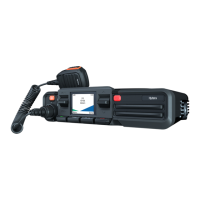
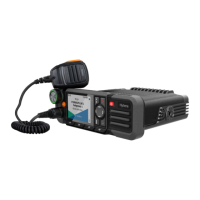
This document serves as a Quick Reference Guide for the Hytera HM682 Digital Mobile Radio, providing essential information on its layout, installation, basic operations, status indications, and call services.

The HM682 is a robust digital mobile radio designed for reliable communication in various environments, particularly suited for in-vehicle installation. Its primary function is to facilitate two-way radio communication, supporting both digital and analog channels, and offering features that enhance user experience and operational efficiency.

Function Description

The HM682 Digital Mobile Radio is engineered to provide clear and consistent voice communication. It operates by transmitting and receiving radio signals, allowing users to communicate with individuals or groups within their network. The radio supports both digital and analog modes, offering flexibility to integrate with existing communication systems or to leverage the advanced features of digital radio technology, such as improved audio quality and enhanced privacy.

Key functional components include:

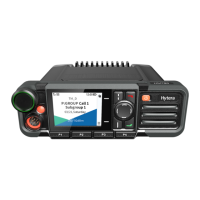
  • Emergency Key: A programmable button that can be configured by a dealer to activate specific emergency features, such as sending an alert or initiating an emergency call, ensuring user safety in critical situations.
  • Volume Key: Allows users to adjust the audio output level of the radio, ensuring comfortable listening.
  • Channel/Navigation Key: A multi-functional key used for selecting channels, navigating through menus, and making selections.
  • LED Indicator: Provides visual feedback on the radio's operational status, such as power on/off, receiving, transmitting, scanning, roaming, and emergency mode.
  • Aviation Port: A dedicated port for connecting the palm microphone, ensuring secure and reliable audio input.
  • Answer Key (programmable): Can be configured to answer calls or activate other assigned radio features.
  • OK/Menu Key: Used to confirm selections and access the radio's menu system for configuration and feature access.
  • Back/Zone Key: Allows users to navigate back in menus and select different communication zones.
  • On-Off Key: Controls the power status of the radio.
  • End Key (programmable): Can be configured to end calls or activate other assigned radio features.
  • Palm Microphone: The primary audio input device, featuring a Push-to-Talk (PTT) key for initiating transmissions.
  • RF Antenna Connector: Connects the radio to an external RF antenna for signal transmission and reception.
  • Power Inlet: Connects the radio to the vehicle's power supply.
  • Accessory Connector: Allows for the connection of various radio accessories.
  • GPS Antenna Connector: Connects to a GNSS antenna, enabling location-based services for radios equipped with this feature.

Usage Features

The HM682 is designed for intuitive operation, making it accessible for users with varying levels of experience.

  • Turning On/Off: The radio can be powered on by connecting it to a power supply or by long-pressing the On-Off key. A long press of the On-Off key will also power down the device.
  • Volume Adjustment: The Volume key can be toggled up to increase volume or down to decrease it, providing quick audio control.
  • Zone Selection: Users can select a communication zone from the home screen by pressing the Back/Zone key, using the Channel/Navigation key to scroll through available zones, and confirming with the OK/Menu key. Alternatively, preprogrammed Zone Up or Zone Down keys can be used for quick zone switching.
  • Channel Selection: Channels can be selected directly from the home screen by toggling the Channel/Navigation key. For more complex selection, users can access the menu via the Back/Zone key, select a zone, then use the Channel/Navigation key to choose a channel, and confirm with the OK/Menu key. Preprogrammed Channel Up or Channel Down keys also offer rapid channel changes.
  • Digital Channel Calls: To initiate a call on a digital channel, users select the desired channel and then press and hold the PTT key on the palm microphone. For contact-specific calls, users can navigate to Menu > Contact, select a contact using the Channel/Navigation key, and then press and hold the PTT key.
  • Analog Channel Calls:
    • Without Signaling: Users select an analog channel and press and hold the PTT key to transmit.
    • With Signaling: Users can access Menu > Contact or use a preprogrammed Contact List key to select a contact. After selecting, they press and hold the PTT key or use a preprogrammed One Touch Call key to initiate the call.
  • Emergency Call: The radio supports an emergency call feature, which must be configured and enabled by a dealer. This feature is crucial for transmitting urgent alerts or communications in critical situations.
  • Palm Microphone Usage: For optimal voice quality, users are advised to hold the palm microphone 2.5 cm to 5 cm from their mouth during speaking. The PTT key on the microphone is central to initiating transmissions.
  • Status Indications: The LED indicator and LCD icons provide comprehensive visual feedback on the radio's status, including signal strength, power mode (low or high), accessory connection, scanning/roaming, emergency mode, missed calls, unread messages, and inbox status. The LED indicator also shows specific states like "Flashes green" for power-on, "Glows green" for receiving, "Glows red" for transmitting, "Flashes orange slowly" for scanning/roaming, "Flashes orange rapidly" for emergency mode, "Glows orange" for call hang time, and "Flashes blue" for Bluetooth status (enabled, connected, or disabled).

Maintenance Features

While the guide primarily focuses on installation and operation, it implicitly suggests several maintenance considerations through its precautions and installation steps.

  • Fuse Replacement: When replacing the fuse for the DC power cord, it is critical to ensure that the new fuse matches the specifications of the old one. This prevents electrical damage and ensures the radio's continued safe operation.
  • Antenna and Power Cord Approval: The guide emphasizes using only antennas and power cords approved by Hytera. This ensures compatibility, optimal performance, and adherence to safety standards, minimizing the risk of damage to the radio or vehicle.
  • Mounting Bracket Usage: The use of a Hytera-approved mounting bracket is recommended. This ensures the radio is securely installed, preventing accidental drops that could injure occupants or damage the device.
  • Regular Cleaning: Although not explicitly stated, maintaining a clean radio and microphone is good practice to ensure clear audio and proper functioning of buttons and connectors.
  • Software Updates: While not detailed in this quick reference, digital radios often benefit from periodic software updates to improve performance, add features, or address issues. Users are encouraged to consult the full User Manual or Hytera's website for information on software maintenance.
  • Dealer Support: The guide frequently refers to the dealer for programming programmable keys and configuring emergency features. This highlights the importance of professional support for advanced configurations and troubleshooting, ensuring the radio operates as intended and all features are correctly set up.
  • Documentation Access: Users are directed to Hytera's website for the full User Manual, which would contain more detailed maintenance procedures, troubleshooting guides, and specifications, enabling users to perform more comprehensive self-maintenance or understand when professional service is required.
  • Environmental Considerations: The installation precautions, such as avoiding damage to vehicle wires and ensuring proper grounding, contribute to the long-term reliability and maintenance of the radio by preventing installation-related issues that could lead to future repairs.

Hytera HM682 Specifications

General IconGeneral
Audio Distortion≤3%
IP RatingIP54
Frequency RangeVHF: 136-174 MHz
Channel Spacing12.5 kHz/25 kHz
Operating Temperature-30°C to +60°C
Modulation Limiting±2.5kHz @12.5kHz
Adjacent Channel Power≥70 dB
Audio Response+1~-3dB

Related product manuals