The Instron 3365 uniaxial testing machine is a versatile instrument designed for mechanical testing, with a focus on load cell switching for various force measurement ranges. This guide details the process of changing load cells, which is a fundamental aspect of its operation, allowing the machine to adapt to different testing requirements.
Function Description:
The Instron 3365 is primarily used for uniaxial material testing, which involves applying a single direction of force (tension or compression) to a specimen to determine its mechanical properties. The core functionality revolves around its ability to accurately measure force and displacement during these tests. The machine's design emphasizes modularity, particularly with its load cells, enabling users to quickly switch between different force capacities. This adaptability makes it suitable for a wide range of applications, from testing delicate materials requiring low forces to more robust materials demanding higher forces.
The load cells are the heart of the force measurement system. They are transducers that convert mechanical force into an electrical signal, which is then processed by the machine's software. The Instron 3365 supports various load cell capacities, as evidenced by the images showing 1 kN, 5 kN, 10 kN, and 100 kN cells. This range ensures that the machine can perform tests on a diverse array of materials and components, from biological samples to metals and composites.
The machine operates in conjunction with specialized software, such as Bluehill Universal, which is mentioned as the platform for checking the load signal. This software is crucial for setting up tests, controlling the machine, acquiring data, and analyzing results. It provides a user interface for defining test parameters, monitoring the test in real-time, and generating reports.
Important Technical Specifications:
While specific numerical technical specifications like accuracy, resolution, or speed are not explicitly detailed in the provided document, several key aspects can be inferred:
- Load Cell Capacities: The machine supports a range of load cells, including 1 kN, 5 kN, 10 kN, and 100 kN. The document specifically mentions 10 N and 2 kN cells in the context of switching, indicating a broad spectrum of measurable forces.
- Noise Floor: For the 10 N and 2 kN load cells, the noise floor is stated to be below 0.1 N. This is a critical specification for low-force applications, as a low noise floor ensures that small forces can be measured accurately without interference from electrical or mechanical noise. This suggests high precision for delicate tests.
- Material Compatibility: The mention of "most cases, as its range covers most plastic materials in standard size" for the 10 N and 2 kN cells implies that the machine is well-suited for testing polymers and other materials with similar mechanical properties.
- Software Integration: The machine relies on software like Bluehill Universal for operation and data acquisition, indicating a modern, digitally controlled system.
Usage Features:
The document provides a detailed guide on load cell switching, which highlights several important usage features:
- Quick Reference Guide: The document itself is designed as a quick reference guide, indicating that the load cell switching procedure is intended to be straightforward and repeatable.
- Ease of Switching: The step-by-step instructions for switching load cells emphasize ease of use. The process involves loosening a screw, removing an alignment ring and anti-rotation pin, and then inserting the new cell with its corresponding ring and pin. This modular design minimizes downtime between different tests.
- Tool Requirements: The procedure specifies the use of an 8 mm hex key, indicating that standard tools are sufficient for maintenance and setup tasks.
- Safety Features: The instruction to "Hold the cell from the bottom to avoid it fall!" during removal underscores a focus on user safety and preventing damage to the equipment.
- Clear Identification: The mention of a "hole marked in green" on the 10 N cell for correct insertion of the ring and pin suggests visual cues are incorporated to aid in proper assembly.
- Cable Management: The instruction to "Plug the cell cable in the "carico" port" and to avoid tangling the cables highlights the importance of proper cable connection and management for reliable operation. The "carico" port likely refers to the load cell input port.
- Verification Step: The final step of checking the load signal in the Bluehill Universal software ensures that the new load cell is correctly installed and communicating with the machine, providing immediate feedback to the user.
Maintenance Features:
While the document primarily focuses on operational procedures rather than dedicated maintenance, several aspects can be considered maintenance-related:
- Modular Design for Component Replacement: The ability to easily switch load cells implies that these components are designed to be replaceable. This modularity simplifies maintenance, as a faulty load cell can be swapped out without requiring extensive machine disassembly.
- Regular Cleaning (Implied): Although not explicitly stated, the handling of load cells and the machine's working plane suggests that regular cleaning would be necessary to maintain accuracy and prevent contamination, especially when switching between different test environments or materials.
- Preventive Measures: Instructions like "avoid tangling the cables" can be seen as a preventive maintenance measure, as tangled cables can lead to damage or signal integrity issues over time.
- Software Diagnostics: The final step of checking the load signal in the software acts as a diagnostic tool, allowing users to verify the proper functioning of the newly installed load cell. This helps in early detection of potential issues.
- Documentation for Troubleshooting: The existence of a detailed switching guide itself serves as a maintenance aid, providing clear instructions for common operational tasks that might otherwise lead to errors or damage if performed incorrectly.
In summary, the Instron 3365 uniaxial testing machine is a robust and adaptable instrument, designed for precision material testing across a wide range of force capacities. Its key features include a modular load cell system for quick and easy switching, a low noise floor for accurate low-force measurements, and integration with advanced software for comprehensive test control and data analysis. The user-friendly design, coupled with clear operational guidelines, ensures efficient and reliable performance in various research and industrial applications.

 Need help?
 General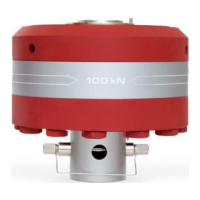

 To Next Page