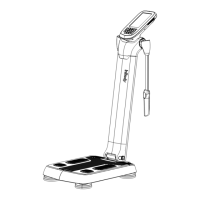
1. Intended Use
The InBody is mainly used for healthy and acute or chronically
ill populations in hospitals, medical practices and inpatient
care facilities in accordance with national regulations. It can be
used to assist in the assessment of nutritional status, obesity
and muscle balance. Body composition analy is important in
preventive medicine since it provides the basis of appropriate
physical activity and dietary habits for improving personal daily
routine. It can be also usefully applied to follow-up studies of
patients treated for various diseases.
2. Medical Indication
•
Medical check-up: Four body composition analysis can
be identified for the risk of developing diseases that are
highly related to body composition imbalance like obesity,
malnutrition, fluid imbalance and osteoporosis for medical
check-up.
•
Obesity: Percent body fat has been recommended rather
than BMI to ensure proper weight loss and improvements in
long-term health, tracking changes for adjusting/developing
customized treatments.
•
Pediatric obesity: Body composition measurement is
an essential part of health assessments for children and
adolescents. Percent Body fat is better than the indicators
of weight status to identify children and adolescents with
unfavorable lipid profile.
•
Sarcopenia: InBody provides a quick, easy to perform test
that provides a calculation for skeletal muscle index(SMI), the
sum of the lean mass in the arms and legs, normalized for
height. This marker is useful in identifying low muscle in the
appendages, which increases frailty risk.
•
Diabetes & endocrinology: Diabetes is often associated
with excess fat, however having insufficient muscle mass is
just as detrimental and increases diabetes risk. And visceral
fat plays a key role in the development of metabolic and
cardiovascular disease.
•
Edema: Over-hydration as assessed by ECW ratio(ECW/TBW)
is prevalent in dialysis patients, and is associated with loss
of residual renal function, inflammation, malnutrition and
hypertension. Monitoring the ECW ratio (ECW/TBW) provides
an assessment of fluid accumulation in the extracellular
space resulting from compromised cardiovascular function.
The patients who did not have ascites originally but have
higher ECW/TBW had a higher incidence of ascites in liver
cirrhosis.
•
Segmental fluid retention: InBody objectively measures
each region of the body separately and provides segmental
ECW ratio measures for each of the arms, legs and the
trunk, and these measures can be used to detect fluid
imbalances resulting from the development or progression
of lymphedema.
•
Nutrition: The four primary components of the nutritional
assessment are summarized by the mnemonic ABCD, with
A standing for anthropometric measurements including
stature, body weight, BMI and body composition. Body
composition analysis can reveal changes in body composition
(body water, protein, minerals and body fat) that cannot be
known by changes in body weight.
•
Fitness: Strength training greatly stimulates muscle growth,
exercise burn the calories strengthens cardiorespiratory
capacity, which reduce the risk of diabetes, heart disease, and
other health concerns and result in the various changes in
body composition. Body composition analysis shows skeletal
muscle mass and lean in each segment of body, it helps
focusing on building more muscle or correct imbalance.
•
The InBody device is not a diagnostic device. To
make an accurate diagnosis, the physician needs to
commission thorough examinations and take their
results into account in addition to the results of the
InBody.
•
The InBody device is not used in home healthcare
environment.


 To Next Page