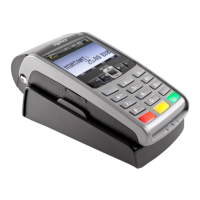
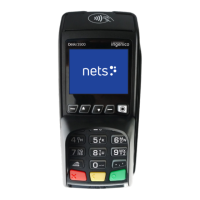
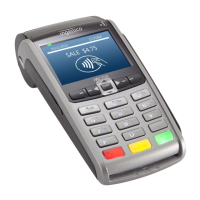
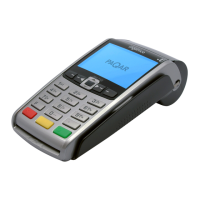
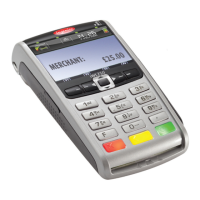
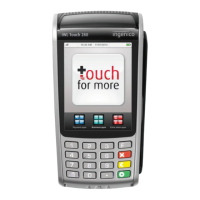
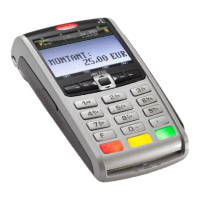
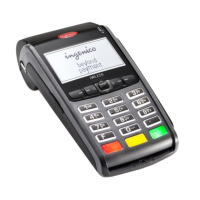
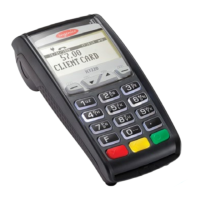
Connecting your Terminal
Using a telephone line/PSTN
You will need to connect to an Analogue telephone line. (This is the standard BT line)
The service will not work over ISDN or digital telephone services.
It is recommended that you connect to the master telephone socket for the premises.
Active telephone services such as BT 1571 can disrupt the signal from the terminal
and interfere with transaction processing. It is recommended that these services be
disabled.
Incoming calls may also disrupt transaction processing. It is recommended that the
telephone line is not used for calls.
If you use a dial prex (such as the number 9 before making calls) then you will need to
make note of this as it will be required later on.
Using an Ethernet connection (such as Broadband)
You will need to connect the ethernet cable to a working port on a broadband router.
You must have a working broadband service.
Your router must be congured to use DHCP, this is standard for most routers. If you
are unsure, contact your Internet Service Provider (ISP)
It is possible for the terminal signal to be blocked by rewalls on the router. It is
important that the terminal be able to connect through ports 10,000 and 20,000 in the
router. This is standard for most routers. If you are unsure, contact your ISP.
Using GPRS (mobile)
GPRS works in the same way as a mobile phone, it uses mobile phone networks to
transfer transaction data securely.
GPRS is a roaming service, meaning that it will automatically detect and connect to the
strongest mobile signal in the area.
Transactions can be disrupted if the terminal is switching networks during a
transaction. If this happens, a void receipt will be printed and the transaction can be
re-processed.
GPRS terminals will not work in areas without signal from major mobile phone
networks.
It is important to charge your terminal regularly.
Connecting your Terminal 9


 To Next Page
 Loading...