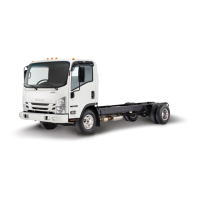
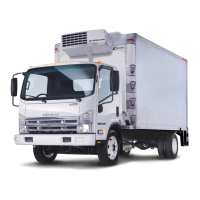
This manual describes the operation, maintenance, and specifications of an Isuzu truck.
Owner and Vehicle Identification
The manual includes a form for recording owner and vehicle identification details, which is crucial for warranty repairs. This form requires the owner's name, business name, address, city/town, state, postcode, business phone, private phone, mobile, email, registration number, Isuzu truck model, vehicle identification number (VIN), IAL tag number, engine number, transmission serial number, differential serial number, selling dealer's signature and stamp, and date.
Change of Ownership or Address
A dedicated form is provided for notifying changes in ownership or address. This is important for warranty purposes and for the manufacturer to contact the owner if needed, even after the original warranty expires. The form requests similar personal and vehicle identification details as the initial registration form, along with a "Sold To Date" field. Completed forms should be mailed to Isuzu Australia Limited, GPO Box 107, Port Melbourne, Victoria 3207.
Symbols Used in This Manual
The manual uses various symbols to highlight important information:
- DANGER: Indicates instructions that, if not followed, could result in death or serious injury.
- WARNING: Indicates instructions that, if not followed, could result in fire, death, or serious injury.
- CAUTION: Indicates instructions that, if not followed, could result in injuries or an accident.
- ADVICE: Provides information to prevent malfunction or damage to the vehicle.
- NOTE: Identifies essential or useful information for operating the vehicle.
- V: Denotes market-/type-specific equipment that may not be present in all vehicles.
- ISZ: Indicates equipment with Isuzu production transmission or axle.
- MER: Indicates equipment with Arvin Meritor production axle.
- ZF: Indicates equipment with ZF production transmission.
- FLR: Indicates equipment with EATON Fuller production transmission.
Abbreviations
Common abbreviations used in the manual are defined:
- A/C: Air Conditioner
- ABS: Antilock Brake System
- ACEA: Association des Constructeurs Européens d'Automobiles
- ADR: The Australian Design Rules
- API: American Petroleum Institute
- ASTM: American Society for Testing and Materials
- BS: British Standard
- CAN: Controller Area Network
- DIN: Deutsche Industrie Normen
- EGR: Exhaust Gas Recirculation
- ELR: Emergency Locking Retractor
- ETRTO: The European Tyre and Rim Technical Organisation
- FMVSS: Federal Motor Vehicle Safety Standards
- JASO: Japanese Automobile Standards Organization
- JATMA: The Japan Automobile Tyre Manufacturers Association
- JIS: Japanese Industrial Standards
- MIL: A United States Defense Standard (Military Standard)
- M/T: Manual Transmission
- PCV: Positive Crankcase Ventilation
- PM: Particulate Matter
- PTO: Power Take-Off
- r/min: revolutions per minute
- SAE: Society of Automotive Engineers
- SRS: Supplemental Restraint System
- TRA: The Tire and Rim Association
- VIN: Vehicle Identification Number
How to Use This Manual and How to Find a Specific Topic
The manual provides guidance on how to navigate its content:
- Chapter/Section Titles: Used as keys to search for specific topics, referencing the general table of contents, chapter index, and table of contents on the first page of each chapter.
- Pictorial Indexes: Pages 0-6 to 0-9 illustrate various switches and devices, allowing users to find information even if they don't know the name of the component.
- Device Names as Keys: The index at the end of the manual (pages 10-1 to 10-4) helps locate information using the name of a switch or device.
- Warning/Indicator Light Index: Pages 0-10 to 0-13 help identify the meaning of illuminated warning or indicator lights and direct to relevant information.
- Troubleshooting: Pages 8-2 to 8-48 provide guidance on what to do in case of vehicle problems or emergencies.
Chapters in This Manual
The manual is organized into several chapters:
- 0: How to Use This Manual and How to Find a Specific Topic
- 1: Vehicle Information: Covers VIN and engine numbers.
- 2: Important Information: Includes warranty, customer assistance, driving precautions, carrying children, stopping and parking, preventing breakdowns, turbocharger, PM catalytic converter, speed limit device, SRS airbag system, and vehicle data collection.
- 3: Doors, Windows and Seats: Details key operation, keyless entry, door and window operation, fuel tank filler cap, seat adjustments, mirrors, and seat belts.
- 4: Controls and Instruments: Describes starter switch, idling control, light controls, hazard warning flasher, exhaust brake, differential lock, windshield wipers/washers, horn, remote control mirror, mirror heater, pedals, parking brake, gearshift lever, manual transmissions (ZF9S1310 and RTO-11908LL), cruise control, ABS, coupler, PTO, and dump/mixer control levers.
- 5: Comfort and Convenience: Covers air outlets, heater/manual air conditioner, automatic air conditioner, interior lights, sun visor, cigarette lighter, ashtray, storage pockets, card holder, glove compartment, center console box, coin holder, overhead shelf, cup holder, coat hook, hook, radio/CD player tips, antenna, AM/FM radio, and CD player.
- 6: Tips on Safe and Smooth Operation: Provides advice on driving safely, driving on various roads, driving with a trailer, parking, driving in hot/cold regions, and using tire chains.
- 7: Service and Maintenance: Includes precautions, discarded parts/oils, genuine oils/grease, tools, front lid, cab tilting, daily checks, engine-related maintenance (oil, filter, coolant, fan belt, radiator, fuel filter, air flow sensor), chassis-related maintenance (brakes, wheel hub bearing, axle shaft, wheels/tyres, spare tyre, air tanks, air pressure, air suspension, air dryer, fuel tank, clutch pedal/fluid, transmission oil, propeller shaft, differential gear oil, power steering fluid/filter, cab tilt pump oil, steering wheel, greasing), other maintenance (jack, wiper blades, washer fluid, exterior lights, battery, air conditioning filters/refrigerant/compressor belt), interior/exterior maintenance, and maintenance data.
- 8: In Case of Emergency: Offers troubleshooting guides for various breakdowns, flat tires, engine issues, brake failures, battery problems, air spring issues, fuel depletion, warning lights, overheating, meter abnormalities, parking brake release issues, bulb failures, fuse/relay replacement, driving on bad roads, and towing.
- 9: Main Data: Contains detailed specifications for the engine, transmission, front axle, rear axle, steering, service brakes, parking brake, fuel, electrical system, and pneumatic characteristics.
Warning/Caution Labels in Your Vehicle
The manual emphasizes the importance of warning/caution labels for safe vehicle use. It advises reading them before use, contacting an Isuzu Dealer for replacements if illegible, and noting that labels may vary by model and additional installations. Examples of label locations are provided for the driver's door, dashboard, center console (FXR/FXM/FXZ/FYH and GXR models), driver's sunvisor, inside the front lid, left rear side of the cab, air cleaner, brake chamber, pre-fuel filter, spare tire carrier, rear of the vehicle, and rear suspension.
- Vehicle Identification Number (VIN) and Engine Numbers: Essential for vehicle registration, official inspections, repairs, and ordering parts. The VIN is stamped on the right-side front part of the frame and indicated on the ID plate at the lower part of the dashboard, which also includes other information like option codes. The engine number is stamped on the back of the engine foot mounting on the left-hand side of the crank case.
- Option Codes: Three-digit alphanumeric codes identifying the model or type of engine, transmission, or other components. Examples include engine (6UZ1-TCC), transmission (MJT7U, ZF9S1310, RTO-11908LL), rear axle and final drive (RT210, RT40-145P, RS23-161), and other components (speed limit devices).
- Warranty Statement: Details the new vehicle warranty for Australian vehicles, repairs covered, warranty period (3 years/250,000 km or 4,000 engine hours for FXD, FXR, FXL, FXY, FXZ, GXD models), and how to make a claim. Engine hours are explained as an approximate calculation based on distance traveled and operation type, with extended idling causing excessive wear not covered by warranty.
- Warranty Exclusions: Damage from accidents, fire, theft, industrial fallout, environmental factors, and misuse (racing, overloading, neglect) are not covered. Maintenance items (brake/clutch adjustments, filters, fluids, hoses, fuses, etc.) are also excluded. Tires are covered by the tire manufacturer, and batteries are warranted for 12 months against manufacturing defects.
- Customer Assistance: Provides a toll-free line (1800 035 640) for assistance and requests details like owner's name, address, contact numbers, vehicle model, VIN, date of purchase, and current odometer reading.
- 24 Hour Roadside Assistance: Isuzu Assist covers roadside assistance for 36 months from the date of first registration, including running out of diesel, flat tires, flat battery, lockout/lost keys, glass repair, and hydraulic hose repair. The service line is 1800 947 898. Towing is provided up to $1500 for FXD, FXR, FXL, FXY, FXZ, GXD models.
- Driving Precautions: Emphasizes safe driving practices, including checking around the vehicle before starting, being careful about exhaust emissions (carbon monoxide poisoning), warming up the engine properly, not running the engine in a garage, releasing the parking brake, appropriate gearshifts, not stopping the engine while driving, driving down long slopes, driving in bad weather (rain, icy/snowy roads), and brake effectiveness on flooded roads.
- Load Cargo Correctly: Warns against overloading and improper cargo distribution, which can lead to accidents and vehicle damage. Provides illustrations for correct cargo placement.
- Do Not Secure Cargo Too Tightly: Advises securing cargo with ropes and tarpaulins to prevent falling, but not too tightly to avoid damaging the cargo bed.
- Make Sure There is No Flammable Material between the Cab and Cargo Bed: Warns against flammable materials near the engine's heat protector to prevent fire.
- Unloading Cargo: Provides cautions for loading/unloading at the roadside, including using warning signs and selecting appropriate locations.
- Do Not Carry Fuel and Spray Cans in the Cab: Warns against carrying flammable items in the cab due to fire/explosion risk.
- Using Curtains: Advises retaining curtains to avoid obstructing view.
- Keep the Floor around the Driver's Seat Clean and Tidy: Warns against items rolling on the floor and interfering with pedals.
- Correct Driving Posture: Emphasizes adjusting the seat, steering wheel, and mirrors for a correct driving posture and wearing seat belts.
- Carrying Children: Advises using appropriate child restraints and never leaving a child alone in the vehicle.
- Do not Allow a Child to Put His/Her Head or Hands out of the Window: Warns against children putting body parts out of windows.
- An Adult must Open, Close, and Lock the Door for a Child: Emphasizes adult supervision for child safety with doors and power windows.
- If a Warning Light or Indicator Light Comes On or Flashes: Advises immediate action and contacting an Isuzu Dealer if critical warning lights appear.
- Preventing Breakdowns: Advises against resting foot on clutch pedal, checking engine oil regularly, not climbing on the engine, not leaving the steering wheel fully turned for long periods, and regular inspections.
- When to Visit an Isuzu Dealer: Advises consulting a dealer for vehicle modifications, engine adjustments, electric welding, replacing tires/wheels, and installing electrical equipment.
- Turbocharger: Provides general precautions for turbocharged engines, emphasizing avoiding overloading and frame extension, and proper engine starting and stopping procedures to prolong turbocharger life.
- Particulate Matter (PM) Catalytic Converter: Explains its function, the emission of white smoke during idling, and cautions regarding fuel quality (ultra-low sulfur diesel fuel recommended) and hot exhaust components.
- Speed Limit Device: Restricts vehicle speed to prevent accidents. Specifications vary by market (e.g., Australia: 100 km/h, Singapore: 60 km/h).
- Seat Belt with Pretensioner and Supplemental Restraint System (SRS) Airbag System: Describes how these systems work in a frontal collision, emphasizing correct seat belt usage and precautions for driver safety. It also details conditions under which the SRS airbag may or may not activate.
- Vehicle Data Collection: Explains that the vehicle's computer systems monitor performance and store information for diagnostics, servicing, and future improvements.
Controls and Instruments
- Speedometer: Indicates vehicle speed in km/h. Displays odometer, TRIP A, and TRIP B.
- Tachometer: Indicates engine speed in r/min. Green zone for economic driving, red zone for dangerous speeds.
- Air Pressure Gauge: Indicates compressed air pressure in the air tank. Red zone indicates low pressure, triggering a warning light and buzzer.
- Engine Coolant Temperature Gauge: Indicates engine coolant temperature. Red zone indicates overheating, triggering a warning message and buzzer.
- Fuel Gauge: Indicates remaining fuel. "F" for full, "E" for empty.
- Hour Meter: Indicates engine running hours.
- Multi-Information Display (MID): Displays warning/indicator lights, operation-related information, and maintenance data.
- Warning and Indicator Lights: Detailed descriptions for various lights including low fuel, water separator, over speed, engine overheat, engine coolant level, PTO, cab tilt, meter failure, CAN system error, transmission oil, fuel filter, power steering fluid, tire rotation, check engine, engine oil pressure, ABS, SRS airbag, alternator, parking brake, trailer ABS, differential lock, inter-differential lock, and low range.
- Warning Buzzer: Sounds under specific conditions like low air pressure, engine overheat, low coolant level, engine overrunning, backing up, power cab tilt in operation, and low accessory air pressure.
- Starter Switch: Positions include LOCK (key removal, steering lock), ACC (audio/accessories), ON (engine running, preheating), and START (engine start).
- Idling Control Switch: Adjusts idling speed for warming up the engine or improving heater/defroster efficiency.
- Combination Light Control Switch: Controls headlights, clearance lights, taillights, license plate lights, and illumination.
- Headlight Leveling Switch: Adjusts headlight aim.
- Fog Light Switch: Turns fog lights on/off.
- Hazard Warning Flasher Switch: Signals emergency.
- Exhaust Brake Switch: Applies/disengages exhaust brake.
- Differential Lock Switch: Engages/disengages differential lock for slippery surfaces.
- Inter-Differential Lock Switch: Engages/disengages inter-differential lock for slippery surfaces.
- Windshield Wiper and Windshield Washer Switch: Controls wiper speed (intermittent, low, high) and washer fluid spray.
- Horn Button: Sounds the horn.
- Remote Control Mirror Switch: Adjusts mirror angle.
- Mirror Heater Switch: Defrosts mirrors.
- Pedals: Brake, accelerator, and clutch pedals.
- Parking Brake Lever: Engages/releases parking brake.
- Gearshift Lever: For manual transmissions (MJT7, ZF9S1310, RTO-11908LL).
- Cruise Control: Maintains constant speed on highways.
- Antilock Brake System (ABS): Prevents wheel lock-up during braking.
- Coupler: For semi-trailer tractors, used for coupling and decoupling trailers.
- Power Take-Off (PTO): Provides engine power to special equipment.
- Dump Control Lever: Raises/lowers dump body.
- Mixer Control Lever: Controls concrete mixer.
Service and Maintenance
- Precautions: Emphasizes safety procedures like turning off the engine, applying parking brake, chocking wheels, using jack stands, disconnecting battery, and being aware of hot components.
- Discarded Parts, Oils and Other Liquids: Advises proper disposal according to regulations.
- Isuzu Genuine Oils and Grease: Recommends using genuine products for optimal performance.
- Tools: Lists standard tools provided with the vehicle.
- Front Lid: Instructions for opening and closing.
- Tilting the Cab: Procedures for electrically driven hydraulic cab tilt, including preparations and emergency manual operation.
- Daily Checks: Comprehensive list of daily pre-operational checks for various components (engine, brakes, steering, lights, fluids, tires).
- Engine Oil: Checking level, adding oil, and changing oil with specified tightening torques for drain plugs.
- Engine Oil Filter: Replacement instructions.
- Engine Oil Separator Element: Replacement instructions.
- Air Cleaner: Cleaning and inspecting the element.
- Fan Belt: Inspection, adjustment, and replacement.
- Engine Coolant: Checking level, preparing, adding, and changing coolant.
- Radiator and Intercooler: Cleaning instructions.
- Fuel Filter: Draining water and changing the element.
- Air Flow Sensor: Inspection and potential replacement.
- Parking Brake: Checking braking performance.
- Wheel Brake: Checking lining wear and drum-to-lining gap, adjusting lining gap for MER models.
- Wheel Hub Bearing: Grease change (dealer service recommended).
- Axle Shaft Bolts or Nuts: Checking for looseness and tightening torques.
- Wheels and Tyres: Importance of proper maintenance, air pressure checks, cracks/damage inspection, tread depth, and tire rotation patterns for different models.
- Spare Tyre: Installation and removal.
- Directional Tyres: Special installation considerations.
- Aluminum Wheels: Specific care and maintenance instructions.
- Air Tanks: Draining water and desiccant replacement.
- Air Pressure: Checking gauges and pressure rise rate.
- Air Suspension: Leakage and spring inspection, vehicle posture inspection.
- Air Dryer: Desiccant replacement.
- Fuel Tank: Removing sediment and water.
- Clutch Pedal: Checking free play and adjustment.
- Clutch Fluid: Checking level, adding fluid, changing fluid, and bleeding the hydraulic system.
- Clutch Booster Exhaust Cover: Removal and cleaning.
- Transmission Oil: Changing oil for MJT7, ZF9S1310, and RTO-11908LL models, including fill and drain procedures and tightening torques.
- Propeller Shaft Center Bearing: Greasing.
- Differential Gear Oil: Changing oil for R130/RT210 and RS23/RT40 type axles, including fill and drain procedures and oil quantities.
- Front Wheel Hub Bearing Oil: Changing oil for MER models.
- Rear Wheel Hub Bearing Oil: Checking level and changing oil.
- Power Steering Fluid: Checking level, changing fluid, and bleeding the system.
- Power Steering Fluid Filter: Cleaning.
- Cab Tilt Pump Oil: Changing oil.
- Steering Wheel: Daily check for play and looseness.
- Greasing Chassis Components: Detailed greasing points for various components.
- Windshield Wiper Blades: Removal and installation.
- Windshield Washer Fluid: Daily check and refilling.
- Exterior Lights: Checking operation and bulb replacement for headlights, clearance lights, turn signals, taillights, stop lights, and license plate lights.
- Handling the Battery: Safety precautions, checking fluid level, specific gravity, cleaning terminals, charging, and installation.
- Air Conditioning Filters: Removing and installing inside-air and outside-air filters.
- Refrigerant: Topping up refrigerant (dealer service recommended).
- Air Conditioning Compressor Belt: Inspection and adjustment.
- Exterior Maintenance: Washing procedures and vehicle storage considerations.
- Interior Maintenance: Cleaning procedures for fabric upholstery, vinyl upholstery, and seat belts.
Main Data
- Engine (6UZ1): Water-cooled, overhead camshaft, direct injection, inter-cooled turbocharger. Compression ratio: 16.2. Displacement: 9,839 cc (600.4 cu. in). Firing order: 1-5-3-6-2-4. Fuel injection timing: 0°. Valve clearance: Intake 0.2 mm (0.008 in), Exhaust 0.5 mm (0.020 in). Idling speed: 450-500 r/min. Fan belt tension: New belt 6-7 mm (0.24-0.28 in) / 178-198 Hz, Reused 8-9 mm (0.31-0.35 in) / 151-163 Hz (for 50/60A alternator); New belt 6-7 mm (0.24-0.28 in) / 174-194 Hz, Reused 8-9 mm (0.31-0.35 in) / 148-160 Hz (for 90A alternator). Oil filter type: Paper. Engine oil capacity: 19.0-24.0 liters (5.02-6.34 US gal./4.18-5.28 Imp gal.) for oil only, 25.5-30.5 liters (6.74-8.06 US gal./5.61-6.71 Imp gal.) for oil and filter. Engine coolant capacity: 36.8 liters (9.72 US gal./8.10 Imp gal.).
- Transmission:
- MJT7U Model (7 Speeds): Overdrive gear for 7th, synchromesh for 2nd to 7th. Gear ratios: 1st 7.740, 2nd 5.697, 3rd 3.153, 4th 1.958, 5th 1.394, 6th 1.000, 7th 0.775, Rev. 7.166. Oil capacity: 18.2 liters (4.81 US gal./4.00 Imp gal.) without PTO, 19.2 liters (5.07 US gal./4.22 Imp gal.) with PTO.
- ZF9S1310 Model (9 Speeds): Overdrive gear for 8th, synchromesh for 1st to 8th. Gear ratios: Crawler 9.479, 1st 6.576, 2nd 4.678, 3rd 3.478, 4th 2.617, 5th 1.890, 6th 1.345, 7th 1.000, 8th 0.752, Rev. 8.967. Oil capacity: 8.0 liters (2.11 US gal./1.76 Imp gal.) without PTO, 8.5 liters (2.25 US gal./1.87 Imp gal.) with PTO.
- RTO-11908LL Model (10 Speeds): Gear ratios: Lo-Lo 14.558, Lo 9.420, 1st 6.239, 2nd 4.632, 3rd 3.404, 4th 2.531, 5th 1.832, 6th 1.360, 7th 1.000, 8th 0.743, Rev. Lo-Lo 15.220, Rev. Lo 9.848, Rev. Hi 2.892. Oil capacity: 13.2 liters (3.49 US gal./2.90 Imp gal.).
- Clutch: Pedal free play: 25-40 mm (0.98-1.57 in) for ZF9S1310/RTO-11908LL, 40-60 mm (1.57-2.36 in) for MJT7. Pedal stroke: 60 mm (2.36 in) or more.
- Front Axle: Wheel alignment (Toe-in): 0 ± 1 mm (0 ± 0.04 in). Camber: 0°30'. King pin: 7°30'. Front wheel hub bearing grease capacity: 0.345 kg (0.760 lb) for F066/F075. Front wheel hub bearing oil capacity: 0.40 liters (0.11 US gal./0.09 Imp gal.) for FG941 (MFS66).
- Rear Axle: Differential gear oil capacity: 14.0 liters (3.70 US gal./3.08 Imp gal.) for R130 type, 15.0 liters (3.96 US gal./3.30 Imp gal.) for RS23-161 type. Rear wheel hub bearing oil capacity: 0.5 x 2 liters (0.13 x 2 US gal./0.11 x 2 Imp gal.) for RS23-161G (MSH-165) + TR4670.
- Steering: Steering wheel free play: 10-60 mm (0.39-2.36 in). Power steering fluid capacity: 4.5 liters (1.19 US gal./0.99 Imp gal.) for FXR/FXZ/FXM/GXR models, 7.5 liters (1.98 US gal./1.65 Imp gal.) for FYH models.
- Service Brakes: Type: Full-air, dual brake system. Brake pedal free play: 10-18 mm (0.39-0.71 in).
- Parking Brake: Type: Spring actuator at rear wheels (FXR/FXM/FXZ/GXR models), Spring actuator at forward and rearward rear wheels (FYH models).
- Fuel: Fuel tank capacity: 400 liters (106 US gal./88 Imp gal.) for FXR/FXM/FXZ/GXR models, 200 liters (53 US gal./44 Imp gal.) for FYH models.
- Electrical System: Battery type: 65D23L, 80D26L, 115E41L. Starter: 24V / 5.5kW. Alternator: 24V / 50A, 24V / 60A, 24V / 90A.
- Pneumatic Characteristic Data: Compressor/unloader valve: Max. cut-out pressure = 8.3 bar, Min. cut-in pressure = 7.4 bar. Four-circuit protection valve: Service brake (Circuit 1 and 2) = 4.4 bar, Parking brake = 4.8 bar, Others = 4.8 bar. Trailer control valve: Corresponding delivery pressure for a control pressure of 1.5 bar = 1.5 bar.
- For the Republic of Singapore: Keyless entry system conforms to IDA standards.

 Need help?

 To Next Page
 General