NOVEMBER 2012 page 7www.jayline.co.nz
SOME OTHER uSEFul TIpS
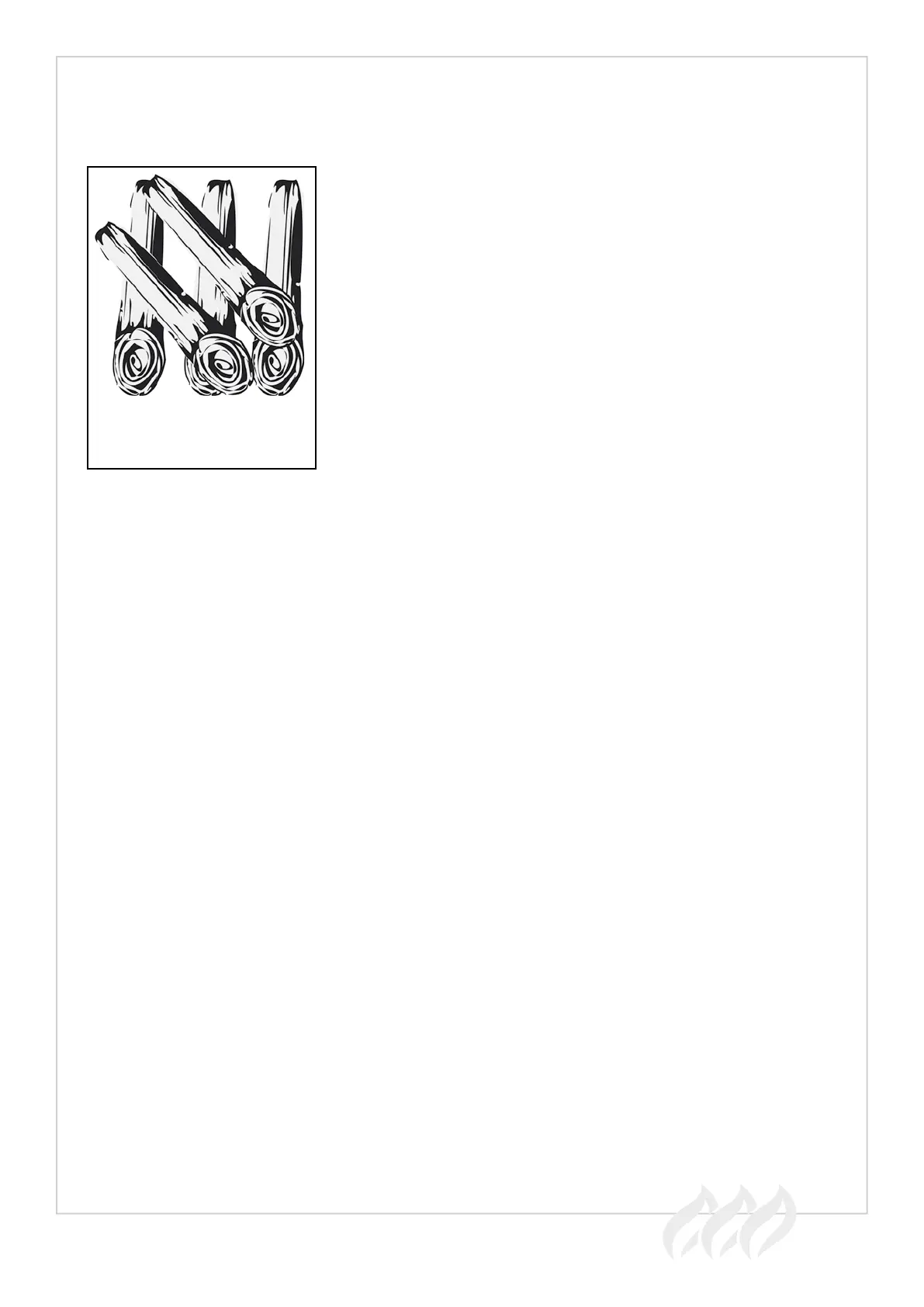
Fuel load geometry: Small pieces of rewood arranged loosely in
a crisscross pattern (loaded front to back) burn quickly because the
combustion air can reach all the pieces at once. Larger pieces placed
a little more compactly burn slower. Once your heater has reached
maximum temperature, it is more ecient to top up frequently with
about 25% of a full load rather than let the re die down and need to
completely rell it.
A STACKED FUEL LOAD
AS VIEWED FROM DOOR
Fire in cycles: Don’t expect perfectly steady heat output from your Jayline heater. Solid fuel heaters
burn in cycles. A cycle is the time between the ignition of a load from charcoal and the consumption of
the load back to a coal bed. Plan the ring cycles around your household routine. If someone is home
to operate the heater, build a small hot re. If you must be away from the house during the day, build a
long-burning re.
The small, hot re: A small, hot re is a small amount of wood burned quickly. Use it when you just want
to take the chill o the house. The small hot re technique eliminates the smouldering res that are
common when people don’t need their heater running hot all the time, like in spring and autumn. To
build a small hot re, rake the embers evenly in the rebox and place several small pieces of rewood on
it. The bottom layer should be placed to ensure that combustion air can ow over the embers and along
the length of the pieces of wood (loaded front to back). The next layer should be stacked as per the
loading geometry. Open the air inlet to produce a hot, bright re. After approximately 15–20 minutes
the air supply can be reduced slightly as the re progresses, but never enough to extinguish the ames.
When only charcoal remains, the air supply can be reduced further to prevent cooling the ember bed.
Reload with small pieces often (loaded front to back), as full loads will smother the ember bed.
The long-burning re: To achieve a long burning re, rake the embers evenly, as with the small hot re,
and use larger and more pieces of wood. Place the pieces in a similar pattern to the small hot re, using
more pieces and larger pieces (especially the top layer). Always make certain that there is a gap between
the pieces to ensure that the combustion air can reach all pieces. Open the air inlets fully for between
15 to 30 minutes depending on load size and fuel moisture content. When the re is burning ercely (at
least 15 minutes), reduce the air control in stages to the desired level. This allows you to turn down the
air control and still maintain a clean-burning re.
REMEMBER: NEVER LET THE FIRE SMOULDER.


 To Next Page
 Loading...