44
a) A small measuring spoon of reagent 1 (narrow end of enclosed double spoon), close lid and shake until
dissolved
b) 10 drops of reagent 2, shake, leave to stand for 10 minutes.
4. Place both test jars in the comparator block: the jar with the added reagent at the smooth end of the
comparator block, the container with untreated sample water (blank sample) at the notched end of the
comparator block.
5. Move the comparator block with the two test jars backwards and forwards on the colour chart, with the
notched side of the block facing the scale, until the colour of the sample treated with reagent matches the
colour under the blank sample as closely as possible.
6. Read the phosphate content in the notch of the comparator block. The graduation of colours from green to
red provided additionally on the colour chart enables you to read the values easily.
In the event that the colour of your test sample is darker than the colours of the chart, dilute the sample with
distilled or phosphate-free water and measure again.
Depending on the dilution, the result must be multiplied as follows to determine the actual phosphate content:
5 ml sample + 5ml dist. water: result x 2
2 ml sample + 8 ml dist. water: result x 5
1 ml sample + 9 ml dist. water: result x 10
The instructions are repeated in a series of simple diagrams on the reverse of the colour chart.
Our tip for the environmentally-friendly user:
All reagents for JBL test sets are available from your retailer as reasonably-priced rell packs!
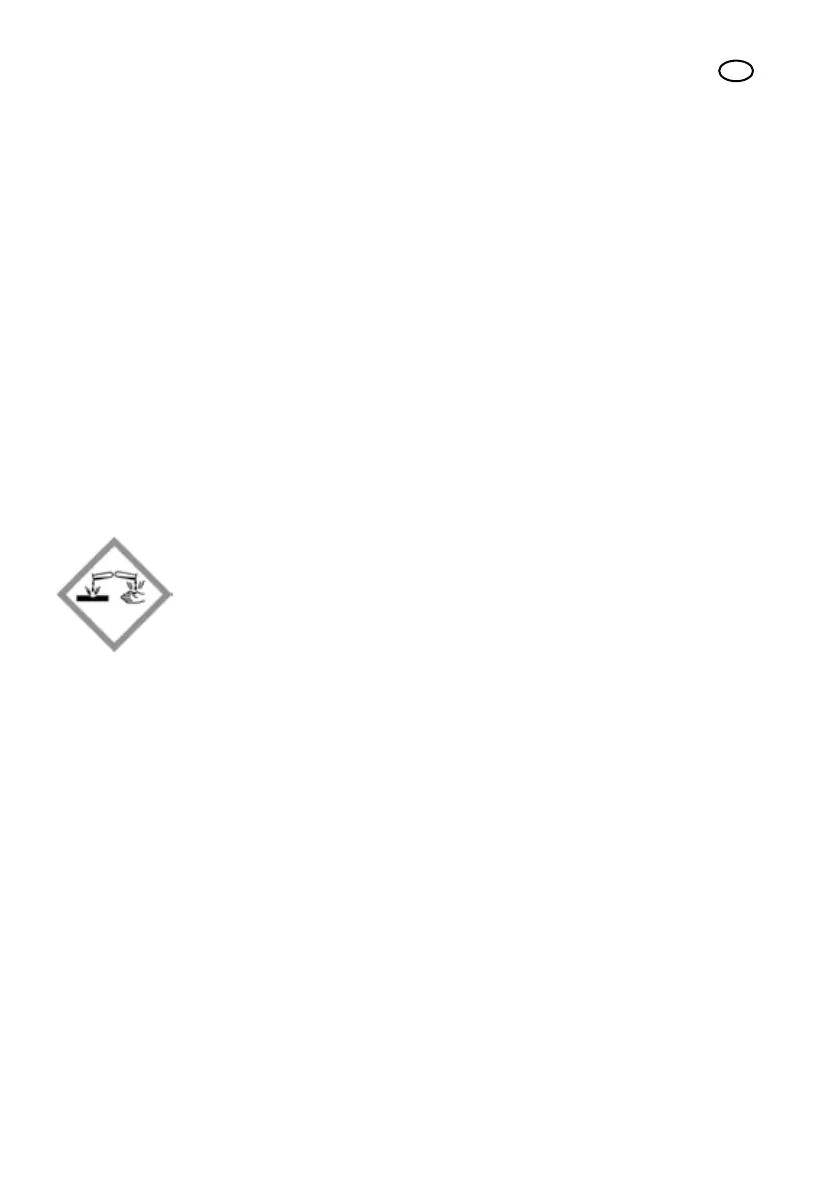
Warning and safety notices concerning reagent 2:
Danger
H314 Causes severe skin burns and eye damage.
P101 If medical advice is needed, have product container or label at hand. P102 Keep
out of reach of children. P280 Wear protective gloves/protective clothing/eye protection/
face protection. P305+P351+P338 IF IN EYES: Rinse cautiously with water for several
minutes. Remove contact lenses, if present and easy to do. Continue rinsing. P310
Immediately call a POISON CENTER or doctor/physician.
Hazard-determining component of labelling: sulphuric acid.
Phosphate Test PO
4
Koi high range
for koi ponds
Special features:
The JBL phosphate test kit PO4 koi high range is for the accurate measurement and routine checking of
phosphate levels within a range of 0.25-10 mg/l (ppm) in unplanted koi ponds. Using the compensation method
specially developed by JBL, precise and reliable results can be obtained even in moderately discoloured water,
e.g. as a result of peat lters and disease treatment.
Why test?
Phosphate, an important plant nutrient, only occurs in very low concentrations in natural waters. The average
values are around 0.01 mg/l in unpolluted natural waters. Plants and algae have adapted to these meagre levels
and only require minimal amounts of phosphate.
In koi ponds, phosphate primarily enters the water as a result of the digestive processes of the sh or in the
form of food remains. If conditions are unfavourable (particularly in heavily populated koi ponds), the phosphate
levels may reach values that are sometimes 100 times higher, and more, than natural levels. This inevitably
leads to an explosion of undesirable algae. By regularly measuring the phosphate concentration using the
JBL phosphate test set PO4 koi high range, this threat can be recognised and prevented with the appropriate
measures. It is important to know that algae can store considerable quantities of phosphate, enabling them to
continue to grow even after the level of phosphate in the water has been reduced. Therefore the sooner the
danger of a rise in the phosphate content is identied, the better the chances of quickly averting an imminent
plague of algae.
In unplanted koi ponds levels should be kept below 0.5 mg/l. There is still no serious danger for the sh, even if
levels are much higher than 3 mg/l. Ideally, the phosphate level in a koi pond shouldn’t be measurable with this
GB


 To Next Page
 Loading...