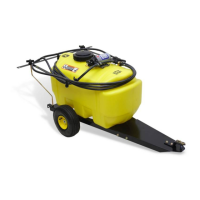
LP19478 LP19479 (10/5/2018) 6 15 & 25 GALLON TOW BEHIND SPRAYER
Safety
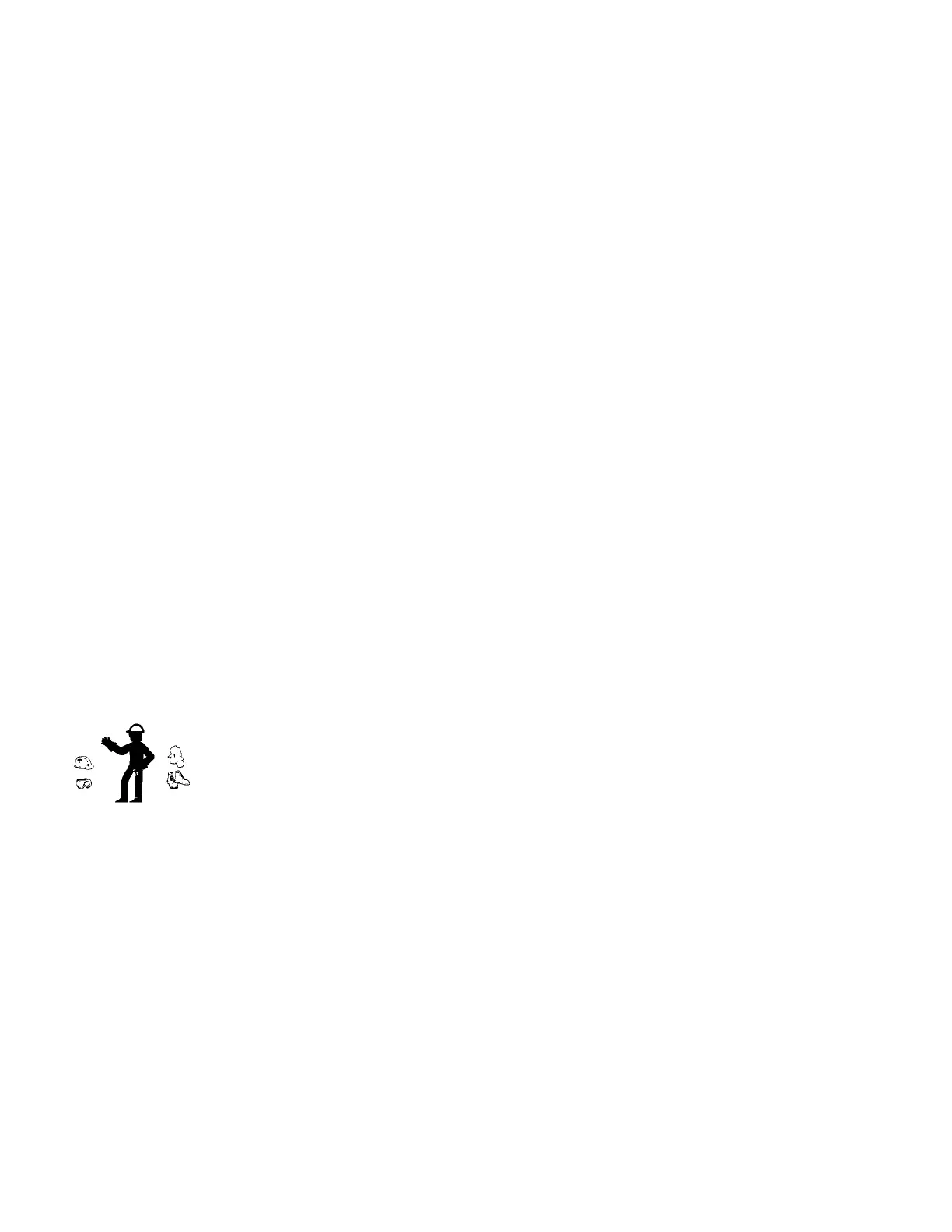
Wear Appropriate Clothing
Always wear eye protection when
operating the machine.
Wear close fitting clothing and safety
equipment appropriate for the job.
• While operating this machine, always wear substantial
footwear and long trousers. Do not operate the
equipment when barefoot or wearing open sandals.
• Wear a suitable protective device such as earplugs.
Loud noise can cause impairment or loss of hearing.
Avoid High Pressure Fluids
• Hydraulic hoses and lines can fail due to physical
damage, kinks, age, and exposure. Check hoses and
lines regularly. Replace damaged hoses and lines.
• Hydraulic uid connections can loosen due to physical
damage and vibration. Check connections regularly.
Tighten loose connections.
• Escaping uid under pressure can penetrate the skin
causing serious injury. Avoid the hazard by relieving
pressure before disconnecting hydraulic or other lines.
• Disconnect battery or remove spark plug wire (for
gasoline engines) before making any repairs.
• Before servicing machine or attachment, carefully
release pressure from any components with stored
energy, such as hydraulic components and springs.
• Release hydraulic pressure by lowering attachment or
cutting units to the ground or to a mechanical stop and
move hydraulic control levers.
• Securely support any machine or attachment elements
that must be raised for service work. Use jack stands
or lock service latches to support components when
needed.
• Never run engine unless park brake is locked.
• Keep all parts in good condition and properly installed.
Fix damage immediately. Replace worn or broken
parts. Replace all worn or damaged safety and
instruction decals.
• Check all hardware at frequent intervals to be sure the
equipment is in safe working condition.
• Do not modify machine or safety devices.
Unauthorized modications to the machine or
attachment may impair its function and safety
• Death or serious injury will result from contact with
overhead power lines. Keep clear of electrically
charged power lines. Check the area before operating
the spreader.
Tighten all connections before applying pressure.
• Search for leaks with a piece of cardboard. Protect
hands and body from high pressure uids.
• If an accident occurs, see a doctor immediately. Any
uid injected into the skin must be surgically removed
within a few hours or gangrene may result. Doctors
unfamiliar with this type of injury should reference a
knowledgeable medical source. Such information is
available from Deere & Company Medical Department
in Moline, Illinois, U.S.A. Information may be obtained
in the United States and Canada only by calling 1-800-
822-8262.
Dispose of Chemicals Properly
• Proper disposal of excess spray material is very
important. If you have excess tank solution, it is best
to dilute it with water and apply it to the area you
previously treated.
• Never dump solution into a drain or near a lake or
stream. Chemicals containers should be triple-rinsed,
with the rinse water added to the sprayer tank. Do not
burn empty chemical containers. Dispose of containers
at recycling centers.
Handling Waste Product and Chemicals
• Waste products, such as, used oil, fuel, coolant, brake
uid, and batteries,can harm the environment and
people:
• Do not use beverage containers for waste uids -
someone may drink from them.
• See your local Recycling Center or authorized dealer
to learn how to recycle or get rid of waste products.
• A Material Safety Data Sheet (MSDS) provides specic
details on chemical products: physical and health
hazards, safety procedures, and emergency response
techniques. The seller of the chemical products used
with your machine is responsible for providing the
MSDS for that\ product.



 To Next Page
 Loading...