Road Surfaces
WARNING
1. The power wheelchair is designed optimally for
level surfaces; such as concrete, asphalt and indoor
ground flooring.
2. Do not use the wheelchair on sand, loose soil
or uneven surfaces to prevent the wheels, bearings, motor
and other parts from being damaged or loosened.
Driving in Traffic Environment
WARNING
Beware of the local traffic regulations on public roads.
You must be aware of that it is dangerous to drive on public roads or parking lots.
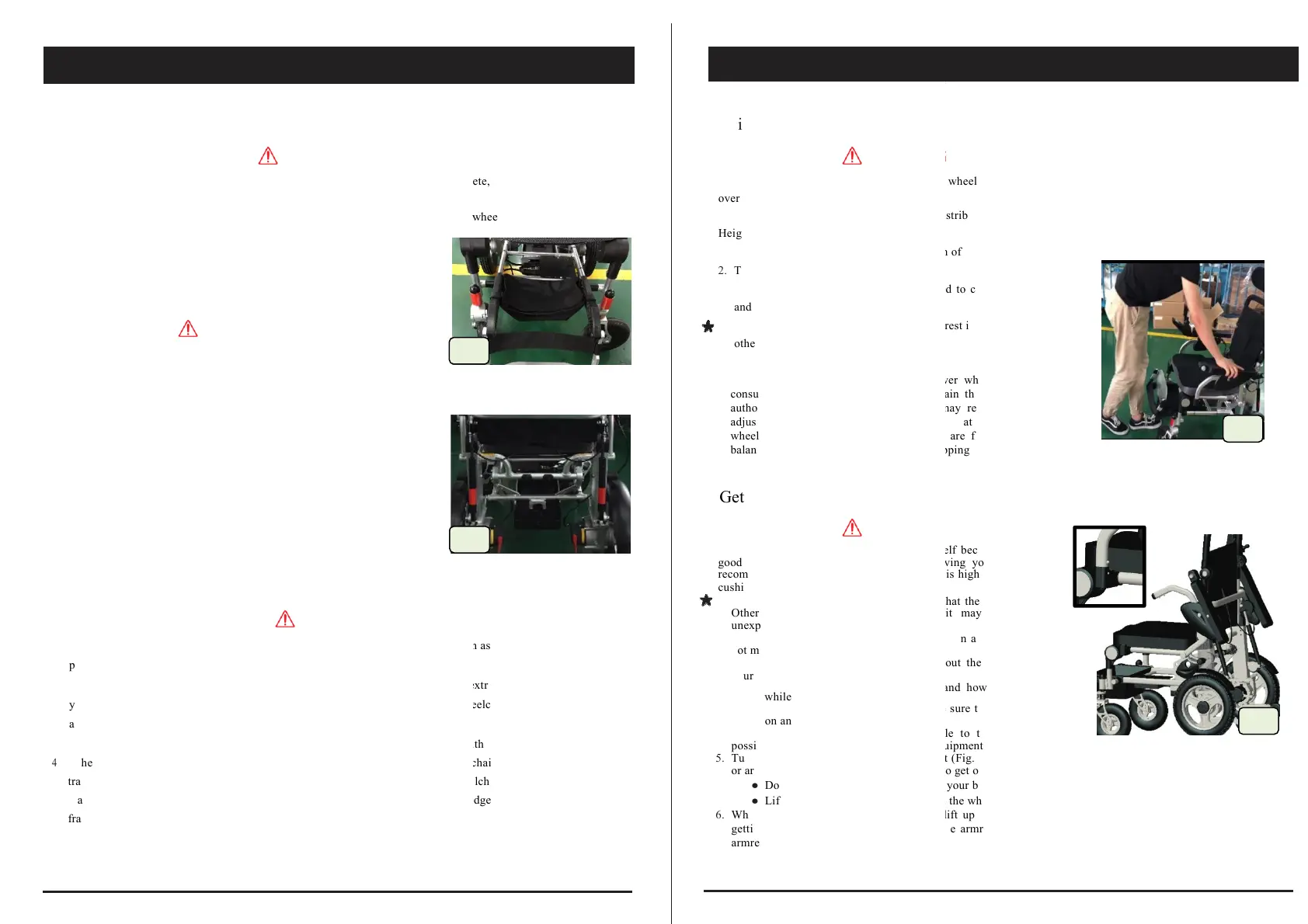
1. For increased visibility at night, the wheelchair has light reflecting
markers (Fig. B1, B2). It is highly recommended that you wear light
reflective clothing while driving at night.
2. When operating the wheelchair in traffic amongst motor vehicles,
make sure the driver notices you. Before you continue to operate
the wheelchair, make eye contact with the driver and make
gestures to show your intention until you are sure it is safe to drive.
Vehicle Transport
WARNING
1.
Please try not to sit in the wheelchair when taking any forms of transportation such as buses, metros trains,
planes or ships.
2.
If you take such forms of transportation while remaining in the wheelchair, it is extremely important that
you fasten your seat belt
, and find a place where the wheels or body of the wheelchair can be fixed to
avoid injury in the event of a sudden stop or a traffic accident.
3.
Do not place the wheelchair in the front row of the vehicle so as not to interfere with the driving.
4.
When you get on and off the transportation vehicles, try not to sit in the wheelchair. If you need to be
transferred without getting off the wheelchair, never allow anyone to lift the
rear backrest. The wheelchair must be lifte
d by firmly gripping the front and rear edges of the seat cushion
frame.
10
Safety
Driving Balance
level surfaces; such as concrete, asphalt and indoor
or uneven surfaces to prevent the wheels, bearings, motor
Please try not to sit in the wheelchair when taking any forms of transportation such as buses, metros trains,
If you take such forms of transportation while remaining in the wheelchair, it is extremely important that
, and find a place where the wheels or body of the wheelchair can be fixed to
Do not place the wheelchair in the front row of the vehicle so as not to interfere with the driving.
When you get on and off the transportation vehicles, try not to sit in the wheelchair. If you need to be
chair by the armrest or
d by firmly gripping the front and rear edges of the seat cushion
Keep
the balance and stability of the power wheelchair
over while driving.
The following factors may affect the weight distribution of the wheelchair:
Height and angle of the wheelchair
1.
Seating position, or weight loading position of the user’s body.
2. The gradient of the ramp or slope.
3.
Whether backpacks or other items are used to change the total weight
and weight distribution of the wheelchair
4. Do not drive the
wheelchair when the backrest is adjusted to a low
otherwise, there is a risk of rollover
●
If
you need to modify or adjust the power wheelchair
consult your supplier in advance
and obtain the manufacturer's
authorization.
The modified wheelchair may require additional
adjustments to correct the balance
wheelchair with special caution until you are familiar with the
balance and the means to avoid falling or tipping over.
Getting On/Off
W
It is dangerous to move your body
good balance and flexibility.
Whenever moving your body, it is
recommended to have a supporting point that is higher than the seat
cushion to avoid falling.
1.
Before getting on the
wheelchair, ensure that the power is off.
Otherwise, if you touch the joystick, it may lead to an
unexpected movement.
2. Make sure that the motor is in “Lock”
not move on its own.
3.
Consult your health care professionals about
your body in and out of the wheelchair.
●
Learn how to position your body and how to support yourself
while moving.
●
Ask others to help you until you are sure that you can safely get
on and off the wheelchair.
4.
Move the wheelchair as close as possible to the target position. If
possible, please use
the related auxiliary equipment.
5. Turn up
the footrest with your hands or feet (Fig. B3), then hold the seat cushion
or armrests to give yourself a suitable way to get
●
Do not stand on the footrest to move your body
●
Lift
the footrest up before you get on the
6. When you get off the wheelchair
, please lift up the footrest first
getting on/off to avoid falling), or p
armrest and get off from the side (Fig. B4).
Safety
the balance and stability of the power wheelchair
to avoid tipping
The following factors may affect the weight distribution of the wheelchair:
Seating position, or weight loading position of the user’s body.
Whether backpacks or other items are used to change the total weight
wheelchair when the backrest is adjusted to a low
level,
you need to modify or adjust the power wheelchair
, please
and obtain the manufacturer's
The modified wheelchair may require additional
wheelchair with special caution until you are familiar with the
balance and the means to avoid falling or tipping over.
t requires
Whenever moving your body, it is
recommended to have a supporting point that is higher than the seat
wheelchair, ensure that the power is off.
Otherwise, if you touch the joystick, it may lead to an
and the wheelchair will
Consult your health care professionals about
the safest way to move
Learn how to position your body and how to support yourself
Ask others to help you until you are sure that you can safely get
Move the wheelchair as close as possible to the target position. If
the related auxiliary equipment.
the footrest with your hands or feet (Fig. B3), then hold the seat cushion
or armrests to give yourself a suitable way to get
on the wheelchair.
Do not stand on the footrest to move your body
to avoid the injury.
the footrest up before you get on the
wheelchair to avoid obstruction.
, please lift up the footrest first
. (Do not stand on the footrest while
ing button on either side, then pull up the
11
B4


 To Next Page
 Loading...