
 Need help?
Do you have a question about the KegLand Cannular KL15769 and is the answer not in the manual?
Aluminium cans are tested for beer only; other beverages are not verified.
Confirm chuck, check roller contact, unplug for adjustments to prevent injury.
Strictly avoid contact between electrical components and any liquids.
Inspect unit for damage, set up for can sizes, and ensure chuck compatibility.
Machine requires a 24V, minimum 20amp power supply with specific plug types.
Recommends securing the machine to a bench for stability during extended use.
Ensure rollers do not contact the chuck during rotation; adjust if necessary.
Test seam quality by filling a can, running the machine, and inspecting for leaks.
Directs users to detailed calibration steps on pages 14-27 if seam leaks occur.
Labels major components like the table, chuck, and various switches for user reference.
Explains the function and operation of the main power switch and momentary operation button.
Explains B64 chuck compatibility and need for specific chucks for non-KegLand cans.
Details steps to unscrew grub nuts and pull the chuck from the drive shaft.
Covers pushing the new chuck onto the shaft and securely tightening grub screws.
Adjust coupling nut to raise/lower turntable for firm can contact against the chuck.
Guidance on identifying and performing small adjustments for concentric can placement.
Steps for significant table repositioning involving machine tipping and bolt adjustment.
Explains how to rotate detented rollers for different can types like aluminium vs. tin.
Adjusting Y-axis (0.05mm) and X-axis (0.6mm +/- 0.1mm) for the first operation roller.
Adjusting Y-axis (1.35mm +/- 0.05mm) and X-axis (0.3mm +/- 0.1mm) for the second roller.
Performing precise movements of the roller towards or away from the chuck.
Check hex bolts are tight and rollers spin freely without excessive resistance.
Manually run the chuck to ensure rollers do not contact it at any point.
Explains the roles of the 1st and 2nd operations in creating a hermetic seam.
Steps to prepare, cut, and examine overlap on test cans for seal integrity.
Measuring seam thickness using calipers on a test can (Can B), average 1.2-1.3mm.
Measuring seam length using calipers on Can B, ideally 2.3-2.4mm.
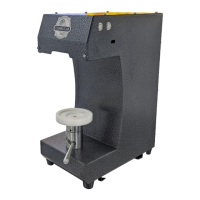
The Cannular Compact Semi-Auto Canning Machine (model KL15769) is a portable, lightweight device designed for seaming cans. Its primary function is to create a double seam on cans, ensuring a hermetic seal for beverages. While primarily calibrated for KegLand 500mL B64 aluminum cans, it can be adjusted to accommodate a range of can heights and diameters, including tin cans, by changing the chuck and adjusting the rollers.
The Cannular operates through a two-stage seaming process. The first operation roller forms the initial seam by taking the can end curl and can flange, initiating the forming process. This first seam is critical for controlling the effectiveness of the second operation. The second operation roller then compresses the previously formed first operation double seam, completing the seal. The machine is semi-automatic, meaning that once a can is placed and the table is raised, a single press of the operation button will cause the motor to run through its full seaming cycle and return to its starting position.
 General
| Brand | KegLand |
|---|---|
| Model | Cannular KL15769 |
| Category | Food Saver |
| Language | English |

 To Next Page