The Kelso Pressure Relief Valve (PRV) is a safety device designed for the transportation industry, specifically for use on railroad tank cars. Its primary function is to prevent over-pressurization of the tank car, thereby ensuring the safe and reliable transport of hazardous materials. The manual details the installation, operation, inspection, and maintenance procedures for various models of these valves.
Function Description:
The Kelso PRV acts as a safety mechanism by automatically venting excess pressure from a tank car when it reaches a predetermined set pressure. This prevents the tank car from rupturing due to internal pressure buildup, which could be caused by factors such as external heating or chemical reactions within the cargo. The valve is designed to open, release pressure, and then re-seat, maintaining the integrity of the tank car and preventing further pressure accumulation. Different models are available to accommodate various pressure requirements and flow rates, ensuring suitability for a wide range of hazardous materials.
Important Technical Specifications:
The manual provides detailed technical specifications for several PRV models, including:
- JS75/S: Set Pressure (psig) of 75, Flow Rate (SCFM-Air) of 20,571 @ 85 PSI, Orifice Diameter (in.) of 3.875, Flow Area (Sq. Inches) of 11.79, Weight (lbs.) of 59, and Flange Thickness (in.) of .94.
- JS75H/HS: Set Pressure (psig) of 75, Flow Rate (SCFM-Air) of 25,635 @ 85 PSI, Orifice Diameter (in.) of 4.375, Flow Area (Sq. Inches) of 15.0, Weight (lbs.) of 68, and Flange Thickness (in.) of .94.
- JS165H/HS: Set Pressure (psig) of 165, Flow Rate (SCFM-Air) of 28,213 @ 182 PSI, Orifice Diameter (in.) of 3.25, Flow Area (Sq. Inches) of 8.3, Weight (lbs.) of 70, and Flange Thickness (in.) of 1.13.
- JS75XH/XHS: Set Pressure (psig) of 75, Flow Rate (SCFM-Air) of 30,061 @ 85 PSI, Orifice Diameter (in.) of 4.835, Flow Area (Sq. Inches) of 18.31, Weight (lbs.) of 71, and Flange Thickness (in.) of 1.13.
For the JS75L/LS, JS165L/LS, JS75XL/XLS, JS75LT/LTS, and JS165LT/LTS models, the specifications are:
- JS75L/LS: Set Pressure (psig) of 75, Flow Rate (SCFM-Air) of 1681 @ 85 PSI, Orifice Diameter (in.) of 1.13, Flow Area (Sq. Inches) of 1, Weight (lbs.) of 21, and Flange Thickness (in.) of .75.
- JS165L/LS: Set Pressure (psig) of 165, Flow Rate (SCFM-Air) of 3445 @ 182 PSI, Orifice Diameter (in.) of 1.13, Flow Area (Sq. Inches) of 1, Weight (lbs.) of 22, and Flange Thickness (in.) of .75.
- JS75XL/XLS: Set Pressure (psig) of 165, Flow Rate (SCFM-Air) of 4089 @ 85 PSI, Orifice Diameter (in.) of 2.05, Flow Area (Sq. Inches) of 3.32, Weight (lbs.) of 18, and Flange Thickness (in.) of .75.
- JS75LT/LTS: Set Pressure (psig) of 75, Flow Rate (SCFM-Air) of 1681 @ 85 PSI, Orifice Diameter (in.) of 1.13, Flow Area (Sq. Inches) of 1, Weight (lbs.) of 18, and Flange Thickness (in.) of .88.
- JS165LT/LTS: Set Pressure (psig) of 165, Flow Rate (SCFM-Air) of 3445 @ 182 PSI, Orifice Diameter (in.) of 1.13, Flow Area (Sq. Inches) of 1, Weight (lbs.) of 18, and Flange Thickness (in.) of .88.
The manual also specifies drum bolt sizes and nominal drum I.D. with maximum allowable tolerances for 1/4 - 20, 5/16 - 18, and 3/8 - 16 bolts.
Usage Features:
The Kelso PRV is designed for straightforward installation and operation. Key usage features include:
- Pre-installation Inspection: Before installation, the valve and its components must be visually inspected for damage, corrosion, or foreign material. The sealing disc surface must be clean and free from scratches or gouges.
- Valve Installation: The installation process involves placing a new gasket on the tank mounting flange, referring to the company's internal documentation for gasket type and material. The valve is then secured to the flange using bolts tightened to a prescribed torque of 100-to-180 foot-pounds.
- Leak Inspection: After installation, a leak test is performed to ensure the flange mating surfaces are pressure tight.
- Valve Operation: Kelso valves are spring-loaded and activated by over-pressurization. They are designed to open, release pressure, and then re-seat.
- Dwell Times: Different valve types have specific dwell times for pressure testing. JS75/S, JS75H/HS, JS165H/HS, and JS75XH/XHS models have a 12-hour dwell time, while JS75L/LS, JS165L/LS, JS75XL/XLS, JS75LT/LTS, and JS165LT/LTS models have a 24-hour dwell time.
- Pressure Testing and Adjustment: The manual outlines detailed procedures for testing the valve's set pressure (STD) and vapor tight pressure (VTP) according to AAR regulations. This involves applying pressure to the valve and observing the first bubble of liquid or the start of discharge. Adjustments to the set pressure are made by turning the adjustment screw clockwise to increase pressure or counter-clockwise to decrease it.
Maintenance Features:
Regular inspection and maintenance are crucial for the continued safe and reliable operation of Kelso PRVs. The manual provides comprehensive guidelines for these tasks:
- Periodic Maintenance: Kelso valves require periodic maintenance or repairs. The manual emphasizes that only qualified personnel should perform these tasks.
- Disassembly: Detailed steps are provided for disassembling the valve, including removing the dome cover, spring block assembly, and the sealing disc. Specific instructions are given for different valve models (JS75/S, JS75H/HS, JS165H/HS, and JS75XH/XHS Seal Disc Disassembly; and JS75L/LS, JS165L/LS, JS75XL/XLS, JS75LT/LTS, and JS165LT/LTS Seal Disc Disassembly).
- Inspection: Components are inspected for wear, damage, and buildup of debris. The elastomeric seal is checked for tears, folds, abrasions, cracking, and buildup of debris. The seal disc face is examined for scratches, nicks, and gouges. Thrust washers and needle bearings are inspected for any damage. The spring block assembly is checked for cracks, corrosion, and proper seating. The spring drum is examined for signs of distress, and its dimensions are measured to ensure it meets specifications.
- Cleaning: All components are cleaned using a wire brush, clean towel, cloth, low-pressure water, glass bead, sand, or soda blasting. A chemical/surfactant application is recommended to ensure the integrity of the metal composition.
- Assembly: The manual provides step-by-step instructions for reassembling the valve, including inserting the seal into the sealing disc groove, installing the retainer bolt, placing the sealing disc assembly onto the valve body, and assembling the bearing and spring components. Proper lubrication with high-quality moly-lube or equivalent is specified for the adjustment screw threads.
- Valve Completion: After assembly, the adjustment screw jam nut is tightened to a specified torque (65 ft.-lbs. for JS75/S, JS75H/HS, JS165H/HS, and JS75XH/XHS; 100 in.-lbs. for JS75L/LS, JS165L/LS, JS75XL/XLS, JS75LT/LTS, and JS165LT/LTS). The wire seal must be stamped with the company's facility QA Code as established by AAR.
- Testing Valves in Storage: Valves that are set and sealed by Kelso Technologies, have been left in their original packaging, are undamaged, and are no more than six (6) months old, may be installed without being retested. If the valve has exceeded six months since the last documented test day, it must be returned for retesting and recalibration.
- Valve Repair: Repair work on pressure relief devices involves machining, grinding, welding or other alterations and modifications can only be performed by the valve manufacturer or the car owner or user, with the valve manufacturer's permission. The flat gasket face on the valve body mounting surface or the gasket tongue, may be machined to remove nicks and burrs.
- Warranty: The manual states that the warranty terms and conditions are available.
- New Seals: AAR requires that new seals be installed when a valve is rebuilt.
The manual emphasizes the importance of using only Kelso Technologies (USA) Inc. All Kelso Valves are Patent Protected. Detailed designs are subject to change without notice.

 Need help?
 General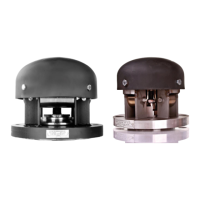

 To Next Page