Leveling the Freezer
To ensureproperdoor sealand optimumperformance,
levelfreezer usingthe levelingleg locatedon itsbottom
frontcorner.
• Onceyourfreezer is inthe desiredlocation,usea
carpenter'slevel and adjustthe levelingleg as
necessaryto make surethe cabinetislevel side-to-
side.
• Adjustthe leg to achievea 1/4 inch slopefrom
front-to-back(1/2 bubbleon a carpenter's level) to
provideeasy doorclosureand properdoor seal.
• Iftherear corners needto be raised,use shims
made ofwoodor otherhardmaterial.Cardboard
and othersoftmaterialswillnotwork.
Electrical Requirements
• 120 Volts,60 Hz (60 cyclesAC), 15 amps
• DO NOT use an extensioncord.
• Select an electricwall outletthat cannot beturned
offbya switchor pullchain.Be surethatthe elec-
tricoutletyou selectdoes notneed a ceilingdrop
cord.
• Use a fuse or circuit-breaker protected circuit that
will not become overloaded when the freezer is
installed.
Electrical Grounding
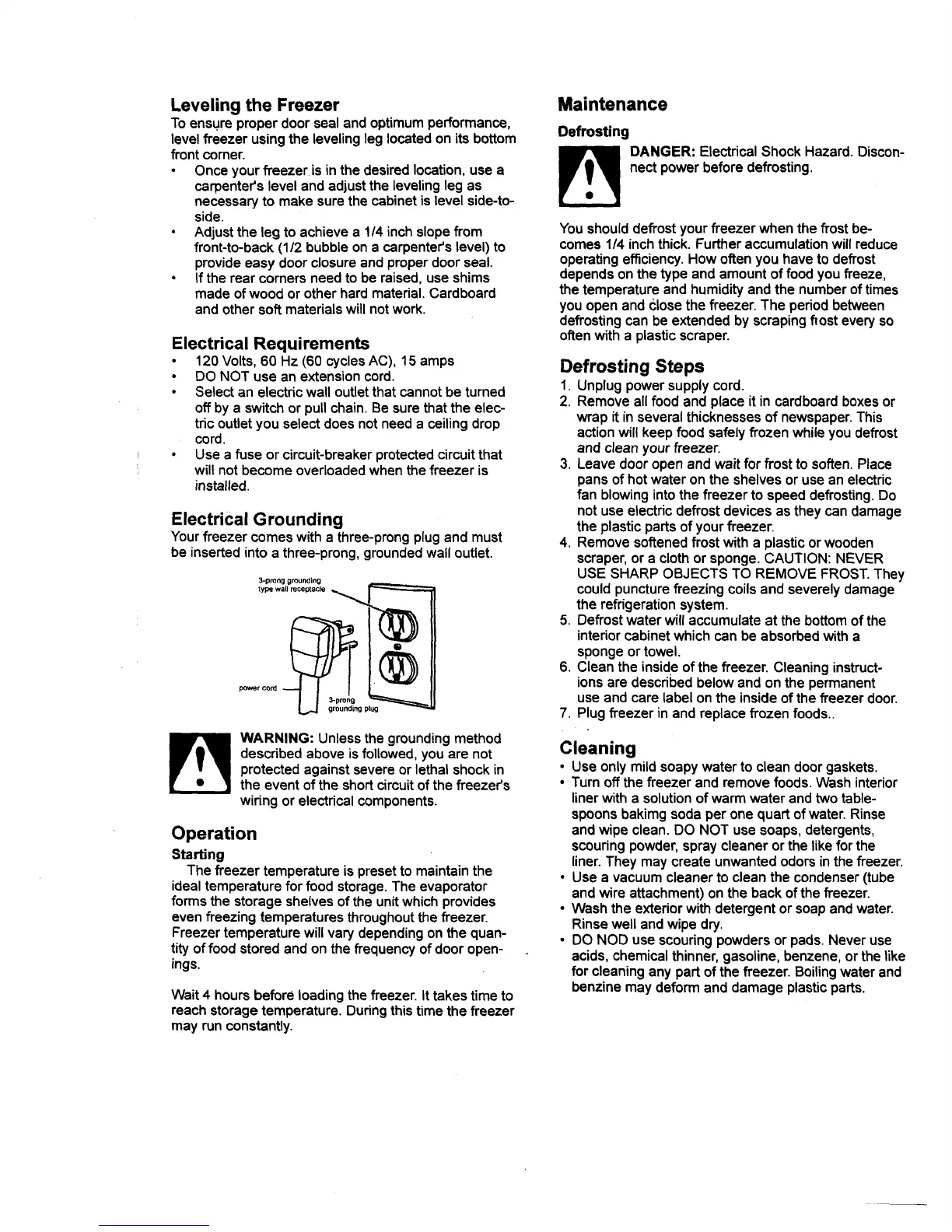
Yourfreezer comeswith a three-prongplugand must
be insertedintoa three-prong,groundedwall outlet.
3-prong grounding
LJ
WARNING: Unless the groundingmethod
described above isfollowed,you are not
protectedagainstsevereor lethalshockin
the event ofthe shortcircuitofthe freezer's
wiringor electricalcomponents.
Operation
Starting
The freezer temperature ispreset to maintainthe
idealtemperatureforfoodstorage.The evaporator
formsthe storageshelvesofthe unitwhichprovides
evenfreezingtemperaturesthroughoutthe freezer.
Freezer temperaturewillvarydependingonthe quan-
tityoffood storedand on the frequencyof dooropen-
ings.
Wait 4 hours before loading the freezer, It takes time to
reach storage temperature. During this time the freezer
may run constantly.
Maintenance
Defrosting
_ DANGER: Electrical Shock Hazard. Discon-
nect power before defrosting.
You shoulddefrost yourfreezer when the frost be-
comes1/4 inch thick.Furtheraccumulationwillreduce
operatingefficiency.How oftenyou haveto defrost
dependson thetype and amountoffood youfreeze,
thetemperatureand humidityandthe numberoftimes
youopen and closethe freezer. The periodbetween
defrostingcan be extended by scrapingfrostevery so
oftenwitha plasticscraper.
Defrosting Steps
1. Unplugpowersupplycord.
2. Remove allfoodand place itin cardboardboxesor
wrap it inseveral thicknessesof newspaper.This
actionwillkeep food safely frozenwhile you defrost
and clean your freezer.
3. Leavedoor open and waitfor frost to soften.Place
pansof hotwater on the shelvesor usean electric
fan blowingintothefreezer to speed defrosting.Do
notuse electricdefrostdevicesas they candamage
the plasticpartsofyour freezer.
4. Removesoftenedfrost witha plasticorwooden
scraper,or a clothor sponge. CAUTION: NEVER
USE SHARP OBJECTS TO REMOVE FROST. They
couldpuncturefreezingcoilsand severelydamage
the refrigerationsystem.
5. Defrostwaterwill accumulateat the bottomofthe
interiorcabinetwhichcan be absorbedwitha
spongeortowel,
6. Clean the insideofthe freezer. Cleaninginstruct-
ionsare describedbelowand on the permanent
useand care label on the insideofthe freezer door.
7. Plugfreezer in and replacefrozen foods..
Cleaning
• Use onlymildsoapywater to clean doorgaskets.
• Turnoffthefreezer and removefoods.Wash interior
linerwitha solutionof warm water and two table-
spoonsbakimg soda per one quart ofwater. Rinse
and wipe clean.DO NOT use soaps,detergents,
scouringpowder,spraycleaner orthe likefor the
liner.They may create unwanted odorsin thefreezer.
• Use a vacuumcleanerto clean thecondenser(tube
and wire attachment)on theback ofthe freezer.
• Wash the exteriorwithdetergent or soapand water.
Rinsewell and wipe dry.
• DO NOD use scoudngpowdersor pads. Never use
acids,chemicalthinner,gasoline,benzene, or thelike
for cleaningany part of the freezer. Boilingwaterand
benzinemay deform and damage plasticparts.



 To Next Page
 Loading...