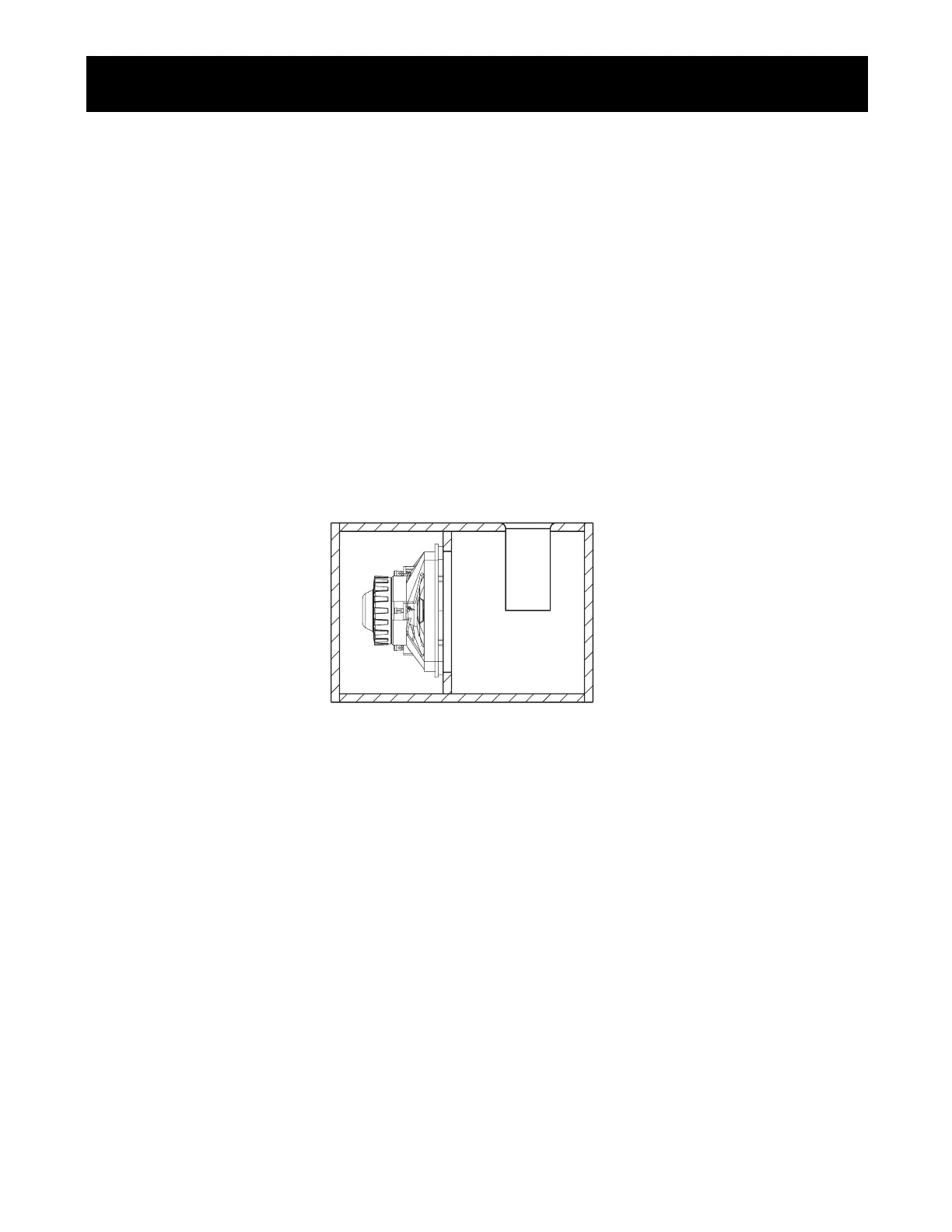
A single reflex bandpass enclosure (sometimes called “fourth- or fifth order”) is a specialized cabinet
design which uses a combination of sealed and vented box volumes to produce a shaped speaker
response.
Some people believe that the bandpass enclosure is the ideal enclosure for all occasions. There are some
situations where it will outperform other possible box designs, and some situations where it will not. If pos-
sible, compare the bandpass enclosures performance to other design possibilities to determine the best
choice. Use of a speaker design program such as Leap is highly recommended.
Bandpass boxes are a critically tuned design and internal pressures can be very high. Small air leaks can
seriously reduce performance, and panel flex can be much more of a problem than usual - particularly with
enclosures using built-in acoustical gain.
Since all speaker output comes from the vent, air speed within the vent can be very high. This can pro-
duce some turbulence and noise (particularly with high gain enclosures), which can be reduced or eliminat-
ed by rounding the ends of the vent with a quarter-round router bit or a round file. The inside end of the
vent must be at least one diameter away from any inside cabinet walls, or flow restriction will occur.
Pros
1. Acoustical gain can be built in. This means that one speaker can be as loud as four or more speakers
(using the same power input) at a limited part of the frequency spectrum. Acoustical gain and low frequen-
cy extension are inversely related; a high gain box will not go as low as a low gain box. Experiment with
gain and cut-off values to find the best compromise.
2. Specific low frequency cut-offs can be designed, including lower cut-offs than would normally be possi-
ble with simple sealed or vented boxes.
3. A reduction in cone excursion can be included in a design, which can reduce distortion and improve
power handling.
Cons
1. Box construction is considerably more complex.
2. Enclosures that add acoustical gain, can be “boomy”. The higher the gain, the less crisp and detailed the
bass is likely to be.
3. Boxes designed for extended low frequency performance will have less SPL output than either vented or
sealed enclosures.
4. Generally requires 50 to 100% more total enclosure volume than vented or sealed types.
5. Usually has less power handling than a simple sealed box. Designing bandpass enclosures for increased
power handling can result in very poor deep bass response.
Characteristics of Bandpass Enclosures
Kicker Technical Tips
Page 4
Vol. 1


 To Next Page
 Loading...