6
INSTALLATION INSTRUCTIONS
Unpack the Refrigerator
WARNING
Excessive Weight Hazard
Use two or more people to move and install or uninstall
appliance.
Failure to do so can result in back or other injury.
Remove the Packaging
� Remove tape and glue residue from surfaces before turning on
the refrigerator. Rub a small amount of liquid dish soap over
the adhesive with your fingers. Wipe with warm water and dry.
� Do not use sharp instruments, rubbing alcohol, flammable
fluids, or abrasive cleaners to remove tape or glue. These
products can damage the surface of your refrigerator. For
more information, see “Refrigerator Safety.”
� Dispose of/recycle all packaging materials.
When Moving Your Refrigerator:
Your refrigerator is heavy. When moving the refrigerator for
cleaning or service, be sure to cover the floor with cardboard or
hardboard to avoid floor damage. Always pull the refrigerator
straight out when moving it. Do not wiggle or “walk” the
refrigerator when trying to move it, as floor damage could occur.
Clean Before Using
After you remove all of the packaging materials, clean the inside
of your refrigerator before using it. See the cleaning instructions in
the “Maintenance and Care” section of your Owner’s Manual.
Important information to know about glass shelves and
covers:
Do not clean glass shelves or covers with warm water when they
are cold. Shelves and covers may break if exposed to sudden
temperature changes or impact, such as bumping. Tempered
glass is designed to shatter into many small, pebble-size pieces.
This is normal. Glass shelves and covers are heavy. Use both
hands when removing them to avoid dropping.
Electrical Requirements
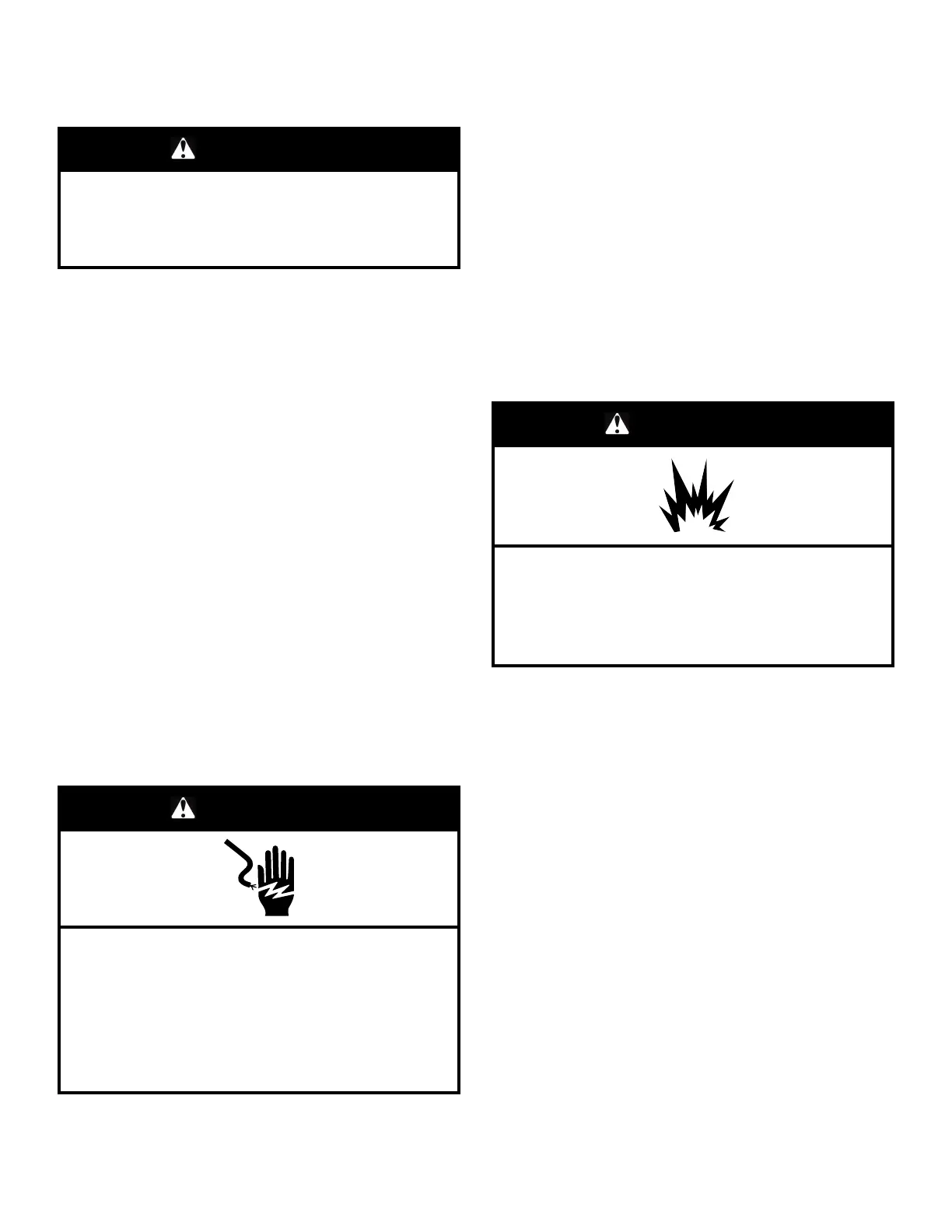
WARNING
Electrical Shock Hazard
Plug into a grounded 3 prong outlet.
Do not remove ground prong.
Do not use an adapter.
Do not use an extension cord.
Failure to follow these instructions can result in death,
fire, or electrical shock.
Before you move your refrigerator into its final location, it is
important to make sure you have the proper electrical connection.
If the supply cord is damaged, it must be replaced by the
manufacturer or its service agent or a similarly qualified person.
Do not use a cord that shows cracks or abrasion damage along its
length or at either the plug or connector end.
Recommended Grounding Method
A 115 V, 60 Hz, AC-only 15 A or 20 A fused, grounded electrical
supply is required. It is recommended that a separate circuit
serving only your refrigerator and approved accessories be
provided. Use an outlet that cannot be turned off by a switch. Do
not use an extension cord.
NOTE: Before performing any type of installation, cleaning, or
removing a light bulb, turn the refrigerator to OFF. Depending on
your model, turn the refrigerator control to the word OFF, or press
the refrigerator down arrow touch pad until a dash (–) appears in
refrigerator displays as shown. Disconnect the refrigerator from
the electrical source. When you are finished, reconnect the
refrigerator to the electrical source and reset the temperature
controls to the desired setting. See “Quick Start Guide.”
Location Requirements
WARNING
Explosion Hazard
Keep flammable materials and vapors, such as gasoline,
away from appliance.
Use nonflammable cleaner.
Failure to do so can result in death, explosion, or fire.
IMPORTANT: This refrigerator is designed for indoor, household
use only.
This appliance is intended to be used in a household and similar
applications such as:
� Staff kitchen areas in shops, offices and other working
environments.
� Farm houses and by clients in hotels, motels and other
residential type environments.
� Bed and breakfast type environments.
� Catering and similar non-retail applications.
To ensure proper ventilation for your refrigerator, allow for 1/2"
(1.25 cm) of space on each side and at the top. Allow for
1" (2.54 cm) of space behind the refrigerator. If your refrigerator
has an ice maker, allow extra space at the back for the water line
connections. When installing your refrigerator next to a fixed wall,
leave 2
1
/
2
" (6.3 cm) minimum on the hinge side (some models
require more) to allow for the door to swing open.


 To Next Page
 Loading...