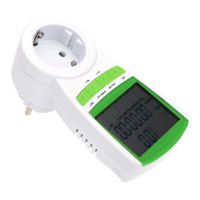
Carbon Monoxide Meter
Instruction
Manual
Version:
8805-EN-OO
I.
Introduction
Pure carbon monoxide (CO)
is
colorless,
odorless,
and
non-irritant
gas:
molecular
weight:
28.01;
density:
1.
250g/l;freezing
point:
-207°C
;
boiling
point:
-190°C.
Its
solubility
in
water
is
quite
Iow,
but it
dissolves instantly
in
ammonia
water.
Air
mixed
explosion
limit
is
between
12.
5% and
74%.
After entering human
body,
carbon
monoxide
will
combine with hemoglobin
in
blood,
making
the
hemoglobin
not
able
to
combine
with
oxygen, which
causes oxygen deficit
to
organism organization, leading
to
death
from
suffocation.
Therefore,
carbon monoxide
is
toxic,
and is
colorless,
odorless,
and
tasteless,
which
is
easy
to be
ignoredand
thus causing poisoning.
Gas
perniciousness: carbon monoxide
can
härm
human
health,
and
serious carbon monoxide
would
cause death.
Therefore, people
should
pay
attention
to
safe
gas
using,
and
people working
in
factory should
pay
attention
to
carbon monoxide concentration.
Carbon monoxide detector
can
detect carbon monoxide
concentration, observing concentration
value
all the
time.
It
hasquite
clear
large
LCD
screen
and
voice
and
light
alarm
indication,
making
sure
that
it can
detect
dangerous
gas
and
inform operators
of
precautions under adverse
Situation.
It is
widely used
in
petroleum, chemistry,
coal
mine,
metallurgy, papermaking,
fire-fighting,
municipal
administration, telecommunication, food, textile
and
other
industries.
Carbon
monoxide detector functions:
»•Large-screen
digital
and
character display, instant value
and
maximum value display.
»-Safety
indication: regulär light flashing
and
voice indication.
When carbon monoxide concentration increases, buzzing
voice
frequency would also
be
increased.
»-Excellent
audible
alarm.
»•Low
maintenance cost.
»•Support
carbon monoxide detection.
»•Solid
shell
and
robust
electriccharacters.
••Carbon
monoxide concentration
of 0-1
OOOppm
can be
displayed
on the
large
LCD
screen.
»•Bright
back-light
lightening;
it can
clearly indicate carbon
monoxide detector under dark environment.
»•Automatically
shut
off if it is not
operated
for
10
minutes,
to
extend battery service
life.
»•Convenientto
replace battery.
»-Special
sensor
for
stable electronic chemistry carbon
monoxide.
»•Sensor
of
over
three-year
service
life
and
battery
of
100-
houralkaline service life (typical
value).
II.
Safety
mstruction
1.
Understand and know toxicity of carbon monoxide
0-1PPM
9 PPM
50
PPM
100
PPM
200 PPM
800
PPM
Normal
ASHRAE 62-1989 regulated Standard
living
area
Average
for
staying
for
eight
hours
in
OSHA closed space
OSHAexposure
limit
Light
headache, tired, sick
and
dizzy
Dizzy,
sick
and
hyperspasmia,
and die in two or
three hours
US
Department
of
Labor regulates
in
Article
24 of the
1917
OSHA
that: carbon monoxide concentration
in any
closed
space
should
be not
higher than 50PPM (0.005%).
If
carbon
monoxide concentration exceeds 100PPM (0.01%),
it
is
necessary
for
workers
to
transfer their sites.
Please
do not use
this
table
only
in
personal safety inspection.
2.
Carbon monoxide
and
tools
fault:
Typical
problems
of
highly-concentrated
carbon monoxide
that
may
be
generated
is
indicated
in the
following table
Tool
Gasstove
indoor
heater
Central furnace
Indoor
heater
Central
heater
Water heater
Wave
oven
Stove
Fireplace
Fuel
Petrol
Natural
gas
Liquefied
gas
Coal
Kerosene
Kerosene
Natural
gas
Liquefied
gas
Natural
gas
Liquefied
gas
Gas
Wood
Coal
Typical Problem
1
.
Damaged
heat
exchanger
2.
The air is not
sufficient
to
Support
normal
burning
of
fuel
3.
Pipe damage
or
blocking
4.
Fire stove imbalance
5.
House
is
improperly pressed
1
.
Damaged heat exchanger
2.
The air is not
sufficient
to
Support
normal
burning
of
fuel
3.
Fireplace
damage
1.
Adjustmenterror
2.
Wrongfuel
(not
K-1)
3.
Wrong
lamp
wick
or
lamp
wick height
4.
The air is not
sufficient
to
support normal
burning
of
fuel
5.
Abnormal System exhausting
1
.
The air is not
sufficient
to
support normal
burning
of
fuel
2.
Pipe damage
or
blocking
3.
Heating stove imbalance
4.
House
is
improperly pressed
1
.
The air is not
sufficient
to
support normal
burning
of
fuel
2.
Heating stove imbalance
3.
Wrongly used
äs
indoor
warm heater
4.
Abnormal
System
exhausting
1
.The
air is not
sufficient
to
support normal
burning
of
fuel
2.
Pipe
damage
or
blocking
3.
Green
or
processed rice material
4.
Damaged heat exchanger
5.
Damaged heating
room
-3-


 To Next Page
 Need help?
 General