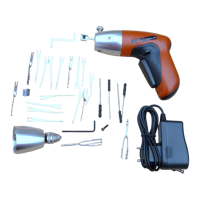
The next step is to insert the actual probe of the lock gun. It is
important here to ensure that the probe does actually reach all
the way to the pin stack at the back of the lock. It is no good
picking 4 out of the 5 pins and not picking that last pin stack.
There are two main angles that the probe can be inserted. The probe can be
perfectly upright underneath the pins or it can positioned so that it is at a slight
angle. By this I mean that you can actually angle the gun and therefore the
probe over to the right a little. Imagine the face of a clock and the top edge of
the probe would be angled at 1 o’clock. It would then sit under the pins at this
slight angle. This helps to adjust the force that is being applied to the pins by
the tool.
When the probe is inserted into the lock it is now a good time to check that the
turning tool will not hamper the operation of the gun in any way. What you
don’t want is for the probe to keep bumping into the turning tool as not only will
this seriously affect the success of picking but it can also cause the turning tool
to get dislodged and eventually fall out. Even being dislodged can affect the
turning force of the tool and prevent the pins properly setting. If you haven’t
tried the top of the lock method for the turning tool then perhaps give that a try
too, especially if you are having problems fitting both the turning tool and the
probe into the lock.
You can now turn on the lock gun by depressing the trigger and at the same
time begin to apply a little turning pressure of the turning tool.
4


 To Next Page
 Loading...