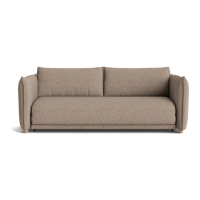
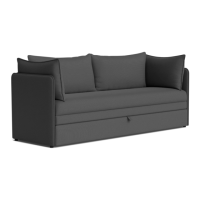
This document is an assembly and care manual for the Koala Stunner Sofa, a versatile piece of furniture designed for both seating and sleeping, with integrated storage.
Function Description:
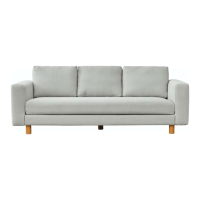
The Koala Stunner Sofa serves as a multi-functional furniture item, primarily a sofa for seating, which can be converted into a sleeping position. It features integrated storage boxes beneath the seat, providing a practical solution for decluttering and organizing living spaces. The design emphasizes ease of assembly and conversion, making it suitable for various living arrangements, including those with limited space.
Important Technical Specifications:
- Weight Capacity:
- Sofa Weight Capacity: 120kg per seat
- Drawer Weight Capacity: 20kg per drawer
- Components (What's in the box - quantities and part numbers):
- x4 Gum nuts (104-9172)
- x8 Gum nuts (104-9173)
- x4 Gum nuts (104-9173) - Note: There are two entries for 104-9173, one with x8 and one with x4. This might be a typo in the original manual, or they are different types of gum nuts with the same part number.
- x2 Seat base boards (slatted design)
- x1 Metal beam (104-9238)
- x2 Side metal frames (long, with brackets)
- x1 Middle metal beam (short, with brackets)
- x2 End metal frames (short, with brackets)
- x2 Side panels (with holes for brackets)
- x2 Back panels (with holes for brackets)
- x1 Mattress/Seat cushion
- x1 Storage box frame (with slatted base and latch mechanism)
- x1 Storage box front panel
- x4 Plastic legs
- x2 Back cushions (cylindrical)
- x2 Armrest cushions (cylindrical)
Usage Features:
- Assembly: The sofa is designed for straightforward assembly, involving connecting metal frames, securing with gum nuts, attaching legs, inserting a middle beam, and then attaching armrests and backrests. Seat base boards are placed on metal ledges.
- Storage: The integrated storage boxes are accessed by hooking a latch over a clasp and pulling back on the handle to tighten, which squeezes the storage boxes together. The front panel of the storage box is secured with large gum nuts. The storage box slides underneath the front metal bar of the seat frame.
- Conversion to Sleeping Position:
- Remove backrest and armrest cushions.
- Pull out the storage box until its brackets are locked.
- Flip out the seat cushion so it lies completely flat, creating a sleeping surface.
- Safety and Use Guidelines:
- Open the drawer by pulling it open with the handle, then pushing it from the middle.
- The drawer should work best on a smooth surface.
- Do not open lids of the drawer when it is being used as a sofa bed.
- Remember that drawers are not toys.
- Do not jump or stand on the drawers.
- Avoid sitting on the arms or backrest.
- Avoid dragging the sofa; if it needs to be moved, remove the drawers first.
Maintenance Features:
- Fabric Care (Regular Care - Weekly):
- Vacuum regularly using low suction.
- Protect from direct sunlight.
- After use, fluff the cushions to bring them back to shape.
- Fabric Cleaning:
- Remove any spills immediately by gently blotting any liquid stains with a clean cloth.
- Scoop any sauces up before blotting the remaining sauces.
- Use a mild detergent to gently remove any loose soilage.
- Do not scrub with a stiff brush.
- Use a clean cloth to blot out any excess liquid.
- Avoid over-wetting as this may result in a water mark.
- Caution: Pretest the cleaning method on a hidden area of the sofa. If there is a change in colour or transfer, do not continue.
- Pilling:
- Pilling can occur occasionally as a result of normal daily wear and should not be considered a fault.
- Fibre pills can be removed with a battery-operated pilling tool, available from most haberdashery stores.
- Timber Care (Regular Care - Weekly):
- Wipe down with a clean damp cloth.
- Protect from direct sunlight.
- Timber Cleaning:
- Treat spills as soon as possible, wipe down with a clean dry cloth.
- Do not use abrasive cloths, concentrated detergents, or silicon-based wood polishes.
- Good to Know (Timber):
- Timber is a natural product, and there will be variation in grain, colour, and features such as knots.
- Over time, the colour of the timber will naturally change.

 Need help?
 General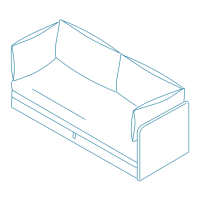

 To Next Page