3
General Safety Instructions
into the bit and kick back.
k) Positionthefencefacesascloseaspossibletothebit. Turn the bit by hand
to check for interference. Firmly tighten the fence-face T-knobs before routing.
l) Adjustrouterspeedtomatchthediameterofthebit. Reduce router speed
when using large-diameter bits. See Table2 for recommended router speeds.
m) Makesuretheroutermotorissecurelyclampedinthebasebefore
starting the router.
n) Always support the workpiece with the fence or start pin. Only use the
starter pin with router bits that have a guide bearing.
o) Whenusingthefence,alwayspositionthebitguardovertherouterbit
andasclosetotheworkpiecesurfaceaspossible.
p) Neverremovealargequantityofstockinonecut.Make several
progressively deeper cuts, adjusting the router bit or fence position between cuts.
q)Keephandsawayfromtherotatingbitandyourbodyoutofthepathof
the cut. Always use the bit guard, Use push sticks, push blocks, and feather
boards whenever possible, especially when routing narrow workpieces. Turn off
the router before clearing parts of scrap.
r) Avoid awkward hand positions, where a sudden slip could cause contact
withtherotatingbit.Neveroverreach.
s) Avoid routing small parts.Routtheproleonalargeworkpieceandthencut
theparttonalsizefromthelargeworkpiece.Ifyoumustroutasmallpart,build
an appropriate jig or hold the part with a wood handscrew clamp.
t) Makesuretheworkpieceisclearofthebitandthebitcomestoacomplete
stopbeforeadjustingtheworkpieceposition.Neverstarttherouterwiththe
workpiece in contact with the bit.
u) Avoidkickbacks.Kickbacksoccurwhentheworkpiecebindsorliftsoff
thetablewhilebeingrouted,causingittobethrownbacktowardthe
operator. To avoid kickbacks and potential injury, use sharp bits, keep the
machine aligned and maintained properly, and adequately support the workpiece.
Do not attempt to rout workpieces that are twisted, warped, or bowed, or that have
loose knots.
v) Feedtheworkpieceagainst(notwith)thebitrotation. The bit can grab a
workpiece fed with the rotation of the bit, violently eject it from the router table, and
can cause your hand to contact the bit.
w) Nevertrapaworkpiecebetweenthebitandthefence. When forming a
proleonthestraightedgeofaworkpiece,alwaysroutwiththebithousedinthe
fence and the edge of the workpiece against the fence.
x) Wheneverroutingaproleinwhichmaterialisnotbeingremovedbelowa
protrudingportionofthebit,orapartoftheproleistrappedbetween
cuttersaboveandbelow,takeextraprecautionstopreventtheworkpiece
fromliftingoffthetablesurfaceduringrouting.A workpiece lifting off the table
cankickbackandcauseseriouspersonalinjury.Whenroutingtheseproles,itis
especiallyimportanttousestraight,atstockandavoidwarped,bowed,ortwisted
stock.
y) Periodically check the tightness of fasteners and adjustment and locking
knobsandthealignmentofthefence.Loose fasteners and knobs and a
misaligned fence can cause personal injury.
z) Thisroutertableisdesignedforaspecicapplication.Donotmodifyand
or use it for any other application. If you have questions relative to the
applicationoftheroutertable,DONOTuseituntilyouhavecontactedKregTool
Company and have been advised accordingly.
Guidelines for extension cord use
Extension cords are only to be used for temporary purposes. They do not replace
the need for installation of outlets and proper wiring where necessary.
In the shop and on construction sites:
1. Extension cords with an equipment grounding conductor must be used at all
times.
2. Extension cords must be protected from damage, and not run through doorways
or windows where the doors or windows can close, causing damage to the cord.
3. Extension cords must be a minimum of 16 AWG and be rated for the equipment
in use.
4. Extension cords must be periodically inspected to ensure that the insulation and
conductivity of the wires are not compromised.
5. Extension cords should not be run through water or allowed to have connections
that may be exposed to accumulated water.
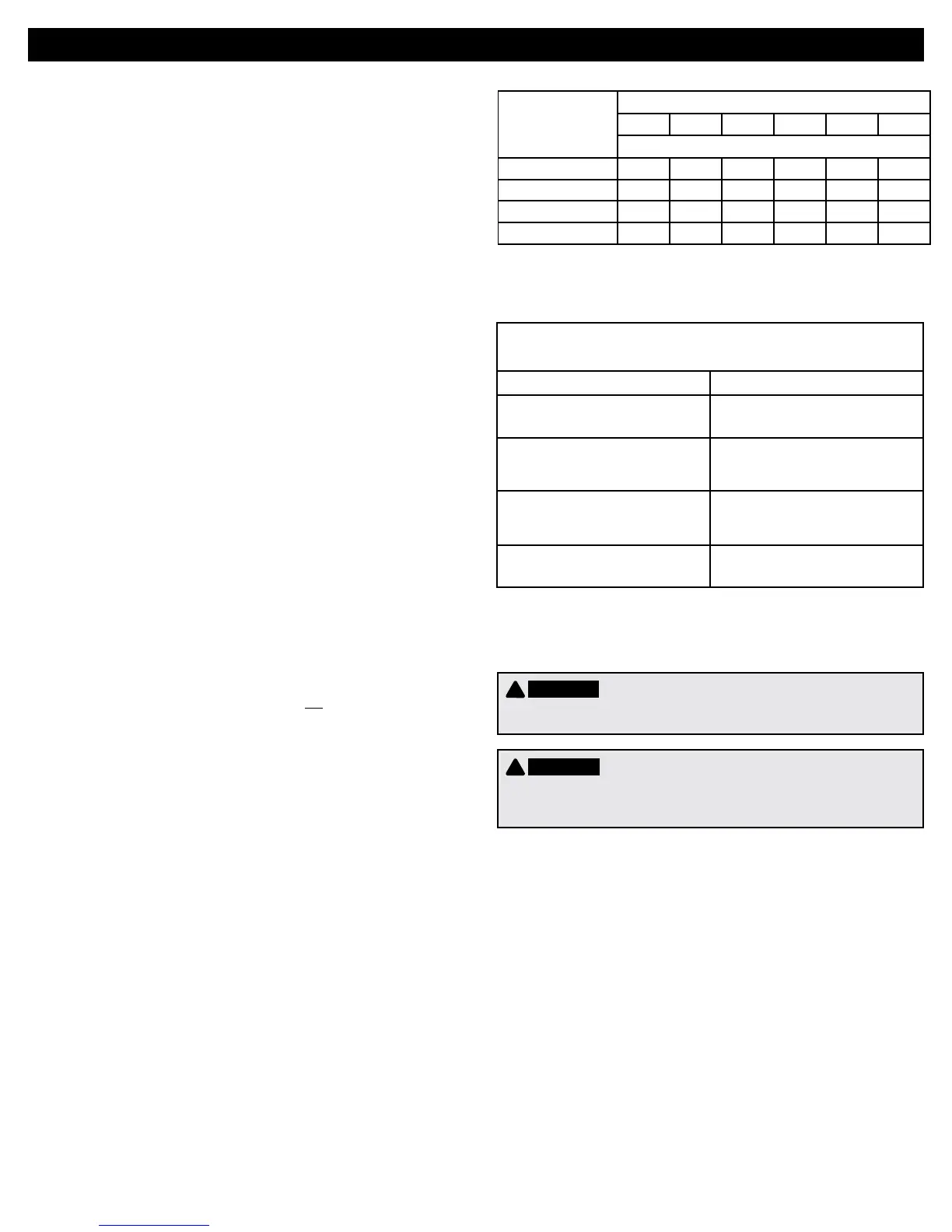
Always follow bit manufacturer’s speed recommendations. Some bit designs require
specicspeedsforsafetyorperformance.
TABLE2
Recommended Router Bit Speeds
Bit Diameter Maximum Speed (RPM)
24,000
18,000
16,000
12,000
@120 V
25 100'
16 16 16 14 12 12
16 16 14 12 10 NR
14 14 12 10 NR NR
12 12 NR NR NR NR
NR–NotRecommended
TABLE1
WARNING:
!
This product can expose you to chemicals including Acrylonitrile
and other chemicals, which are known to the State of California to cause cancer and
reproductive harm. For more information go to www.P65Warnings.ca.gov.
WARNING:
!
Drilling, sawing, sanding or machining wood products can
expose you to wood dust, a substance known to the State of California to cause
cancer. Avoid inhaling wood dust or use a dust mask or other safeguards for
personal protection. For more information go to www.P65Warnings.ca.gov/wood.


 To Next Page
 Loading...