Need help?
Do you have a question about the Lime Generation 3.0 and is the answer not in the manual?
Remove 3 screws using a T20 wrench, then loosen 3 screws on the joint cover with a T10 wrench.
Remove two screws with a 6mm hex wrench, then pry the joint apart using a flathead screwdriver.
Unplug connectors to the motor controller and remove four screws on the protective cover with a T20 wrench.
Remove 11 screws on the bottom plate with a T20 wrench and unplug motor/brake light connectors.
Disconnect connectors to the motor controller and pull out the motor controller unit.
Insert the motor controller into the joint and tighten 3 securing screws with a T20 wrench.
Route cable slack into the tube, install the joint, and avoid pinching wires.
Tighten two screws with a 6mm hex wrench, then tighten three joint cover screws with a T10 wrench.
Connect the terminals for the motor and brake light, and connect the motor controller terminals.
Tighten 11 screws on the bottom plate and 4 screws on the protective cover using a T20 wrench.
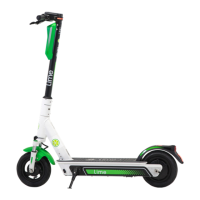
This manual outlines the process for replacing the motor control unit on a Lime Generation 3.0 scooter, a common maintenance procedure for these shared electric vehicles. The scooter is designed for urban mobility, offering a convenient and eco-friendly mode of transportation for short to medium distances. Its primary function is to provide personal electric transport, allowing users to navigate city streets with ease.
The Lime Generation 3.0 scooter operates as a personal electric vehicle, powered by a battery and controlled by a motor control unit. The motor control unit is a critical component that regulates the power delivered to the electric motor, thereby controlling the scooter's speed and acceleration. It acts as the brain of the electric propulsion system, translating user input from the throttle into precise motor commands. When a user engages the throttle, the motor control unit receives this signal and adjusts the electrical current flowing to the motor, causing the wheels to turn. Conversely, when the user applies the brakes, the motor control unit works in conjunction with the braking system to safely decelerate the scooter. The scooter is equipped with a robust frame and a folding joint mechanism, allowing for compact storage and transport. The design incorporates various covers and plates to protect internal components from environmental factors and physical damage.
The Lime Generation 3.0 scooter is designed for intuitive and user-friendly operation. Users typically unlock the scooter via a mobile application, which also tracks ride duration and cost. Once unlocked, the user steps onto the footboard and uses a throttle mechanism, usually located on the handlebars, to accelerate. The scooter features a braking system, also controlled from the handlebars, to ensure safe stopping. The folding joint is a key usage feature, enabling the scooter to be folded for easier carrying or storage in tight spaces. This joint is secured by screws and a protective cover, which need to be manipulated during maintenance but are designed to remain secure during normal operation. The scooter's overall design emphasizes ease of use and accessibility for a broad range of urban commuters. The motor control unit's seamless operation ensures a smooth and responsive ride experience, adapting to varying terrain and user demands.
The provided manual focuses heavily on the maintenance features of the Lime Generation 3.0 scooter, specifically detailing the motor control replacement process. This indicates that the scooter is designed with modularity in mind, allowing for component-level repairs rather than requiring full unit replacement for certain failures. The maintenance process involves several key steps, each requiring specific tools and attention to detail.
Accessing the Motor Control Unit: The initial steps involve removing various screws and covers to gain access to the internal components. This includes removing screws from the footboard area and the joint cover. The use of standard Torx and hex wrenches (T20, T10, 6mm hex) suggests that common tools are sufficient for these tasks, making maintenance more accessible. The joint itself is designed to be separated, allowing technicians to reach the internal wiring and the motor control unit.
Disconnecting Components: Once access is gained, the maintenance procedure requires unplugging several connectors. This includes connectors to the motor controller inside the joint, as well as motor and brake light connectors located under the bottom plate. The clear distinction between these connectors simplifies the disconnection and reconnection process, minimizing the risk of incorrect wiring.
Removing and Installing the Motor Controller: The motor controller itself is designed to be pulled out once all connectors are disconnected. The reinstallation process is essentially the reverse, involving inserting the new motor controller and reconnecting all cables. The manual emphasizes the importance of proper cable management, instructing technicians to pull any slack in the cables upwards and downwards into the tube to prevent pinching during reassembly.
Reassembly and Securing: The final stages of maintenance involve reattaching all covers and tightening all screws. This includes securing the joint, replacing the protective cover, and reattaching the bottom plate. The specified torque settings (implied by the use of specific wrench sizes) are crucial for ensuring the structural integrity and safety of the scooter after maintenance.
Throughout the manual, "CAUTION" notes highlight critical points to ensure proper maintenance and prevent damage or injury. For example, the instruction "Do not pinch the wires" during joint installation is vital for preventing electrical shorts or damage to the wiring harness. The overall structure of the manual, with clear steps, estimated times, and tool lists, promotes efficient and standardized maintenance procedures. The inclusion of "Video Link" placeholders suggests that visual aids are also part of the comprehensive maintenance support, further enhancing the clarity and effectiveness of the instructions. Finally, the concluding remark "Remember to quality check & test ride. Wrench On!" underscores the importance of verifying the repair and ensuring the scooter is fully functional and safe before returning it to service. This holistic approach to maintenance ensures the longevity and reliability of the Lime Generation 3.0 scooters in a demanding shared mobility environment.
 General
| Max Speed | 25 km/h |
|---|---|
| Battery | 36 V |
| Tires | 10-inch pneumatic |
| Brakes | Front drum, rear regenerative |
| Lights | Front and rear LED |
| Max Load | 100 kg |

 To Next Page