The device described in this manual is a Loadmaster Elite Series refuse collection vehicle, commonly known as a garbage truck or packer. It is designed for efficient and safe collection and compaction of refuse.
Function Description:
The Loadmaster Elite Series vehicle is primarily used for collecting and compacting solid waste. It features a rear-loader design, where refuse is loaded into a hopper at the rear of the truck and then compacted by a hydraulic packer mechanism into the main body of the vehicle. The compaction process reduces the volume of waste, allowing for more refuse to be collected per trip. The vehicle is also equipped with a tailgate that can be raised for unloading the compacted refuse at a disposal site. The operation involves various hydraulic controls for the packer blades, tailgate, and other functions, managed by an operator from the cab and at the rear of the vehicle.
Important Technical Specifications:
While specific detailed technical specifications like engine type, horsepower, or exact dimensions are not explicitly listed in the provided excerpts, the manual highlights several operational aspects that imply certain technical characteristics:
- Chassis Compatibility: The Elite Series is designed for setup on various chassis, indicating adaptability to different truck manufacturers and models. This implies that the refuse body is a separate unit mounted onto a commercial truck chassis.
- Hydraulic System: The core of the compaction and unloading mechanism is a hydraulic system. This includes hydraulic cylinders for the packer blades (sweep and slide), tailgate lift, and ejector blade. The manual frequently mentions hydraulic pressure, lines, and components.
- Compaction Blades: The vehicle uses "sweep" and "slide" blades for compaction. These blades move in a semi-automatic cycle to push and compact refuse into the body.
- Ejector Blade: For unloading, an ejector blade pushes the compacted refuse out of the body. This is a key feature for efficient discharge.
- Control Levers: The vehicle features various control levers for operation, including those for the packer blades, tailgate lift, and ejector control. These are typically located at the rear of the vehicle and inside the cab.
- PTO (Power Take-Off): The hydraulic system is powered by the vehicle's PTO, which engages the hydraulic pump.
- Tailgate: The tailgate is a critical component that lifts to allow access to the hopper and opens for unloading. It is equipped with safety features and controls.
- Container Handling Devices (Optional): The manual mentions optional container handling devices, including roll bar options (for 1 and 2 cubic yard cans) and winch options (for 2 through 10 yard cans). These devices allow the vehicle to lift and dump various sizes of refuse containers.
- Gauges: The vehicle is equipped with pressure gauges (e.g., 24" diameter, 3000 PSI working pressure) for monitoring the hydraulic system.
- Lights and Signals: The vehicle includes various lights and signals for safe operation, such as strobe lights, beacon lights, gate ajar warning light, and turn signals.
Usage Features:
- Operator Controls: The manual details numerous operator controls, including rocker switches in the cab for PTO, throttle, work lights, strobe lights, and gate ajar warning. Rear-mounted controls for the packer blades, tailgate lift, and ejector are also described.
- Semi-Automatic Compaction Cycle: The packer blades operate in a semi-automatic cycle, simplifying the compaction process for the operator.
- Pre-Startup Inspection ("Walk-Around"): A comprehensive pre-startup inspection is emphasized, covering checks of the chassis, packer, fluid levels, lights, and safety components to ensure the vehicle is in safe working condition.
- Traveling Procedures: Specific instructions are provided for traveling, including shifting the transmission to Park or Neutral, applying the park brake, and checking PTO and throttle settings.
- On-the-Route Garbage Collection: The manual outlines procedures for collecting garbage on the route, including shifting the transmission to Park, applying the emergency brake, and operating the packer blades and throttle.
- Unloading Procedures: Detailed steps for unloading refuse are provided, including engaging the PTO, operating the tailgate and ejector, and ensuring the area is clear.
- Container Handling (Optional): For vehicles equipped with container handling devices, instructions are given for attaching and lifting containers, emphasizing safety precautions.
- "Storing" a Cable's Hook: The manual provides instructions and illustrations for properly storing the cable's hook when not in use, highlighting correct and incorrect storage methods to prevent damage and ensure safety.
- Safety Decals: The vehicle is equipped with numerous safety decals providing warnings and cautions related to various operations, such as moving blades, entering the body, riding steps, and overhead clearances.
Maintenance Features:
- Regular Inspections: The manual implicitly emphasizes regular inspections as part of the pre-startup routine, which helps identify potential issues before they become serious.
- Troubleshooting (Implied): While not a dedicated troubleshooting section, the warnings and cautions often highlight potential malfunctions or issues that require attention, such as hydraulic leaks or component failures.
- Lubrication and Adjustment (Implied): The mention of "fresh tailgate seal" in a repair section suggests that seals and other components may require periodic replacement or adjustment.
- Service and Repair: The manual advises that only qualified and trained personnel should perform maintenance and repairs, particularly for complex systems like hydraulics and electrical components. It also refers to a "chassis operator's manual" for specific chassis-related maintenance.
- Lockout/Tagout Procedures: The manual stresses the importance of following OSHA lockout/tagout procedures during maintenance to prevent accidental activation of the machine.
- Hydraulic System Maintenance: Warnings about hydraulic fluid leaks and the need for proper maintenance of hydraulic components are present, indicating the importance of this system for the vehicle's operation.
- Decal Maintenance: The manual includes a section on "On-the-Truck Decal Overview," implying that these safety decals should be maintained and replaced if damaged or unreadable.

 Need help?
 General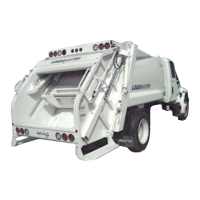

 To Next Page