Page 2
1.2 Tools Required
z Large and small flat bladed screwdrivers
z Large and small crosspoint screwdrivers
z Hammer
z Power drill
z 5mm & 8mm masonry drill bits
z Sharp knife
z Pencil & bradawl
z Wire cutters & wire stripper
z Ladder or other safe working platform
z Eye protection
1.3 System Features
z Detector Learning System – every LS5000
cordless detector contains a unique
identification code; during installation the
Control Unit will learn which detectors
belong within your system by receiving
coded radio transmissions from each
detector.
z The system can control up to 24 detectors,
16 of which can be cordless. 4 traditional
detectors (6-wire PIR or door/window
contact) and 4 two-wire detectors (2-wire
PIR).
z To allow you to leave and enter the
protected area without setting the alarm off,
Zone 1 is set aside as an Entry/Exit zone.
When triggered, Zone 1 gives the user 30
seconds (adjustable) to unset (disarm) the
system without causing full alarm. In most
cases the Zone 1 detector will be a door
contact on your main entrance door.
z Every system component contains a tamper
detection device. If any attempt is made to
interfere with any part of the system, an
alarm system will sound immediately even
if the system is not armed.
z Each wireless detector transmits a signal to
the control unit to warn the user of any
problems within the detector, such as a low
battery condition.
z Optional wired and two-wire detector give
alternative protection – they do not rely on
radio signals and hence cannot be jammed
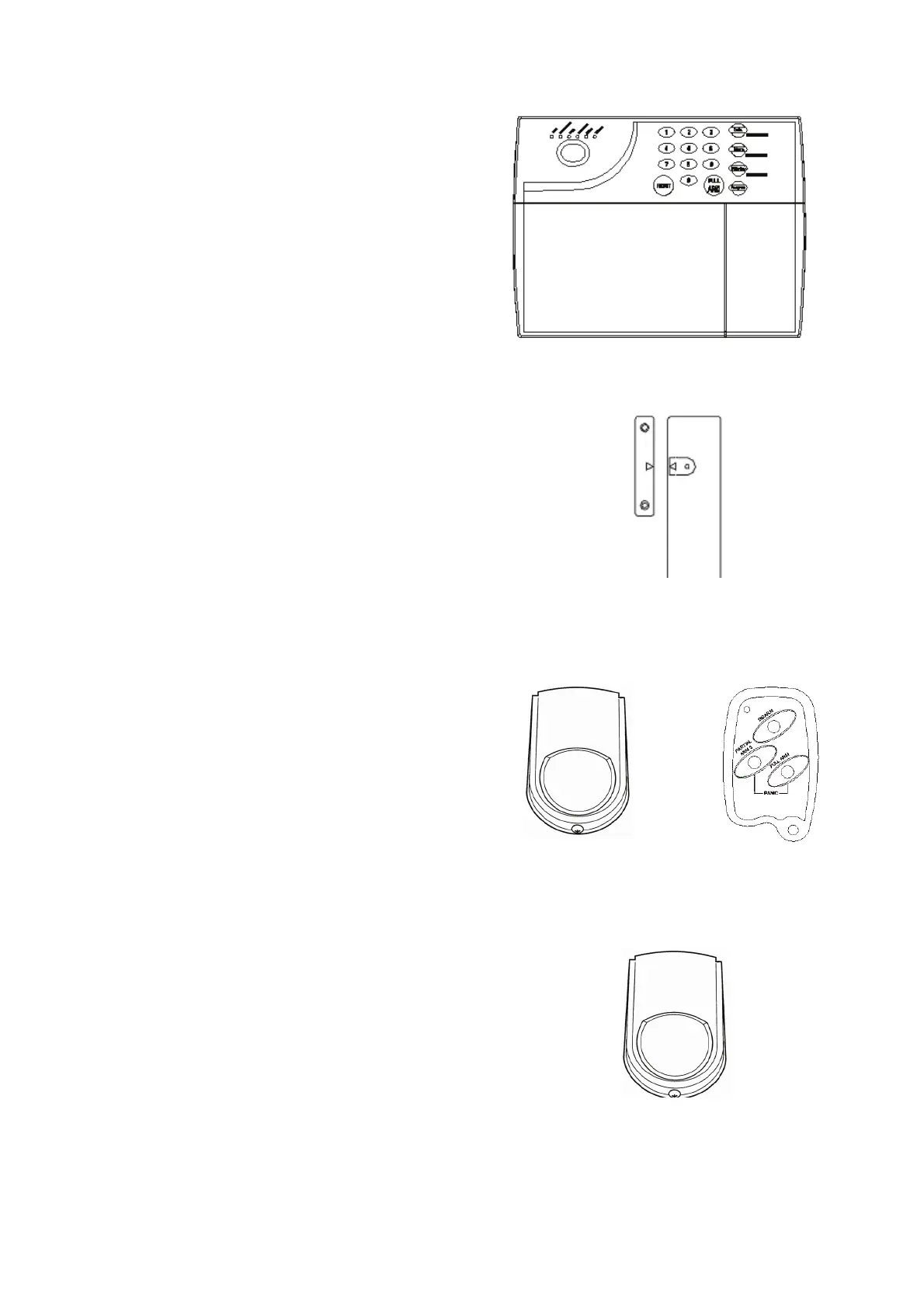
LS1600 Wireless Passive
Infra-Red Detector
LS-1601
Wireless Door/Window Contact
CONTROL UNIT
TW402 Two-Wire
Passive Infra-Red Detector
LS1606
Remote Control Key


 To Next Page
 Loading...