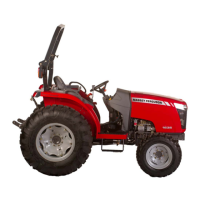
This document is an operator's manual for the Massey Ferguson MF 1531 Tractor, identified by part number 1857 712 M1. It provides comprehensive information for the safe and efficient operation and maintenance of the tractor.
Function Description
The MF 1531 Tractor is designed for various agricultural and utility tasks, featuring a robust build and a range of operational capabilities. It is equipped with a hydrostatic transmission, a three-point hitch, and a Power Take-Off (PTO) system, allowing it to operate a wide array of implements and attachments. The tractor is designed for both field work and travel on public roads, with specific safety guidelines for each. Its primary function is to provide reliable power and versatility for tasks such as seeding, tilling, hauling, and general landscape maintenance, as suggested by the cover image showing it with a "Speedseed 1600" attachment on a golf course.
Important Technical Specifications
The manual details various technical specifications and capacities crucial for the tractor's performance and longevity. These include:
- Engine: Specifications for engine oil, coolant, and fuel tank capacity are provided, along with details on the engine air cleaner and block heater. The manual emphasizes the use of diesel fuel and outlines procedures for the fuel system, including air-bleed and filter maintenance.
- Transmission and Differential Housing: Specific oil requirements and capacities are listed for these critical components, ensuring proper lubrication and operation.
- Front Axle: Details on front axle oil and alignment are included, essential for steering and stability.
- Hydraulic System: The manual covers the hydraulic system's specifications, including fluid types and capacities, and provides warnings regarding high-pressure fluid leaks. It also mentions external auxiliary hydraulics as an option.
- Electrical System: Battery specifications, neutral start system, and wiring/fuse arrangements are described, along with safety precautions for handling the battery and electrical components.
- Wheels and Tyres: Tyre inflation pressures, wheel bolt torque, and wheel spacing (front and rear) are specified. The manual also includes safety warnings for tyre servicing and fluid ballasting.
- Capacities: General capacities for various fluids are listed, along with the maximum load capacity, which is crucial for safe operation.
- General Dimensions: Overall dimensions of the tractor are provided, important for transport and maneuvering in confined spaces.
- Roll-Over Protective Structure (ROPS): The ROPS is a critical safety feature, and the manual specifies its importance in reducing injuries during overturns. It advises against welding, drilling, or altering the ROPS and mandates replacement if damaged.
- Power Take-Off (PTO): The tractor features both rear and mid PTO shafts (if equipped), with detailed operating controls and safety instructions for connecting and disconnecting implements.
- Brakes: Independent brake pedals are mentioned, with instructions for latching them together during transport and warnings against sudden or heavy braking on slippery surfaces.
- Three-Point Hitch: The three-point hitch includes position control and optional draft control, allowing for precise implement management.
Usage Features
The MF 1531 Tractor offers several features designed for ease of use and operator comfort and safety:
- Hydrostatic Transmission: This allows for smooth and continuous speed changes, controlled by pedals or a lever, enhancing maneuverability and reducing operator fatigue. A ground speed chart is included for reference.
- Operator's Seat: The seat includes adjustment features for operator comfort, and the manual emphasizes the importance of wearing the seat belt, especially when the ROPS is in the upright position.
- Instrument Panel: The panel includes a main switch, indicator light strip, coolant temperature gauge, tachometer, fuel gauge, light/turn switch, flashing warning lamp switch, and turn/warning indicator lights, providing essential operational information at a glance.
- Engine Speed Controls: These allow the operator to manage engine RPM for various tasks.
- Differential Lock and Four-Wheel Drive: These features enhance traction and control in challenging terrain.
- Safety Signs: The manual provides a detailed diagram of all safety signs on the tractor, emphasizing their importance and the need for replacement if damaged or unreadable.
- Travel on Public Roads: Specific guidelines are provided for road travel, including the use of flashing amber warning lights and a Slow Moving Vehicle (SMV) identification emblem, ensuring visibility and compliance with local regulations.
- Loader Attachment: Instructions for using a loader attachment are included, with specific warnings about hydraulic connections and the need for a dedicated, properly configured loader valve to prevent serious injury from falling loads.
Maintenance Features
The manual outlines a comprehensive maintenance schedule and procedures to ensure the tractor's reliability and longevity:
- Inspection and Maintenance Chart: A detailed chart guides operators through routine checks and servicing intervals.
- Lubrication/Fill Points: Clear instructions are given for accessing and lubricating various components, including grease fittings, engine oil and filter, transmission oil and filter, and front axle oil.
- Service Access: Procedures for opening/closing the hood and removing/reinstalling side covers are described to facilitate maintenance.
- Cooling System: Instructions for checking coolant levels, adding coolant, and safely removing the radiator cap are provided.
- Fuel System: Maintenance includes checking and replacing the fuel filter and air-bleeding the fuel system. Warnings against unauthorized servicing of the fuel injection system are also present.
- Engine Air Cleaner: Procedures for cleaning and replacing the air cleaner filter element are detailed to ensure optimal engine performance.
- Brake Adjustment: Instructions for adjusting the brakes are included to maintain effective stopping power.
- Hydrostatic Pedal Adjustment: This ensures proper function of the hydrostatic transmission controls.
- Battery Maintenance: Safety precautions for handling the battery, checking its state of charge, and jump-starting are outlined, along with warnings about sulfuric acid electrolyte and explosive hydrogen gas.
- Replacement Parts: The manual stresses the importance of using genuine replacement parts to maintain original specifications and avoid voiding warranties.
- Storage: Specific guidelines for storing the tractor are provided to protect it during periods of inactivity.

 Need help?
 General

 To Next Page