163
Tyres, Wheels, Ballasting
6
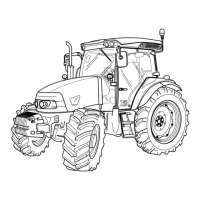
Ballastingtherearwheels.Max.2ringsoneachwheel.
Ballasting the rear wheels [4.2.h]
Tworingscanbeappliedoneachrearwheel(seefigure).
Thefirstoneisdirectlyfixedtothewheel,thesecondone
onthefirstring.
Thetotalweightthatcanbeappliedistherefore:
4rings(2+2)eachweighing60kg:total240kg.
WARNING: Due to the great weight of each bal-
last, manual lifting of front and rear ballast
weights could be dangerous for your safety.
Use exclusively a hook or suitable equipment
to lift front and rear ballast weights.
IMPORTANT:
- Do not ballast the tractor over its rated carrying weight.
- When using the tractor for light work, transport and
on-road towing, remove the ballast weights to avoid
unnecessary strain on the mechanical components.
- With semi-mounted and fully mounted implements
(which inevitably increase the load on the rear axle
of the tractor), ballast must only be used when strictly
necessary. There is no point in increasing grip beyond
the level required for efficient work, as this will reduce
tyre life.
- Carefully check the tyre inflation pressure since this will
make the tyre last longer and ensure a more regular
wear.
- The softer the soil, the lower tyre inflation must be, while
the tyre should be inflated to a greater extent as the soil
becomes more compact.
IMPORTANT: The total tractor weight with full equipment
and ballast weight must never be more than the maximum
allowed operating weight. See Maximum Allowed Operat-
ing Weights in this manual. Comply with tyre capacities
and any possible legal limitations.
WARNING: Always use suitable personal sa-
fety devices (safety gloves and shoes) when
applying or removing ballast.


 To Next Page
 Loading...