EasyManua.ls Logo

MDM SEQUENCE ALPHA PRIMER - User Manual

MDM SEQUENCE ALPHA PRIMER
4 pages
Print Icon
To Next Page IconTo Next Page
Loading...
© MDM INCORPORATED
WWW.MDMINC.COM
Reliable. Efficient.
PROUDLY MADE
IN THE USA
®
ALPHA PRIMER
P.1
Read this manual completely before you install or operate your new pump. This is an external “out-of-pond” pump.
It is not submersible. Do not allow this pump to become submerged. Never run dry.
INSTALLATION AND SERVICE MANUAL
Model 6800PRM19 7800PRM24
INLET 2” 2”
DISCHARGE 2” 2”
MAX FLOW (GPH) 6800 7800
MAX HEAD (FEET) 19’ 24’
MAX POWER (WATTS) 369 504
MAX CURRENT (AMPS) 3.93 @115V 5.02 @115V
VOLTS 115/230 115/230
MOTOR HP 1/2, 1/3 1/2, 1/3
MOTOR TYPE 56Y 56Y
MOTOR ENCLOSURE TEFC TEFC
TYPE:
STRAIGHT CENTRIFUGAL
MOTOR:
NEMA 56Y
HORSEPOWER:
1/3, 1/2 (1750 RPM)
INLET:
2” FNPT WITH 2” SLIP ADAPTERS
DISCHARGE:
2” & 2 1/2” SLIP ADAPTERS
MATERIAL:
GLASS-FILLED POLYPROPYLENE
HARDWARE:
STAINLESS STEEL
OPTIONS:
SALTWATER SERVICE
ACCESSORIES:
SWING CHECK VALVES (1.5”, 2”, 3”)
S/N: XXXX-XXXXXX
XXXXPRMXX
*MOTORS ARE SUBJECT TO CHANGE DUE TO
AVAILABILITY OR SPECIFICATION REQUIREMENTS.
FILL IN FOR FUTURE REFERENCE:
MODEL: ______________________________
SERIAL NUMBER: _______________________
DATE PURCHASED: ______________________
COMPLETE AND MAIL YOUR WARRANTY REGISTRATION
CARD INCLUDED WITH THIS PRODUCT OR FILE ONLINE AT:
WWW.MDMINC.COM/PUMP-REGISTRATION
®
Question and Answer IconNeed help?

Do you have a question about the MDM SEQUENCE ALPHA PRIMER and is the answer not in the manual?

Summary

INSTALLATION

ELECTRICAL HOOK-UP

Provides guidance on connecting the pump's electrical supply, matching motor requirements.

PUMP END ASSEMBLY

DISASSEMBLY

Details the process of taking apart the pump, including removing components like the diffuser and impeller.

MAINTENANCE

Lubrication

Information regarding motor and rotary seal lubrication requirements, noting permanent lubrication.

Troubleshooting Guide

Provides solutions for common pump issues like No Flow, Low Flow, Sporadic Operation, and Excessive Noise.

Overview

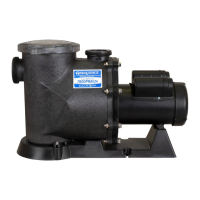
The Sequence Alpha Primer is a series of straight centrifugal pumps designed for external, "out-of-pond" applications. These pumps are not submersible and must never be run dry or submerged. They are engineered for reliability and efficiency, utilizing modern technology and robust construction.

Function Description

The Sequence Alpha Primer pumps are designed to move water efficiently in various applications. They are self-priming, though a flooded suction situation is preferred for optimal performance. For non-flooded suction setups, a check valve is recommended. The pump's primary function is to circulate water, with models offering different flow rates and head capabilities.

Important Technical Specifications

General Specifications:

  • Type: Straight Centrifugal
  • Motor: NEMA 56Y
  • Horsepower: 1/3, 1/2 (1750 RPM)
  • Inlet: 2" FNPT with 2" Slip Adapters
  • Discharge: 2" & 2 1/2" Slip Adapters
  • Material: Glass-Filled Polypropylene
  • Hardware: Stainless Steel
  • Options: Saltwater Service
  • Accessories: Swing Check Valves (1.5", 2", 3")
  • Motor Enclosure: TEFC (Totally Enclosed Fan Cooled)
  • Voltage: 115/230V (some models are dual voltage)

Model-Specific Specifications:

6800PRM19:

  • Inlet: 2"
  • Discharge: 2"
  • Max Flow (GPH): 6800
  • Max Head (Feet): 19'
  • Max Power (Watts): 369
  • Max Current (Amps): 3.93 @ 115V
  • Volts: 115/230
  • Motor HP: 1/2, 1/3
  • Motor Type: 56y
  • Motor Enclosure: TEFC

7800PRM24:

  • Inlet: 2"
  • Discharge: 2"
  • Max Flow (GPH): 7800
  • Max Head (Feet): 24'
  • Max Power (Watts): 504
  • Max Current (Amps): 5.02 @ 115V
  • Volts: 115/230
  • Motor HP: 1/2, 1/3
  • Motor Type: 56y
  • Motor Enclosure: TEFC

Note: Motors are subject to change due to availability or specification requirements.

Usage Features

Installation Guidelines:

  • Location: Install the pump as close as possible to the water source. A flooded suction setup is preferred.
  • Mounting: Securely mount the motor base to an immobile foundation.
  • Fittings: Use only plastic fittings on both intake and discharge ports, sealing connections with Teflon® paste. Fittings must be self-supported and in neutral alignment to prevent stress on the pump volute.
  • Flow Optimization: Avoid restricting the intake. Keep input and discharge lines free of elbows and valves as much as possible, and use adequately sized piping to minimize friction losses and maximize output.
  • Priming: Before starting, the priming pot must be filled with water.
  • Electrical Hook-up:
    • Verify supply voltages match motor requirements.
    • Connect motor wiring according to instructions to match supply voltage.
    • Protect the power cord with conduit or use a proper gauge cable.
    • Draw power directly from a box with circuit breaker protection or a fused disconnect switch.
    • Always shut off electrical power before installation or servicing. All wiring must meet state and local ordinances.

Pump End Assembly: The pump end assembly involves careful handling of components to ensure proper sealing and alignment. Key steps include:

  • Inspecting and cleaning all parts (O-rings, impeller hub, motor shaft).
  • Applying sealant (e.g., Gasgacinch® or silicone) when replacing the seal in the bracket bore hole.
  • Carefully pressing the seal into the bracket, ensuring the sealing surface is parallel with the impeller hub.
  • Lubricating the boot around the ceramic piece and pressing it into the impeller hub evenly.
  • Applying clean water to carbon-graphite and seal seat sealing surfaces (avoid silicon lubricants or grease).
  • Mounting the bracket to the motor face.
  • Threading the impeller onto the shaft, installing the O-ring and screw. A screwdriver on the back of the motor shaft may be needed to prevent rotation during tightening.
  • Placing the diffuser over the impeller, ensuring it's in an upright position (indicated by the word "top"), and tightening allen bolts.
  • Seating O-rings on the diffuser and in the bracket slot.
  • Assembling the casing to the bracket.
  • Installing drain plugs with O-rings in the casing drain holes.

Disassembly Procedure:

  • Shut off electrical power and close all valves.
  • Drain the pump by removing both drain plugs and loosening the lid.
  • Disassemble the bracket-motor assembly from the casing.
  • Remove the diffuser by unscrewing the two allen bolts (may require prying).
  • Remove the screw and O-ring from the front of the impeller (left-handed thread, loosens clockwise).
  • Remove the motor shaft cap and unscrew the impeller counterclockwise while holding the shaft with a large screwdriver.
  • Remove the ceramic piece from the impeller (if replacing the seal).
  • Detach the bracket from the motor.
  • Remove the seal from the bracket by pressing it out from the back (do not dig from the front).

Maintenance Features

Lubrication:

  • Motor: Equipped with permanently lubricated ball bearings, requiring no service.
  • Rotary Seal: Requires no lubrication after assembly.

Troubleshooting Guide: The manual provides a comprehensive troubleshooting guide for common issues:

  • No Flow:

    • Insufficient Prime: Prime the system with water, purge air from suction piping, install a check valve.
    • Insufficient Power: Verify power supply, connections, and proper voltage (115/230V for dual voltage models).
    • Flow Restriction: Ensure valves are open, plumbing is clear (including suction strainers, check valves), and verify check valve orientation. Clean out leaves/debris from the basket strainer.
    • Air Leak: Fix air leaks at fittings, connections, or the strainer basket, typically on the intake side.
    • System Incompatibility: Verify hydraulic compatibility (pump and pipe sized for the system).
  • Low Flow:

    • Insufficient Power: Verify power supply, connections, and proper voltage.
    • Flow Restriction: Ensure valves are open, plumbing is clear, and clean the basket strainer.
    • Insufficient Prime: Prime the system with water and purge air.
    • Cavitation: Verify airtight plumbing on suction fittings, clean basket strainer, increase pipe size, decrease suction pipe length, reduce elbows, and verify hydraulic compatibility.
  • Sporadic Operation:

    • Insufficient Power: Verify power supply, connections, and proper voltage.
    • Poor Ventilation: Ensure adequate airflow over the motor to prevent overheating.
    • Cavitation: Verify airtight plumbing on suction fittings, clean basket strainer, increase pipe size, decrease suction pipe length, reduce elbows, and verify hydraulic compatibility.
  • Excessive Noise:

    • Insufficient Power: Verify power supply, connections, and proper voltage.
    • Flow Restriction: Ensure valves are open, plumbing is clear, and verify check valve orientation.

Important Maintenance Warnings:

  • Eye Protection: Strongly recommended during any servicing.
  • Draining: The pump must be drained before servicing or if stored below freezing temperatures.
  • Seal Replacement: Periodic replacement of seals may be required due to normal carbon wear.

The Sequence Alpha Primer is proudly made in the USA, emphasizing reliability and efficiency in its design and construction.

MDM SEQUENCE ALPHA PRIMER Specifications

General IconGeneral
BrandMDM
ModelSEQUENCE ALPHA PRIMER
CategoryPond Pumps
LanguageEnglish