QUICK START GUIDE
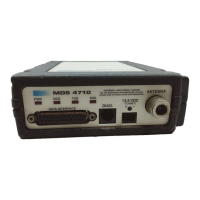
Below are the basic steps for installing the transceiver. Detailed instructions are given in “INSTALLA-
TION” on page 9 of this guide.
1. Install and connect the antenna system to the radio
• Use good quality, low loss coaxial cable. Keep the feedline as short as possible.
• Preset directional antennas in the direction of desired transmission.
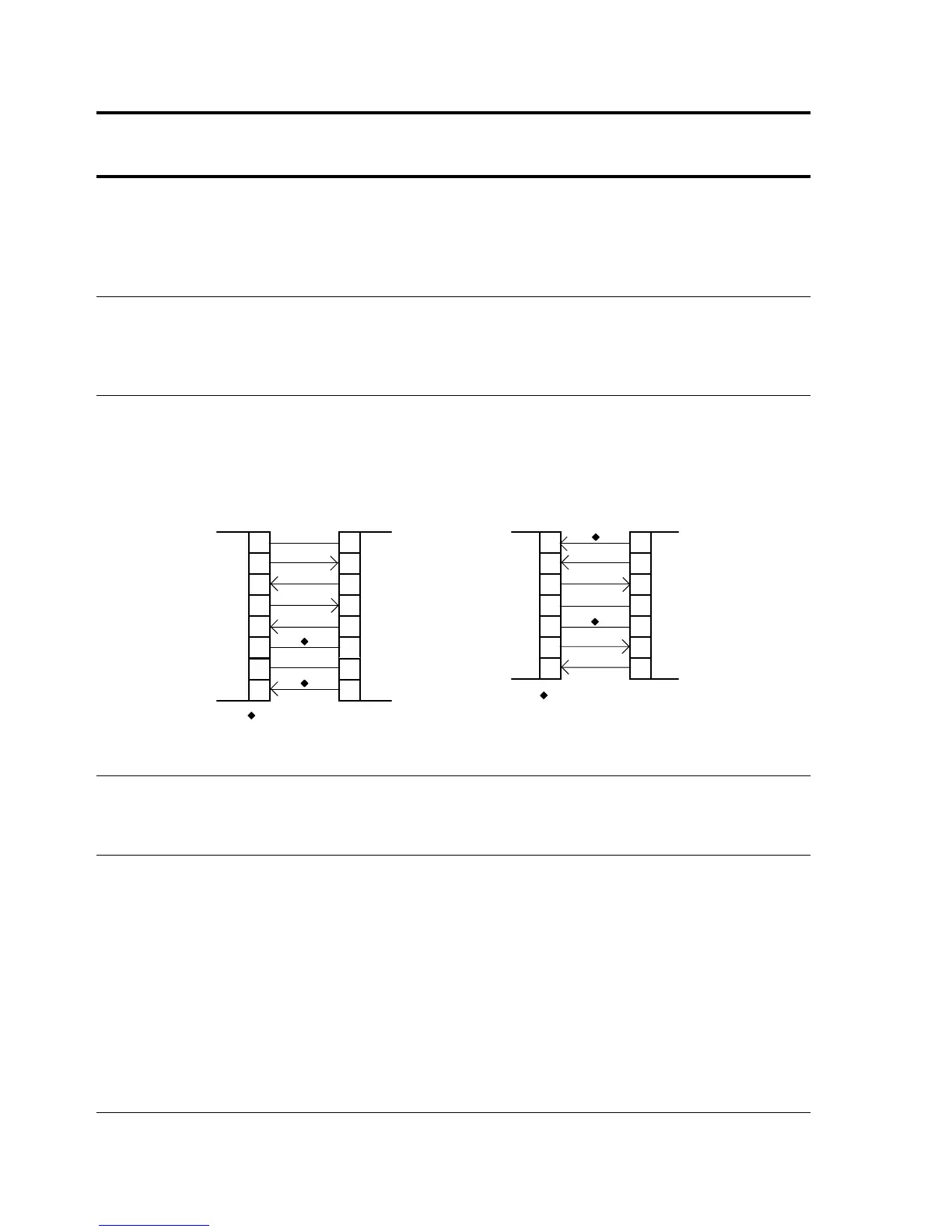
2. Connect the data equipment to the radio’s INTERFACE connector
• Connection to the radio must be made with a DB-25 Male connector. Connections for typical sys-
tems are shown below.
• Connect only the required pins. Do not use a straight-through RS-232 cable with all pins wired.
• Verify the data equipment is configured as DTE. (By default, the radio is configured as DCE.)
3. Apply DC power to the radio (10.5–16 Vdc @ 2.5 A minimum)
• Observe proper polarity. The red wire is the positive lead; the black is negative.
4. Set the radio’s basic configuration with a Hand-Held Terminal (HHT)
• Set the transmit frequency (
TX xxx.xxxx
).
• Set the receive frequency (
RX xxx.xxxx
).
• Set the baud rate/data interface parameters as follows. Use the
BAUD xxxxx abc
command, where
xxxxx
equals the data speed (110–38400 bps) and
abc
equals the communication parameters as
follows:
a
= Data bits (7 or 8)
b
= Parity (N for None, O for Odd, E for Even
c
= Stop bits (1 or 2)
(Example:
BAUD 9600 8N1
)
NOTE: 7N1, 8E2 and 8O2 are invalid parameters and are not supported by the transceiver.
5. Verify proper operation by observing the LED display
• Refer to Table 5 on page 16 for a description of the status LEDs.
• Refine directional antenna headings for maximum receive signal strength using the
RSSI
command.
DB-25 DB-25
TRANSCEIVER
(DCE)
2
3
2
3
RTU
(DTE)
4
5
20
6DSR
DSR
6
TXD
RXD
GND
RTS
CTS
TXD
RXD
GND
4
CTS
5
RTS
DB-9 DB-25
DB-9 to DB-25 ExampleDB-25 to DB-25 Example
11
4
5
TRANSCEIVER
(DCE)
2
3
3
2
RTU
(DTE)
5
20
7
RXD
TXD
DCD
GN
D
DSR
RTS
RXD
TXD
DCD
GN
D
As required for application
5
18
7
6
CTS
DSR
RTS
CTS8
6
4
5
77
GND
GND
8 8
DCD
DCD
As required for application



 To Next Page