Electrical Systems
-------------------------------------------------------------------------------------------------------------------------------------------------------------------------------------------------------------------------------------------------------------------------------------------------------------------
This is the type of battery that is best suited for use with 12 volt operated
lights, appliances and inverters. Deep cycle batteries are designed to have the
majority of their capacity used before being recharged. Available in many sizes
and types, the most common is a non-sealed, liquid electrolyte battery. the non-
sealed types have battery caps. The caps should be removed periodically to
check the level of electrolyte. When a cell is low, only distilled water should be
added. Water consumption will vary depending on many factors: how far the
batteries are depleted, how much voltage, how long the voltage is being applied
to charge the batteries and how often this occurs.
NOTE: Tap water contains minerals which can alter battery
chemistry and ruin the battery. Use only distilled water when refill-
ing the battery.
----------------------------------------------------------------------------------------------------------------------------------------------------------------------------------------------------------------------------
At a minimum, the battery electrolyte level should be
checked at least once a month. Check the level sooner if the
battery is frequently used. The level should be above the top of
the plates, but not overfull. Most batteries have a plastic cup or
well. The electrolyte level should be approximately 1/8” below
the well to allow room for expansion while the battery is being
charged. Over-filling the battery will allow the electrolyte solu-
tion to boil or gas out of the battery cap. Remember to use only
distilled water to refill the battery. A battery with a low elec-
trolyte level will boil the water out rapidly once the plates have
been exposed to air. This process may take only a matter of
hours. If this has happened the battery is more than likely
damaged.
After checking the battery’s electrolyte levels it is also a good
idea to check the battery connections for tightness and corrosion.
If any corrosion is found, disconnect the cables (make sure to
mark their locations) and carefully clean them with a mild solu-
tion of baking soda and water. There are also aerosol products
available that will work. This will neutralize any acid that may
be present. Do not allow the solution to enter the battery as this
will damage the electrolyte balance. Use water to rinse the top of
the battery area when done. Hook the cables back to the battery.
Coat the terminals with petroleum jelly or an anticorrsion grease.
The battery cable to battery terminal connections should be
metal to metal. Periodically, check the batteries for corrosion.
Look for cracks and check the vent plugs. Replace them if
they are cracked or missing. Keep the top of the batteries clean.
The accumulation of electrolyte and dirt may permit small
amounts of current to flow between the terminals, which can
drain the battery.
5•151
EXECUTIVE
Deep Cycle
Battery
Battery Maintenance
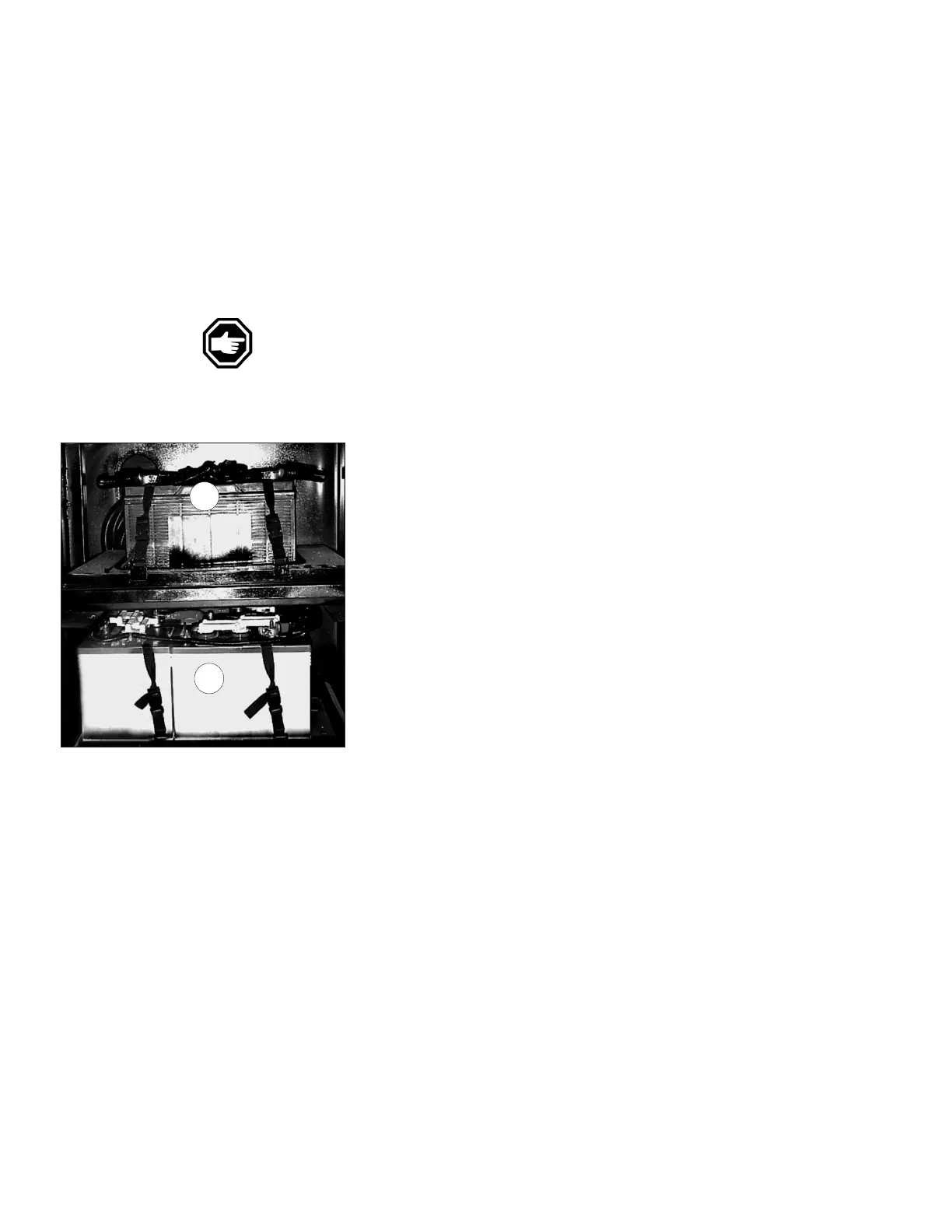
The Chassis Battery (1) and the Domestic Batteries ( 2),
located within the Battery Storage Compartment.
2
1


 To Next Page
 Loading...