2
Cleaning the MULTISTACK stainless steel brazed plate heat exchanger can be done using FlushGun™ with and Acid Flush or Detergent Soak. Each solvent oers an
advantage for removing specic types of debris.
Acid Flush Detergent Soak
• Carbonates • Dirt and Sand Particles
• Sludge • Fibrous Materials
• Rust • Grease
• Plastics
WARNING: Do not use hydrochloric or sulfuric acid for cleaning any MULTISTACK Heat Exchangers. Make sure any chemicals used are
compatible with copper and stainless steel.
The MULTISTACK Heat Exchangers should always be cleaned from the outlet to inlet, by backushing the particles from the corrugated passages.
1. Victaulic Coupling
2. Remove Condenser Headers
3. Remove Evaporator Headers
PREPARING CHILLER FOR CLEANING
1. Disconnect power to chiller.
2. Isolate Chilled Water Loop by closing the condenser and evaporator isolation valves.
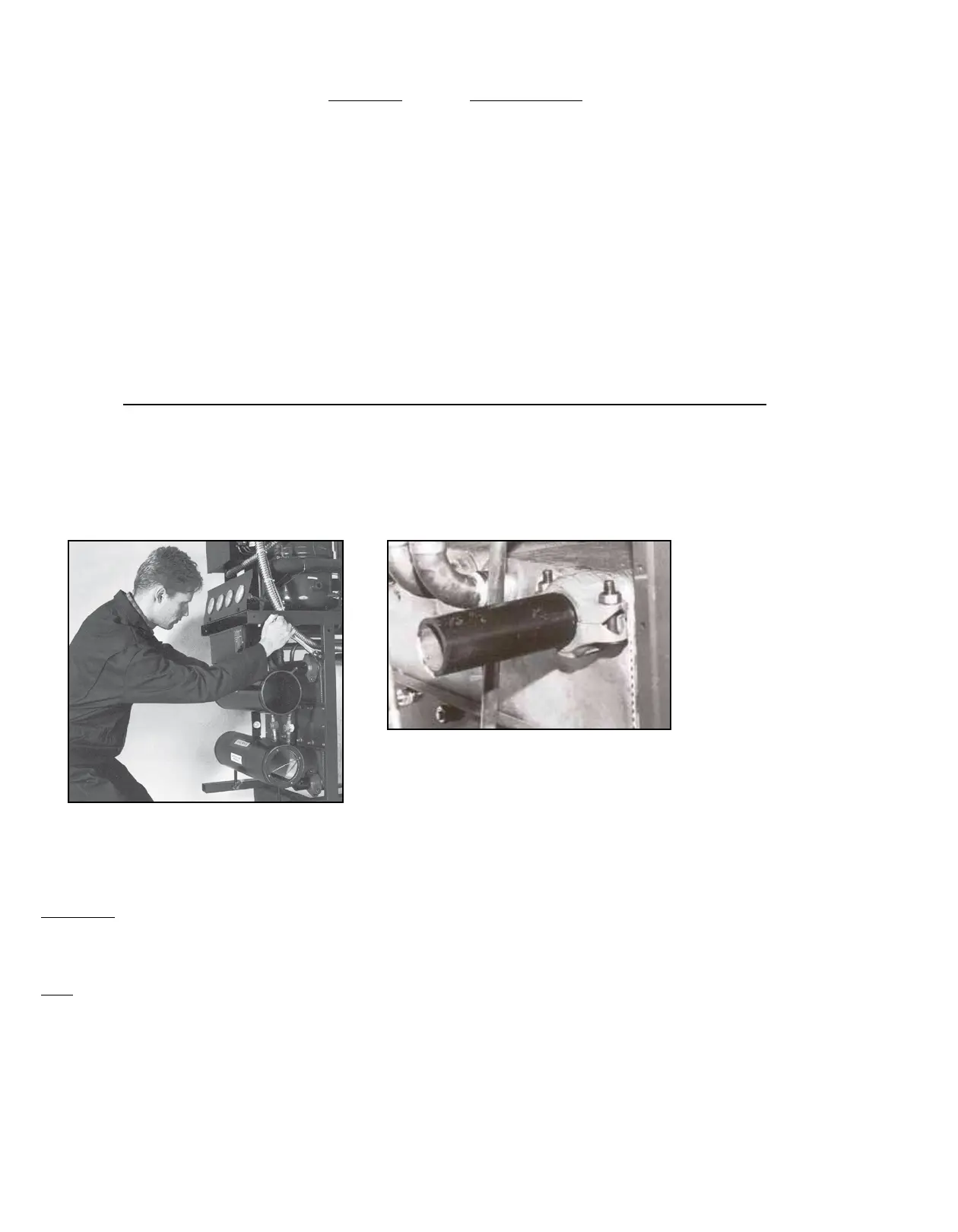
3. Remove end caps and drain the water from the condenser or evaporator (Figure 1).
CAUTION: Be careful not to let the electrical connections get wet. Remove the VICTAULIC COUPLINGS and HEADERS (Figure 1).
Figure 1, Removing header from heat exchanger.
Figure 2, 6” Pipe connection.
NOTE: Install 6” long pipe to condenser or evaporator inlet, using one victaulic coupling and gasket that you removed from unit (Figure 2).
PREPARE SOLVENT
Detergent
Dish soap and hot water (140º F)
CAUTION: When cleaning dicult types of debris (i.e., grease), allow heat exchanger to soak in detergent 1 ½ hours.
Acid
Phosphoric or sulfamic acid such as Nu-Calgon Imperial Grade Scale Remover part number 4360-84. Prepare acid solvent according to the chemical manufacturers’
directions. If further assistance is required, call Multistack, Inc.
CAUTION: When circulating solutions heated to temperatures above 128º F, the module high pressure switches will open. They will need to
reset before starting.
WARNING: Do not use hydrochloric or sulfuric acid for cleaning any MULTISTACK Heat Exchangers. Make sure any chemicals used are
compatible with copper and stainless steel.


 To Next Page
 Loading...