
 Need help?
Do you have a question about the NewStar FPMA-C200 and is the answer not in the manual?
This document provides an installation guide for an LCD monitor/TV ceiling mount, specifically the NewStar FPMA-C200 model. The guide details the steps for securely attaching a flat panel television to a ceiling, offering both functional and safety information for users.
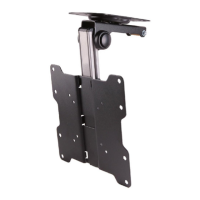
The NewStar FPMA-C200 is a ceiling mount designed to support flat panel LCD monitors or televisions. Its primary function is to provide a secure and adjustable mounting solution, allowing the display to be suspended from the ceiling. This design is particularly useful in environments where wall mounting is not feasible or desirable, such as in rooms with large windows, open-plan spaces, or commercial settings where displays need to be visible from multiple angles. The mount is engineered to hold displays within a specified size and weight range, ensuring stability and safety once installed. A key feature of this mount is its ability to allow for effortless tilt adjustments, enabling users to optimize the viewing angle of their television. This adjustability is crucial for reducing glare and achieving the best possible visual experience from various positions within a room. The overall structure of the mount, as depicted in the diagrams, includes a ceiling plate for attachment, an adjustable pole, and a display mounting bracket, all designed to integrate seamlessly for a clean and professional appearance.
The FPMA-C200 ceiling mount offers several features that enhance its usability and adaptability. The mount is compatible with flat panel televisions ranging from 10 to 32 inches, making it suitable for a wide array of display sizes. Its robust construction is designed to support televisions weighing up to 20 kilograms (44 pounds), ensuring that it can safely accommodate most displays within its recommended size range.
Installation is designed to be straightforward, with clear instructions and diagrams provided in the manual. The process involves securing the ceiling plate, assembling the pole and mounting bracket, and finally attaching the television. The inclusion of various hardware components, such as screws and washers, indicates that the mount is intended for a complete installation package.
A significant usage feature is the mount's adjustability. The "effortless tilt" capability allows users to easily adjust the vertical angle of the television. This is particularly beneficial for optimizing viewing from different heights or to counteract reflections from lighting or windows. The diagrams also suggest that the pole length might be adjustable, or at least that the mounting bracket can be positioned at different points along the pole, offering flexibility in how far the display hangs from the ceiling. This adjustability contributes to a customized viewing experience, catering to the specific needs of the installation environment.
The design emphasizes a clean aesthetic, with the mount's components appearing to be streamlined and unobtrusive once installed. This makes it suitable for both home and professional settings where appearance is important. The mount's ability to suspend a display from the ceiling also helps to free up wall and floor space, contributing to a more open and uncluttered environment.
While the manual does not explicitly detail a separate section for "maintenance features," several aspects of the product and its instructions imply considerations for long-term care and safety.
Firstly, the "Safety Warning" section serves as a crucial maintenance guideline. It advises users to "Be careful to make sure there are no missing or defective parts. Never use defective parts." This highlights the importance of pre-installation inspection, which is a form of preventative maintenance. Ensuring all components are in good condition before assembly is vital for the mount's structural integrity and the safety of the television. This warning also implicitly suggests that if parts become defective over time, they should be replaced, or the mount should be taken out of service to prevent damage or injury.
The instruction to "Adjust torque...if necessary" (Step 4) can be interpreted as a maintenance-related feature. Torque adjustment is often required to ensure that moving parts, such as those allowing for tilt or swivel, maintain their desired friction and hold the display securely in position. Over time, screws or joints might loosen due to vibrations or repeated adjustments, necessitating re-tightening to the correct torque. This step ensures that the mount continues to function as intended, providing stable support and smooth adjustability. Regular checks of these torque settings could be considered a routine maintenance task to prevent the display from sagging or becoming unstable.
The robust construction implied by the weight capacity (20 kgs / 44 lbs) and the use of durable materials (though not explicitly stated, typical for such mounts) suggests that the product is designed for longevity with minimal active maintenance. The focus on secure installation, particularly the caution regarding ceiling types and the recommendation to consult an expert if uncertain, underscores the importance of a correct initial setup to minimize future issues. A properly installed mount, adhering to weight limits and ceiling compatibility, will inherently require less corrective maintenance.
Furthermore, the general nature of ceiling mounts means they are largely static once installed. Beyond occasional dusting or cleaning of the visible surfaces, the primary "maintenance" involves ensuring the mounting hardware remains secure and the adjustable mechanisms operate smoothly. The absence of complex electronic components means there are no software updates or intricate internal parts requiring specialized servicing. The "All Rights Reserved" and "Unauthorized Copying and Reproduction are prohibited" statements on the back cover, while legal disclaimers, also subtly reinforce the idea of a finished, self-contained product that is not intended for user modification beyond the specified installation and adjustment steps.
 General
| Mounting Type | Desk mount |
|---|---|
| Weight Capacity | 8 kg |
| VESA Compatibility | 75x75 mm, 100x100 mm |
| Tilt | Yes |
| Swivel | Yes |
| Rotate | Yes |
| Number of Displays Supported | 1 |
| Color | Black |
| Max Screen Size | 27 inches |
| Material | Steel |
| Tilt Angle Range | 15 degrees |
| Swivel Angle | 180 degrees |
| Mounting | Clamp, Grommet |
| Compatible Devices | Monitor |


 To Next Page