ENGLISH – 7
2. If the guide must be fastened in an intermediate position, it is
possible to use the 4 tabs (C) present on the joining element.
To do this, simply turn the tabs by 90 or 180° (D) (“Figure 9“)
C
D
9
3. insert the bracket (E) into the screw (C) and then make it
slide inside the guide
4. insert the spring, washer and nut (F) onto the screw (C)
(“Figure 10“)
10
5. slide the head (G) to the end of the guide
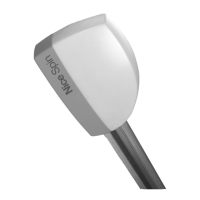
6. turn the guide over and lock the head (G) using the screws
provided (“Figure 11“)
G
11
7. turn the nut (F) to tension the belt (“Figure 12“)
a
An excessively taut belt could cause the gearmo-
tor to break, while an excessively slack belt could
cause unpleasant noises.
F
E
12
8. insert the motor pin (H) into the head (G)
9. position the drawbar (I) and fasten it with the four screws
(“Figure 13“)
l
The motor can also be mounted at 90° with respect
to the guide axis.
H
G
I
13
10. from the opening side of the door, position the wall mounting
bracket (J) on the guide and lock it by inserting the pin and
cotter pin (“Figure 14“)
J
14
11. mount the door mounting bracket (K) on the drawbar (L)
12. insert the relevant pin (M) into the drawbar and lock it in
place with the cotter pin (N) (“Figure 15“)
K
M
N
L
15


 To Next Page
 Loading...