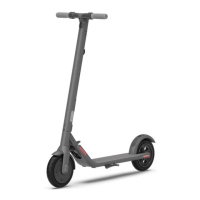
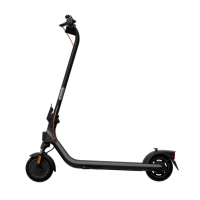
图示
裁切线
压线
反压线
齿刀线 x/x
mm
开槽
技术说明:
1、材质:105G哑粉纸,正反面专色印刷,过哑油,胶装
2、印刷颜色:pantone cool gray 11C ;pantone 1505C ;
3、物理指标:
4、外观工艺要求:图案、字体完整,清晰;表面洁净;不许有明显的外观不良
5、纸箱接口方式:
6、其它:环保要求:欧盟 ROHS;REACH-SVHC;REACH 附录17;
POPs;TSCA:CA65;TPCH 新增:MOAH&MOSH
工艺类别
产品手册-E2 II-欧德
等级
质量
/
标记
处数
更改文件号
姓名
日期
设计
陆飞 240130
吴煜 240130
审核
版本
图幅
比例
CE.04.00.1025.00
A0A
1 1
1:1
B
包材定制-说明书类
校对
投影视角
标准化
批准
第 页 共
页
140*140 mm ±0.5mm
±1mm
0~200mm ±2mm
20~500mm ±3mm
>500mm ±5mm
单瓦楞 ±3mm
双瓦楞 ±5mm
280*140 mm
印刷方向
成型尺寸
公差(无特殊说明下)
展开尺寸
图纸方向
纸箱类
标签类
说明书类
PE袋类
模具成型类
(EPS/纸塑等)
EPE类
外尺寸:0~400mm ±2mm
400~600mm ±3mm
>600mm ±4mm
腔体尺寸:+2/-0mm
+5mm/-3mm
Approx. 20 km/h (12.4 mph)
Approx. 20 km (12.4 miles)
Approx. 12%
Mostly smooth roads or normal asphalt, tarmac roads
-10–40°C (14–104°F)
-10–50°C (14–122°F)
IPX4
Approx. 7.5 h
www.segway.com
Original instructions
CE.04.00.1025.00-A
XXXX
Ninebot eKickScooter
Product Manual
Manuel du produit
Produkthandbuch
Manuale del prodotto
Manual del producto
Instrukcja obsługi
Producthandleiding
Manual do produto
EN
FR
DE
IT
ES
PL
NL
PT
Raccolta Carta
Power Button: Press the button to power on the scooter; press and hold the button for 2 seconds to power it o. When the scooter is on, press the
button to turn on/o the headlight and the tail light, and press twice to switch between the speed modes.
Speedometer: It displays the current speed of the scooter, as well as error codes.
Walk Mode: The headlight and tail light are always on and can't be turned o.
Speed Mode: There are 3 modes available. The top speed is as follows:
* Ranges of Speed Modes: Tested while riding with a full battery, 75 ± 5 kg (165 ± 11 lbs) load, 25 ±5°C (77 ± 41 °F), at the max. speed of each speed
mode on average on pavement.
Left Directioin Indicator: When this icon blinks, it indicates that the direction indicators on the left side are turned on.
Right Directioin Indicator: When this icon blinks, it indicates that the direction indicators on the right side are turned on.
Error Notication: It indicates that the scooter has detected an error.
Temperature Warning: It indicates that the battery temperature has reached 55°C (131°F) or is below 0°C (32°F).
* At this point, the scooter cannot accelerate normally and may not be charged. Do not use until the temperature has reverted to the normal range.
Bluetooth: It indicates that the scooter has been successfully connected to the mobile device.
Battery Level: The total battery power equals 5 bars.
* The battery power is very low when the rst battery bar is red. Please charge your scooter immediately.
Locking Reminder: When the icon lights up, it means the scooter is locked. If abnormal movements are detected, the scooter will start beeping and
the tail light will falsh.
Diagram
1
EN EN
Dashboard & Power Button
Speedometer
Temperature Warning
Locking Reminder
Bluetooth
Speed Mode
Walk Mode
Headlight
Error Notication
Battery Level
Power Button
Model
Mode
E2 II Speed limit E2 Plus II Speed limit
15 km/h (9.3 mph)
20 km/h (12.4 mph)
20 km/h (12.4 mph)
15 km/h (9.3 mph)
20 km/h (12.4 mph)
25 km/h (15.5 mph)
E2 II Ranges*
25 km (15.5 miles)
20 km (12.4 miles)
20 km (12.4 miles)
E2 Plus II Ranges*
25 km (15.5 miles)
25 km (15.5 miles)
20 km (12.4 miles)
D (Standard mode)
E (Energy-saving mode)
S (Sport mode)
Bell
Handlebar
Electronic Throttle
Direction Indicator Switch
Left Direction Indicator
Right Direction Indicator
Left Direction Indicator
Right Direction Indicator
Snap Hook
Dashboard
Brake Lever
Headlight
Stem
Safety Button
Returning mark
Folding Mechanism
Quick-release Lever
Front Shock Absorber
Front Fender
Hub Motor
Charge Port
Footboard
Buckle
Rear Fender
Drum Brake
Tail Light &
Rear Reector
Side Reector
Front Reector
Kickstand
Battery Compartment
Power Button
EN EN
This product is certied to ANSI/CAN/UL-2272 by TUV Rheinland.
The battery complies with UN/DOT 38.3.
The battery complies with ANSI/CAN/UL-2271.
European Union Compliance Statement
Important WEEE information
This symbol on the product or on its packaging indicates that used electrical and electronic products should not be mixed with
unsorted municipal waste. For proper treatment, it is your responsibility to dispose of your waste equipment by arranging to
return it to designated collection points.
Disposing of this product correctly will help save valuable resources and prevent any potential negative eects on human health
and the environment, which could otherwise arise from inappropriate waste handling.
Penalties may be applicable for incorrect disposal of this waste, in accordance with your national legislation.
Please contact your local authority for further details of your nearest designated collection point.
Battery recycling information for Users
This symbol means that batteries and accumulators, at their end-of-life, should not be mixed with unsorted municipal waste.Your
participation is an important part of the eort to minimize the impact of batteries and accumulators on the environment and on
human health. For proper recycling you can return this product or the batteries or accumulators it contains to your supplier or to
a designated collection point.
Disposing of this product correctly will help save valuable resources and prevent any potential negative eects on human health
and the environment, which could otherwise arise from inappropriate waste handling.
Penalties may be applicable for incorrect disposal of this waste, in accordance with your national legislation.
there are separate collection systems for used batteries and accumulators.
Please, dispose of batteries and accumulators correctly at your local community waste collection/recycling center.
Radio Equipment Directive
Ninebot (Changzhou) Tech Co., Ltd. hereby declares that the product listed in this section comply with the essential requirements
and other relevant provisions of the Radio Equipment Directive 2014/53/EU.
Restriction of the use of certain hazardous substances (RoHS) Directive
Ninebot (Changzhou) Tech Co., Ltd. hereby declares the whole product including parts (cables, cords, and so on) meets the
requirements of RoHS Directive 2011/65/EU and amendment Commission Delegated Directive (EU) 2015/863 on the restriction of
the use of certain hazardous substances in electrical and electronic equipment ("RoHS recast" or "RoHS 2.0").
Certications
3
Machinery Directive
Ninebot (Changzhou) Tech Co., Ltd. hereby declares that the product listed in this section comply with the essential requirements
and other relevant provisions of the Machinery Directive 2006/42/EC.
EU Authorised Representative:
Segway-Ninebot Europe
Dynamostraat 7, 1014 BN Amsterdam, The Netherlands.
Ninebot (Changzhou) Tech Co., Ltd. hereby declares that the product model: 051401DD, 051402EE comply with the essential
requirements and other relevant provisions of the Radio Equipment Directive 2014/53/EU, the machinery directive 2006/42/EC,
and the RoHS Directive 2011/65/EU and amendment Commission Delegated Directive (EU) 2015/863.
The declaration of conformity can be viewed at the following address:
https://eu-en.segway.com/instruction-manuals
EN EN
Specications
2
License
Plate Holder
The manufacturer reserves the right to make changes to the product, release rmware updates, and update this manual at any time. Visit www.segway.com or
check the Segway-Ninebot app to download the latest user materials. You must install the app, activate your KickScooter, and obtain the latest updates and
safety instructions.
Le fabricant se réserve le droit d'apporter des modications au produit, de publier des mises à jour du rmware et de mettre à jour ce manuel à tout moment.
Visitez www.segway.com ou consultez l'application Segway-Ninebot pour télécharger les derniers contenus destinés à l'utilisateur. Vous devez installer
l'application, activer votre Kickscooter et obtenir les dernières mises à jour et consignes de sécurité.
Der Hersteller behält sich das Recht vor, jederzeit Änderungen am Produkt vorzunehmen, Firmware-Updates zu veröentlichen und dieses Handbuch zu
aktualisieren. Besuchen Sie www.segway.com oder schauen Sie in der Segway-Ninebot-App nach, um die neuesten Benutzermaterialien herunterzuladen. Sie
müssen die App installieren, Ihren KickScooter aktivieren und die neuesten Aktualisierungen und Sicherheitsanweisungen erhalten.
Il produttore si riserva il diritto di apportare modiche al prodotto, rilasciare aggiornamenti del rmware e aggiornare il presente manuale in qualsiasi
momento. Visitare il sito www.segway.com o controllare l'app Segway-Ninebot per scaricare i materiali più recenti rivolti agli utenti. È necessario installare
l'app, attivare il KickScooter e ottenere gli ultimi aggiornamenti e le istruzioni di sicurezza.
El fabricante se reserva el derecho de realizar cambios en el producto, fabricar actualizaciones de sus piezas y actualizar este manual en cualquier momento.
Visite www.segway.com o consulte la aplicación Segway-Ninebot para descargar los materiales más recientes para el usuario. Debe instalar la aplicación,
activar el KickScooter y obtener las últimas actualizaciones e instrucciones de seguridad.
Producent zastrzega sobie prawo do wprowadzania zmian w produkcie, aktualizacji oprogramowania wbudowanego oraz aktualizacji niniejszej instrukcji w
dowolnym momencie. Odwiedź witrynę www.segway.com lub otwórz aplikację Segway-Ninebot, aby pobrać najnowsze materiały dla użytkownika. Musisz
zainstalować aplikację, aktywować hulajnogę KickScooter, a także uzyskać najnowsze aktualizacje i instrukcje dotyczące bezpieczeństwa.
De fabrikant behoudt zich het recht voor om op elk moment wijzigingen aan het product aan te brengen, rmware-updates uit te brengen en deze
handleiding bij te werken. Ga naar www.segway.com of bekijk de Segway-Ninebot-app om het nieuwste gebruikersmateriaal te downloaden. U moet de app
installeren, uw KickScooter activeren en de nieuwste updates en veiligheidsinstructies verkrijgen.
O fabricante reserva-se o direito de fazer alterações no produto, lançar atualizações de rmware e atualizar este manual a qualquer momento. Visite
www.segway.com ou verique a aplicação Segway-Ninebot para descarregar os materiais de utilizador mais recentes. Deve instalar a aplicação, ativar a sua
KickScooter e obter as últimas atualizações e instruções de segurança.
EN
FR
DE
IT
ES
PL
NL
PT
EN The pictures shown are for illustration purposes only. The actual product may vary.
FR Les images sont présentées à titre indicatif uniquement. Le produit réel peut varier.
DE Die gezeigten Abbildungen dienen nur zur Veranschaulichung. Das tatsächliche Produkt kann davon abweichen.
IT Le immagini mostrate sono solo a scopo illustrativo. Il prodotto eettivo può subire variazioni.
ES Las imágenes que se muestran son solo para nes ilustrativos. El producto real puede variar.
PL Przedstawione obrazy służą wyłącznie do celów ilustracyjnych. Faktyczny produkt może wyglądać inaczej.
NL De getoonde foto's zijn alleen ter illustratie. Het werkelijke product kan variëren.
PT As imagens apresentadas são meramente ilustrativas. O produto real pode variar.
EN ENEN EN
5
Common Failures
Possible causesError code Solution
Bluetooth communication failure
Abnormal 1A phase current sampling of motor
Abnormal 1B phase current sampling of motor
Abnormal 1C phase current sampling of motor
Abnormal throttle hall sampling
Abnormal brake hall sampling
Abnormal default voltage
Abnormal data writing/reading
Incorrect FLASH operation
Default S/N
Abnormal battery temperature
Abnormal controller temperature
Abnormal motor temperature
Motor not calibrated
Abnormal bus current sampling
Motor phase loss
Motor stalled
10
11
12
13
14
15
24
26
31
35
39
40
41
42
45
50
52
Check the connection of the dashboard communication wire
and the control cable, or contact after-sales service or an
authorized dealer.
Please contact after-sales service or an authorized dealer.
Please contact after-sales service or an authorized dealer.
Check whether the KickScooter's S/N is the default S/N.
Check the working environment of battery, or contact
after-sales service or an authorized dealer.
Controller temperature is too high, please contact after-sales
service or an authorized dealer.
Please contact after-sales service or an authorized dealer.
Check whether the wire connected with the motor and the
controller is loose, or contact after-sales service or an
authorized dealer.
Check whether the KickScooter is overload, or contact
after-sales service or an authorized dealer.
Check whether the throttle is pressed when powered on, or
contact after-sales service or an authorized dealer.
Check whether the breke lever is squeezed when powered on,
or contact after-sales service or an authorized dealer.
Check whether the wire connected with the battery cable and
the controller is loose, or contact after-sales service or an
authorized dealer.
4
Ninebot is the trademark of Ninebot (Beijing) Tech Co., Ltd; Segway and the Rider Design are the registered trademarks of
Segway Inc., App Store and Apple Logo are trademarks of Apple Inc. Google Play and the Google Play logo are trademarks of Google
LLC.The Bluetooth® word mark and logos are registered trademarks owned by Bluetooth SIG, Inc. and any use of such marks by
Segway-Ninebot is under license. Other trademarks and trade names are those of their respective owners.
We have attempted to include descriptions and instructions for all the functions of the KickScooter at the time of printing. However, due to
constant improvement of product features and changes of design, your KickScooter may dier slightly from the one shown in this
document. Scan the QR code or visit the Apple App Store (iOS) or the Google Play Store (Android) to download and install the App.
Please note that there are multiple Segway and Ninebot models with different functions, and some of the functions mentioned herein
may not be applicable to your unit. The manufacturer reserves the right to change the design and functionality of the KickScooter product
and documentation without prior notice.
© 2024 Ninebot (Beijing) Tech Co. Ltd. All rights reserved.
(※The Segway-Ninebot App can support KickScooter with built-in Bluetooth)
Trademark
Bluetooth
Frequency Band(s)
Max. RF Power
2.4000-2.4835GHz
20 mW
Approx. 1081 x 475 x 1177 mm
(42.6 x 18.7 x 46.3 in)
Approx. 1081 x 475 x 548 mm (42.6 x
18.7 x 21.6 in)
Approx. 1081 x 475 x 1177 mm
(42.6 x 18.7 x 46.3 in)
Approx. 1081 x 475 x 548 mm
(42.6 x 18.7 x 21.6 in)
Approx. 16.8 kg (37.0 lbs)
Product
Rider
Machine
Battery
Motor
Charger
Ninebot eKickScooter E2 II
Ninebot eKickScooter E2 Plus II
051401DD
Item Parameter
Name
Model
Length × Width × Height
Folded: Length × Width × Height
Max. Payload
Recommended Age
Required Height
Max. Speed
Range at Max. Speed
[1]
Max. Slope
Traversable Terrain
Operating Temperature
Storage Temperature
IP Rating
Duration of Charging
Nominal Voltage
Max. Charging Voltage
Charging Temperature
Nominal Energy
Nominal Capacity
Battery Management System
Output Power
Input Voltage
Max. Output Voltage
Rated Output
Tires
Direction Indicators
8.1-inch inner hollow shock-absorbing tires
36.3 W 100-240
V~ 50-60 Hz
25.2 V
24.2 V 1.5 A
Max. power 0.45 kW, 450 W
Model
NBW25D201D5N-EU
Front and rear direction indicators
Nominal Power 0.25 kW, 250 W
21.6 V
25.2 V
0°C–44°C (32–111°F)
220 Wh
10.2 Ah
Protection against overvoltage/undervoltage/short circuit/overcur-
rent/over temperature
90 kg (198 lbs)
14–60 years old
130–190 cm (4'3''–6'2'')
[1]: Range at Max. Speed: tested while riding with a full battery, 75 ± 5 kg (165 ± 11 lbs) load, 25 ± 5°C (77 ± 41 °F), at the max. speed on average on pavement.
* Some of the factors that aect range include speed, load, number of starts and stops, ambient temperature, etc.
Tire
Other
051402EE
Approx. 16.2 kg ( 35.7 lbs)Net Weight
Item Component
It is required that original Segway-Ninebot parts shall be used for
repairs and replacements.
Functional
parts
Maintenance Method
Every 3
months
Every 6
months or
every
500km
(310 miles)
After 2 years or
the total mileage
>
5,000km
(3,107 miles)
Rear wheel
assembly
Throttle & Brake
levers
Front fork
assembly
Folding
mechanism
Drum brake
assembly
Dashboard
√
Item Component Maintenance Method
Every 3
months
Every 6
months or
every
500km
(310 miles)
After 2 years or
the total mileage
>
5,000km
(3,107 miles)
Function
Inspection
Headlight Check the headlight and see if it lights brightly.
Direction
indicators
Toggle the direction indicator switch to the left/right
respectively, check if the direction indicators on the left/right side
ash normally.
Dashboard Power on the scooter, the dashboard works properly.
Throttle
Charging
Steering
Buttons
Fault
detection
Press and hold the throttle, then release it, checking for acceleration
and deceleration.
After connecting with the Segway-Ninebot app:
1) Update the rmware to the latest version.
2) Check if the notication of the corresponding error code and possible
causes will prompt when the scooter detects an error.
Charge the scooter:
1) Check if the current battery power displays on the dashboard.
2) Check the LED indicator on the battery charger.
Charging: red, Fully charged: green.
Press or toggle the button 3 times without failure.
Test with left turns and right turns (the steering angle is 55).
No resistance or lag when turning.
√
√
√
√√
√√
√√
√√
√√
√√
√√
Battery
assembly
Controller
The battery need to be replaced when it is charged and
discharged for 500 times or the total mileage is more than 10,000
km (6,213 miles).
Note: It is recommended to charge once every 60 days for
long-term storage.
It is required that original Segway-Ninebot parts shall be used for
repairs and replacements.
Important
parts
Hub motor
6
Wiring Diagram
Controller
Motor
Dashboard
Throttle
Brake
Headlight
MCU
Buzzer
Display
Bluetooth
Module
U
V
W
Motor driver
Battery
BMSCell
Voltage
Sampling
Current
Sampling
Tail light
Direction Indicator Direction Indicator Button
Key
7
Recommended Maintenance Schedule
To ensure safe riding, day to day care and regular maintenance are essential. You, the owner, havecontrolandknowledgeofhowoften
youuseyourscooter,howhardyouuseitandwhereyouuseit. It is the owner's responsibility to perform regular checks and bring your
scooter to authorized service center for inspection and service. Please refer to the maintenance schedule below.
Note: This maintenance schedule charges a service fee.
Item Component
Mainframe parts Use a soft, wet cloth to wipe the mainframe clean.
Tire wear
Screws on the
stem top
Mainframe
maintenance
Check if the tires are cracked, deformed, or signicantly
worn.
Tighten the six screws xed with the handlebar and the
stem. The suggested torque is 5.5±0.3 N·m.
Tighten the screw on the throttle. The suggested torque is
2±0.1 N·m.
Tighten the screws on the brake levers. The suggested
torque is 5±0.1 N·m.
Tighten the screws on the stem top. The suggested torque
is 2±0.1 N·m.
Maintenance Method
Every 3
months
Every 6
months or
every
500km
(310 miles)
After 2 years or
the total mileage
>
5,000km
(3,107 miles)
√√
√√
√√√
√√√
Hub motor
Rear wheel
maintenance
Drum Brake
To accelerate and decelerate, check if the hub motor is
stalled or has abnormal sounds.
Check if the rear wheel is stalled or gets shaky, or the axis shaft
is unbalanced.
1) Spin the rear wheel, it spins normally. The rear wheel shall
not stuck or make abnormal sounds.
Note: Slight noise does not aect riding safety. But if the drum
brake makes a loud noise when you apply brakes, please
contact customer service for support.
2) Squeeze the brake lever, the rear wheel stops moving.
√√
√√
√√
Function
Inspection
Approx. 25 km/h (15.5 mph)
0.3 kW, 300 W
0.50 kW, 500 W
Bouton marche/arrêt : Appuyez sur le bouton pour allumer le scooter; appuyez et maintenez le bouton pendant 2 secondes pour l'éteindre. Lorsque
le scooter est allumé, appuyez sur le bouton pour allumer/éteindre le feu de route et le feu arrière, et appuyez deux fois pour basculer entre les
modes de vitesse.
Compteur de vitesse : Il ache la vitesse actuelle du scooter, ainsi que les codes d'erreur.
Mode Marche : Le feu de route et le feu arrière sont toujours allumés et ne peuvent pas être éteints.
Mode de vitesse : 3 modes sont disponibles. La vitesse maximale est la suivante:
* Autonomies des modes de vitesse: Testées avec une batterie pleine, une charge de 75 ± 5 kg (165 ± 11 lbs), à 25 ± 5 °C (77 ± 41 °F), à la vitesse
maximale de chaque mode de vitesse en moyenne sur chaussée.
Indicateur de direction gauche: Lorsque cette icône clignote, cela indique que les indicateurs de direction sur le côté gauche sont allumés.
Indicateur de direction droite: Lorsque cette icône clignote, cela indique que les indicateurs de direction sur le côté droit sont allumés.
Message d'erreur: Le symbole indique que le scooter a détecté une erreur.
Avertissement de température: Il indique que la température de la batterie a atteint 55°C (131°F) ou est inférieure à 0°C (32°F).
* À ce stade, le scooter ne peut pas accélérer normalement et peut ne pas être chargé. Ne pas utiliser tant que la température n'est pas revenue à la
normale.
Bluetooth: Cela indique que le scooter a été connecté avec succès à l'appareil mobile.
Niveau de batterie: La puissance totale de la batterie correspond à 5 barres.
* La puissance de la batterie est très faible lorsque la première barre de batterie est rouge. Veuillez recharger votre scooter immédiatement.
Rappel de verrouillage: Lorsque l'icône s'allume, cela signie que le scooter est verrouillé. Si des mouvements anormaux sont détectés, le scooter
commencera à émettre un bip et le feu arrière s'allumera.
Diagramme
1
Tableau de bord & bouton marche/arrêt
Compteur de vitesse
Avertissement
de température
Rappel de verrouillage
Bluetooth
Mode de vitesse
Mode Marche
Feu de route
Message d'erreur
Niveau de batterie
Bouton marche/arrêt
Modèle
Mode
Limite de vitesse E2 II Limite de vitesse E2 Plus II
15km/h (9,3mph)
20km/h (12,4mph)
20km/h (12,4mph)
15km/h (9,3mph)
20km/h (12,4mph)
25km/h (15,5mph)
Autonomie E2 Plus II*
25 km (15,5 miles)
25 km (15,5 miles)
20 km (12,4 miles)
Autonomie E2 II*
25 km (15,5 miles)
20 km (12,4 miles)
20 km (12,4 miles)
D (Mode Standard)
E (mode économie d'énergie)
S (Mode Sport)
Sonnette
Guidon
Accélérateur électronique
Bouton d'indicateur de direction
Indicateur de direction gauche
Indicateur de direction droit
Mousqueton
Tableau de bord
Frein à main
Feu de route
Tige
Bouton de sécurité
Marque de retour
Mécanisme de pliage
Levier à dégagement rapide
Garde-boue avant
Moyeu moteur
Port de charge
Repose-pieds
Boucle
Garde-boue arrière
Frein à tambour
Plaque
d'immatriculation
Catadioptre latéral
Catadioptre avant
Amortisseur de
chocs avant
Béquille
Compartiment de la batterie
Bouton marche/arrêt
FR
Ce produit est certié ANSI/CAN/UL-2272 par TUV Rheinland.
La batterie est conforme à NU/DOT 38,3
La batterie est conforme à la norme ANSI/CAN/UL 2271.
Déclaration de conformité de l'Union européenne
Informations importantes sur les DEEE
Ce symbole sur le produit ou sur son emballage indique que les produits électriques et électroniques usagés ne doivent pas être
mélangés avec les déchets ménagers non triés. Pour un traitement approprié, il est de votre responsabilité d'éliminer vos déchets
d'équipements en prenant des dispositions pour les rapporter aux points de collecte désignés.
L'élimination correcte de ce produit contribuera à économiser des ressources précieuses et à prévenir tout eet négatif potentiel sur la
santé humaine et l'environnement, qui pourrait autrement résulter d'un traitement inapproprié des déchets.
Des sanctions peuvent être applicables en cas d'élimination incorrecte de ces déchets, conformément à votre législation nationale.
Veuillez contacter votre autorité locale pour plus de détails sur le point de collecte désigné le plus proche.
Informations sur le recyclage de la batterie pour les utilisateurs
Ce symbole signie que les piles et accumulateurs, en n de vie, ne doivent pas être mélangés avec les déchets municipaux non triés.
Votre participation est une part importante de l'eort visant à minimiser l'impact des piles et accumulateurs sur l'environnement et sur la
santé humaine. Pour un recyclage approprié, vous pouvez retourner ce produit ou les piles ou accumulateurs qu'il contient à votre
fournisseur ou à un point de collecte désigné, ce qui est gratuit.
L'élimination correcte de ce produit contribuera à économiser des ressources précieuses et à prévenir tout eet négatif potentiel sur la
santé humaine et l'environnement, qui pourrait autrement résulter d'un traitement inapproprié des déchets.
Des sanctions peuvent être applicables en cas d'élimination incorrecte de ces déchets, conformément à votre législation nationale.
Il existe des systèmes de collecte séparés pour les piles et accumulateurs usagés.
Veuillez éliminer correctement les piles et accumulateurs dans votre centre local de collecte/recyclage des déchets.
Directive sur les équipements radio
Ninebot (Changzhou) Tech Co., Ltd. déclare par la présente que le produit répertorié dans cette section est conforme aux exigences
essentielles et aux autres dispositions pertinentes de la directive sur les équipements radio 2014/53/UE.
Directive sur la limitation de l'utilisation de certaines substances dangereuses (RoHS)
Ninebot (Changzhou) Tech Co., Ltd. déclare par la présente que l'ensemble du produit, y compris les pièces (câbles, cordons, etc.) est
conforme aux exigences de la directive RoHS 2011/65/UE et de l'amendement à la directive déléguée de la Commission (UE) 2015/863
sur la restriction de l'utilisation de certaines substances dangereuses dans les équipements électriques et électroniques («Refonte RoHS
» ou «RoHS 2.0»).
Certications
Directive Machines
Ninebot (Changzhou) Tech Co., Ltd. déclare par la présente que le produit répertorié dans cette section est conforme aux exigences
essentielles et aux autres dispositions pertinentes de la directive sur les machines 2006/42/CE.
Représentant autorisé:
Segway-Ninebot Europe
Dynamostraat 7, 1014 BN Amsterdam, Pays-Bas.
Ninebot (Changzhou) Tech Co., Ltd. déclare par la présente que le modèle de produit: 051401DD, 051402EE sont conformes aux
exigences essentielles et aux autres dispositions pertinentes de la directive sur les équipements radio 2014/53/UE, de la directive sur les
machines 2006/42/CE et de la directive RoHS 2011/65/UE et de la modication de la directive déléguée de la Commission (UE ) 2015/863.
La déclaration de conformité est consultable à l'adresse suivante:
https://eu-en.segway.com/instruction-manuals
Spécications
Schéma de câblage
Contrôleur
Moteur
Tableau de bord
Accélérateur
électronique
Frein
Feu de route
MCU
Avertisseur
sonore
Achage
Clé
U
V
W
Pilote de
moteur
Batterie
BMSCellule
Feu arrière
Indicateur de direction
Bouton indicateur
de direction
Échecs courants
Causes possibles
Code d'erreur
Solution
Échec de la communication Bluetooth
Échantillonnage anormal du courant de phase 1A du moteur
Échantillonnage anormal du courant de phase 1B du moteur
Échantillonnage anormal du courant de phase 1C du moteur
Échantillonnage anormal du capteur Hall
de l’accélérateur électronique
Échantillonnage anormal du capteur Hall de freinage
Tension par défaut anormale
Écriture/lecture de données anormale
Opération FLASH erronée
S/N par défaut
Température de batterie anormale
Température anormale du contrôleur
Température anormale du moteur
Moteur non calibré
Échantillonnage de courant de l mère anormal
Perte de phase moteur
Moteur calé
10
11
12
13
14
15
24
26
31
35
39
40
41
42
45
50
52
Vériez la connexion du câble de communication du tableau de
bord et du câble de commande, ou contactez le service
après-vente ou un revendeur agréé.
Veuillez contacter le service après-vente ou un revendeur
agréé.
Veuillez contacter le service après-vente ou un revendeur
agréé.
Vériez si le S/N du KickScooter est le S/N par défaut.
Vériez l'environnement de fonctionnement de la batterie ou
contactez le service après-vente ou un revendeur agréé.
La température du contrôleur est trop élevée, veuillez contacter le
service après-vente ou un revendeur agréé.
Veuillez contacter le service après-vente ou un revendeur
agréé.
Vériez si le câble connecté au moteur et au contrôleur est
desserré, ou contactez le service après-vente ou un revendeur
agréé.
Vériez si le KickScooter est surchargé ou contactez le service
après-vente ou un revendeur agréé.
Vériez si l'accélérateur électronique est enfoncé lors de la mise sous tension ou
contactez le service après-vente ou un revendeur agréé.
Vériez si le levier de frein est serré lors de la mise sous tension ou
contactez le service après-vente ou un revendeur agréé.
Vériez si le câble connecté au câble de communication de la
batterie et au contrôleur est desserré, ou contactez le service
après-vente ou un revendeur agréé.
Ninebot est la marque de Ninebot (Beijing) Tech Co., Ltd; Segway et le Rider Design sont des marques déposées de Segway Inc., App
Store et le logo Apple sont des marques d'Apple Inc. Google Play et le logo Google Play sont des marques de Google LLC. La marque
verbale et les logos Bluetooth® sont des marques déposées appartenant à Bluetooth SIG, Inc. et toute utilisation de ces marques par
Segway-Ninebot se fait sous licence. Les autres marques et noms commerciaux appartiennent à leurs propriétaires respectifs.
Nous nous sommes eorcés d'inclure des descriptions et des instructions pour toutes les fonctions du KickScooter au moment de
l'impression. Cependant, en raison de l'amélioration constante des fonctionnalités de l'appareil et des modications de conception, votre
KickScooter peut diérer légèrement de celui présenté dans ce document. Scannez le QR code ou visitez l'Apple App Store (iOS) ou le
Google Play Store (Android) pour télécharger et installer l'application.
Veuillez noter qu'il existe plusieurs modèles Segway et Ninebot ayant diérentes fonctions et certaines des fonctions mentionnées ici
peuvent ne pas concerner votre appareil. Le fabricant se réserve le droit de modier la conception et les fonctionnalités du produit et de
la documentation KickScooter sans préavis.
© 2024 Ninebot (Beijing) Tech Co., Ltd. Tous droits réservés.
(※L'application Segway-Ninebot peut prendre en charge le KickScooter avec Bluetooth intégré)
Marque déposée
Bluetooth
Bande(s) de fréquence
Puissance radio max.
2,4000 - 2,4835GHz
20 mW
Environ 1081 x 475 x 1177 mm
(42,6 x 18,7 x 46,3 po)
Environ 1081 x 475 x 548 mm (42,6
x 18,7 x 21,6 po)
Environ 1081 x 475 x 1177 mm
(42,6 x 18,7 x 46,3 po)
Environ 1081 x 475 x 548 mm (42,6
x 18,7 x 21,6 po)
Environ 16,8 kg (37,0 lb)
Produit
Conducteur
Machine
Batterie
Moteur
Chargeur
Ninebot eKickScooter E2 II Ninebot eKickScooter E2 Plus II
051401DD
Élément Paramètres
Nom
Modèle
Longueur × Largeur × Hauteur
Plié: Longueur × Largeur × Hauteur
Charge utile maximale :
Âge recommandé
Hauteur requise
Vitesse maximale
Autonomie en vitesse max.
[1]
Pente maximale
Terrain traversable
Température de fonctionnement
Température de stockage
Protection IP
Durée de charge
Tension nominale
Tension de charge max.
Température de charge
Énergie nominale
Capacité nominale
Système de gestion de batterie
Puissance de sortie
Tension d'entrée
Tension de sortie max.
Puissance nominale
Pneus
Indicateurs de direction
Pneus intérieurs creux absorbant les chocs de 8,1 pouces
36,3W
100 à 240V ~ 50 à 60Hz
25,2V
24,2V 1,5A
Puissance max.
Modèle
0,45kW, 450W
NBW25D201D5N-EU
Indicateurs de direction avant et arrière
Puissance nominale 0,25kW, 250W
21,6 V
25,2 V
0°C à 44°C (32 à 111°F)
220Wh
10,2Ah
Protection contre les surtensions/sous-tensions/court-circuit/
surintensité/surchaue
Environ. 20 km/h (12,4 mi/h)
Environ. 20 km (12,4 miles)
Environ 12%
Routes principalement lisses ou asphalte normal, routes goudronnées
-10 à 40°C (14 à 104°F)
-10 à 50°C (14 à 122°F)
IPX4
Environ 7,5h
Environ. 25 km/h (15,5 mi/h)
0,3 kW, 300 W
0,50 kW, 500 W
90 kg (198 lb)
14 à 60 ans
130 - 190cm (4'3' – 6'2'')
[1]: Autonomie en vitesse max.: Testée en roulant avec une batterie pleine, une charge de 75 ± 5 kg (165 ± 11 lbs), 25 ± 5 °C (77 ± 41 °F), à la vitesse maximale en moyenne sur
chaussée.
* Certains des facteurs qui inuent sur la plage d’autonomie comprennent: la vitesse, le nombre de démarrages et d'arrêts, la température ambiante, etc.
Pneu
Autre
051402EE
Environ 16,2 kg (35,7 lb)Poids net
Calendrier d'entretien recommandé
An d’assurer une conduite en toute sécurité, un soin quotidien et un entretien régulier sont essentiels. En tant que propriétaire, vous avez le
contrôle et la connaissance de la fréquence à laquelle vous utilisez votre scooter, de l’intensité avec laquelle vous l'utilisez et de l'endroit où vous
l'utilisez. Il est de la responsabilité du propriétaire d'eectuer des vérications régulières et d'apporter votre scooter au centre de service agréé pour
inspection et entretien. Veuillez vous référer au calendrier d'entretien ci-dessous.
Remarque: Ce calendrier d’entretien entraîne des frais de service.
Élément Composant
Il est nécessaire que des pièces d'origine Segway-Ninebot soient
utilisées pour les réparations et les remplacements.
Pièces
fonctionnelles
Méthode d'entretien
Tous les 3
mois
Tous les
6 mois ou
tous les 500
km (310
miles)
Après 2 ans ou
après avoir atteint
un kilométrage total
> 5,000km (3,107
miles)
Ensemble
roue arrière
Leviers
d'accélérateur
et de frein
Ensemble de
fourche avant
Mécanisme de
pliage
Ensemble de
frein à tambour
Tableau de bord
√
Élément Composant
Pièces du cadre
Utilisez un chion doux et humide pour essuyer le châssis
principal pour le nettoyer.
Usure des pneus
Vis sur le dessus de
la tige
Maintenance du
cadre
Vériez si les pneus sont ssurés, déformés ou très usés.
Serrez les six vis xées au guidon et à la tige. Le couple suggéré
est de 5,5±0,3 N·m.
Serrez la vis sur l’accélérateur électronique. Le couple suggéré
est de 2±0,1 N·m.
Serrez les vis sur les leviers de frein. Le couple suggéré est de
5±0,1 N·m.
Serrez les vis sur le dessus de la tige. Le couple suggéré est de
2±0,1 N·m.
Méthode d'entretien
Tous les 3
mois
Tous les
6 mois ou
tous les
500km (310
miles)
Après 2 ans ou après
avoir atteint un
kilométrage total >
5,000km (3,107
miles)
√√
√√
√√√
√√√
Élément Composant
Moyeu moteur
Entretien de la
roue arrière
Frein à tambour
Pour accélérer et décélérer, vériez si le moyeu moteur est
bloqué ou émet des sons anormaux.
Vériez si la roue arrière est bloquée ou tremble, ou si l'arbre
de l'axe est déséquilibré.
1) Faites tourner la roue arrière, elle tourne normalement. La roue
arrière ne doit pas se coincer ou faire de bruits anormaux.
Remarque : un léger bruit n'aecte pas la sécurité de conduite. Mais si
le frein à tambour fait un bruit fort lorsque vous utilisez les freins,
veuillez contacter le service client pour obtenir de l'aide.
2) Appuyez sur le levier de frein, la roue arrière s'immobilise.
Méthode d'entretien
Tous les 3
mois
Tous les
6 mois ou
tous les
500km
(310 miles)
Après 2 ans ou après
avoir atteint un
kilométrage total >
5,000km (3,107 miles)
√√
√√
√√
Contrôle des
fonctions
Contrôle des
fonctions
Feu de route Vériez le feu de route et voyez s'il s'allume bien.
Indicateurs de
direction
Basculez le bouton d’indication de direction vers la gauche/droite
respectivement, vériez si les indicateurs de direction du côté
gauche/droit clignotent normalement.
Tableau de bord
Allumez le scooter, le tableau de bord fonctionne correctement.
Accélérateur
électronique
Charge
Pilotage
Boutons
Détection de
panne
Appuyez et maintenez l’accélérateur électronique, puis relâchez-le, en
vériant l'accélération et la décélération.
Après connexion avec l'application Segway-Ninebot:
1) Mettez à jour le rmware vers la dernière version.
2) Vériez si la notication du code d'erreur correspondant et des causes
possibles s'ache lorsque le scooter détecte une erreur.
Chargez le scooter:
1) Vériez si la puissance actuelle de la batterie s’ache sur le tableau de bord.
2) Vériez l'indicateur LED sur le chargeur de batterie.
Charge: rouge, complètement chargé: vert.
Appuyez ou actionnez le bouton 3 fois sans échec.
Testez avec des virages à gauche et des virages à droite (l'angle
de braquage est de 55 °).
Pas de résistance ni de décalage lors des virages.
√
√
√
√√
√√
√√
√√
√√
√√
√√
Batterie
Contrôleur
La batterie doit être remplacée lorsqu'elle est chargée et
déchargée 500 fois ou que le kilométrage total est supérieur à
10,000km (6,213 miles).
Remarque: Il est recommandé de charger une fois tous les 60
jours pour un stockage à long terme.
Il est nécessaire que des pièces d'origine Segway-Ninebot soient
utilisées pour les réparations et les remplacements.
Pièces
importantes
Moyeu moteur
Indicateur de direction gauche
Indicateur de direction droit
Feu arrière et
Clignotant arrière
Module
Bluetooth
Échantillonnage
de tension
Échantillonnage
actuel
FR
FR FR
FR FR FR FR
FR FR
Ein-/Aus-Schalter: Drücken Sie den Schalter, um den Roller einzuschalten; halten Sie den Schalter 2 Sekunden lang gedrückt, um ihn auszuschalten.
Wenn der Roller eingeschaltet ist, drücken Sie die Taste, um das Frontlicht und das Rücklicht ein-/auszuschalten, und drücken Sie zweimal, um
zwischen den Geschwindigkeitsmodi zu wechseln.
Tachometer: Er zeigt die aktuelle Geschwindigkeit des Rollers sowie Fehlercodes an.
Laufmodus: Das Frontlicht und das Rücklicht sind immer eingeschaltet und können nicht ausgeschaltet werden.
Geschwindigkeitsmodus: Es sind 3 Modi verfügbar. Die Höchstgeschwindigkeit ist wie folgt:
* Reichweiten der Geschwindigkeitsmodi: Getestet während der Fahrt mit vollem Akku, 75 ± 5 kg (165 ± 11 lbs) Last, 25 ± 5°C (77 ± 41 °F), bei max.
Durchschnittsgeschwindigkeit jedes Geschwindigkeitsmodus auf Asphalt.
Linker Fahrtrichtungsanzeiger: Wenn dieses Symbol blinkt, bedeutet dies, dass die Fahrtrichtungsanzeiger auf der linken Seite eingeschaltet sind.
Rechter Fahrtrichtungsanzeiger: Wenn dieses Symbol blinkt, bedeutet dies, dass die Fahrtrichtungsanzeiger auf der rechten Seite eingeschaltet sind.
Fehlerbenachrichtigung: Zeigt an, dass der Roller einen Fehler erkannt hat.
Temperaturwarnhinweis: Zeigt an, dass die Temperatur des Akkus 55 °C (131 °F) erreicht hat oder unter 0 °C (32 °F) liegt.
* Zu diesem Zeitpunkt kann der Roller nicht mehr normal beschleunigen und darf nicht mehr geladen werden. Verwenden Sie ihn erst, wenn die
Temperatur wieder in den normalen Bereich zurückgegangen ist.
Bluetooth: Zeigt an, dass der Roller erfolgreich mit dem Mobilgerät verbunden wurde.
Akkuladestand: Die Gesamtleistung des Akkus liegt bei 5 Balken.
* Die Akkuleistung ist sehr gering, wenn der erste Akkubalken rot ist. Bitte laden Sie Ihren Roller sofort auf.
Verriegelungserinnerung: Wenn das Symbol aueuchtet, bedeutet dies, dass der Roller verriegelt ist. Wenn abnormale Bewegungen festgestellt
werden, beginnt der Roller zu piepen und das Rücklicht blinkt.
Abbildung
1
Anzeigetafel & Ein-/Aus-Schalter
Tachometer
Temperaturwarnhinweis
Verriegelungserinnerung
Bluetooth
Geschwindigkeitsmodus
Laufmodus
Frontlicht
Fehlerbenachrichtigung
Akkuladestand
Ein-/Aus-Schalter
Modell
Modus
Höchstgeschwindigkeit für E2 II Höchstgeschwindigkeit für E2 Plus II
15 km/h (9,3 mph)
20 km/h (12,4 mph)
20 km/h (12,4 mph)
15 km/h (9,3 mph)
20 km/h (12,4 mph)
25 km/h (15,5 mph)
Reichweiten E2 Plus II*
25 km (15,5 Meilen)
25 km (15,5 Meilen)
20 km (12,4 Meilen)
Reichweiten E2 II*
25 km (15,5 Meilen)
20 km (12,4 Meilen)
20 km (12,4 Meilen)
D (Standardmodus)
E (Energiesparmodus)
S (Sport-Modus)
Klingel
Lenker
Elektronischer Gasgri
Fahrtrichtungsanzeigerschalter
Linker Fahrtrichtungsanzeiger
Rechter Fahrtrichtungsanzeiger
Einrasthaken
Anzeigetafel
Bremshebel
Frontlicht
Lenkstange
Sicherheitstaste
Entsprechende Markierung
Klappmechanismus
Schnellspannhebel
Kotügel vorne
Vorderer Stoßdämpfer
Radnabenmotor
Ladeanschluss
Trittbrett
Schließe
Kotügelbremse
Trommelbremse
Seitenreektor
Frontreektor
Ständer
Akkufach
Ein-/Aus-Schalter
DE
Dieses Produkt ist vom TÜV Rheinland nach ANSI/CAN/UL-2272 zertiziert.
Der Akku entspricht den UN/DOT 38.3-Vorschriften.
Der Akku entspricht den ANSI/CAN/UL-2271-Vorschriften.
Konformitätserklärung der Europäischen Union
Wichtige WEEE-Informationen
Dieses Symbol auf dem Produkt oder seiner Verpackung weist darauf hin, dass gebrauchte elektrische und elektronische Produkte nicht
mit unsortiertem Hausmüll vermischt werden dürfen. Um eine ordnungsgemäße Verarbeitung zu gewährleisten, sind Sie dafür
verantwortlich, Ihre Altgeräte bei den dafür vorgesehenen Sammelstellen abzugeben.
Die ordnungsgemäße Entsorgung dieses Produkts trägt dazu bei, wertvolle Ressourcen zu sparen und mögliche negative Auswirkungen
auf die menschliche Gesundheit und die Umwelt zu vermeiden, die sonst durch unsachgemäße Abfallentsorgung entstehen könnten.
Bei unsachgemäßer Entsorgung dieser Abfälle können gemäß den nationalen Rechtsvorschriften Strafen verhängt werden.
Wenden Sie sich bitte an Ihre örtliche Behörde, um weitere Informationen zur nächstgelegenen ausgewiesenen Sammelstelle zu
erhalten.
Informationen zum Batterierecycling für Benutzer
Dieses Symbol bedeutet, dass Batterien und Akkumulatoren am Ende ihrer Lebensdauer nicht mit unsortiertem Hausmüll vermischt
werden dürfen. Ihre Teilnahme ist ein wichtiger Teil der Bemühungen, die Auswirkungen von Batterien und Akkumulatoren auf die
Umwelt und die menschliche Gesundheit zu minimieren. Für ein ordnungsgemäßes Recycling können Sie dieses Produkt oder die darin
enthaltenen Batterien oder Akkus an Ihren Lieferanten oder an eine dafür vorgesehene Sammelstelle zurückgeben.
Die ordnungsgemäße Entsorgung dieses Produkts trägt dazu bei, wertvolle Ressourcen zu sparen und mögliche negative Auswirkungen
auf die menschliche Gesundheit und die Umwelt zu vermeiden, die sonst durch unsachgemäße Abfallentsorgung entstehen könnten.
Bei unsachgemäßer Entsorgung dieser Abfälle können gemäß den nationalen Rechtsvorschriften Strafen verhängt werden.
Es gibt getrennte Sammelsysteme für Altbatterien und -akkumulatoren.
Bitte entsorgen Sie Batterien und Akkus ordnungsgemäß bei Ihrer örtlichen kommunalen Sammel-/Recyclingstelle.
Funkanlagenrichtlinie
Hiermit erklärt Ninebot (Changzhou) Tech Co., Ltd., dass das in diesem Abschnitt aufgeführte Produkt den grundlegenden
Anforderungen und anderen relevanten Bestimmungen der Funkanlagenrichtlinie 2014/53/EU entspricht.
Richtlinie zur Einschränkung der Verwendung bestimmter gefährlicher Stoe (RoHS)
Ninebot (Changzhou) Tech Co., Ltd. erklärt hiermit, dass das gesamte Produkt einschließlich der Teile (Kabel, Leitungen usw.) die
Anforderungen der RoHS-Richtlinie 2011/65/EU und der Änderung der Delegierten Richtlinie (EU) 2015/863 der Kommission zur
Einschränkung der Verwendung bestimmter gefährlicher Stoe in Elektro- und Elektronikgeräten („RoHS-Neufassung“ oder „RoHS 2.0“)
erfüllt.
Zertizierungen
Maschinenrichtlinie
Hiermit erklärt Ninebot (Changzhou) Tech Co., Ltd., dass das in diesem Abschnitt aufgeführte Produkt den grundlegenden
Anforderungen und anderen relevanten Bestimmungen der Maschinenrichtlinie 2006/42/EG entspricht.
Bevollmächtigter Vertreter (EU):
Segway-Ninebot Europa
Dynamostraat 7, 1014 BN Amsterdam, Niederlande.
Ninebot (Changzhou) Tech Co., Ltd. erklärt hiermit, dass das Produktmodell: 051401DD, 051402EE den grundlegenden Anforderungen
und anderen relevanten Bestimmungen der Funkanlagenrichtlinie 2014/53/EU, der Maschinenrichtlinie 2006/42/EG und der
RoHS-Richtlinie 2011/65/EU und der Änderung der Delegierten Richtlinie (EU) 2015/863 entspricht.
Die Konformitätserklärung kann unter folgender Adresse eingesehen werden:
https://eu-en.segway.com/instruction-manuals
Technische Daten
Schaltplan
Controller
Motor
Anzeigetafel
Elektronischer
Gasgri
Bremse
Frontlicht
MCU
Summer
Schlüssel
Display
U
V
W
Motortreiber
Akku
BMSZelle
Rücklicht
Fahrtrichtungsanzeiger Fahrtrichtungsanzeiger-Taste
Häuge Fehler
Mögliche UrsachenFehlercode Lösung
Bluetooth-Kommunikationsfehler
Anormale 1A-Phasenstrom-Abtastung des Motors
Anormale 1B-Phasenstrom-Abtastung des Motors
Anormale 1C-Phasenstrom-Abtastung des Motors
Anormale Abtastung des Gasgri-Halls
Anormale Abtastung des Brems-Halls
Anormale Standardspannung
Anormales Schreiben/Lesen von Daten
Falscher FLASH-Betrieb
Standard-Seriennummer
Anormale Akkutemperatur
Anormale Temperatur des Controllers
Anormale Motortemperatur
Motor nicht kalibriert
Anormale Abtastung des BUS-Stroms
Verlust der Motorphase
Motor abgewürgt
10
11
12
13
14
15
24
26
31
35
39
40
41
42
45
50
52
Überprüfen Sie den Anschluss des Kommunikations- und
Steuerkabels der Anzeigetafel, oder wenden Sie sich an den
Kundendienst oder einen autorisierten Händler.
Bitte wenden Sie sich an den Kundendienst oder einen
autorisierten Händler.
Bitte wenden Sie sich an den Kundendienst oder einen
autorisierten Händler.
Prüfen Sie, ob die Seriennummer des KickScooters die
Standard-Seriennummer ist.
Prüfen Sie die Arbeitsumgebung des Akkus, oder wenden Sie sich an den
Kundendienst oder einen autorisierten Händler.
Die Temperatur des Controllers ist zu hoch, wenden Sie sich bitte an
den Kundendienst oder einen autorisierten Händler.
Bitte wenden Sie sich an den Kundendienst oder einen
autorisierten Händler.
Prüfen Sie, ob das mit dem Motor und dem Controller
verbundene Kabel locker ist, oder wenden Sie sich an den
Kundendienst oder einen autorisierten Händler.
Prüfen Sie, ob der KickScooter überlastet ist, oder wenden Sie sich an den
Kundendienst oder einen autorisierten Händler.
Prüfen Sie, ob der Gasgri beim Einschalten gedrückt ist, oder wenden Sie sich
an den Kundendienst oder einen autorisierten Händler.
Prüfen Sie, ob der Bremshebel beim Einschalten betätigt wird,
oder wenden Sie sich an den Kundendienst oder einen
autorisierten Händler.
Prüfen Sie, ob das mit dem Akkukabel und dem Controller
verbundene Kabel locker ist, oder wenden Sie sich an den
Kundendienst oder einen autorisierten Händler.
Ninebot ist eine Marke von Ninebot (Beijing) Tech Co., Ltd.; Segway und das Rider Design sind eingetragene Marken von Segway Inc.,
App Store und Apple Logo sind Marken von Apple Inc. Google Play und das Google Play-Logo sind Marken von Google LLC. Die
Bluetooth®-Wortmarke und -Logos sind eingetragene Marken im Besitz von Bluetooth SIG, Inc. und jede Verwendung dieser Marken
durch Segway-Ninebot erfolgt unter Lizenz. Andere Marken und Handelsnamen sind Eigentum der jeweiligen Inhaber.
Wir haben versucht, Beschreibungen und Anweisungen für alle Funktionen des KickScooter zum Zeitpunkt des Drucks aufzunehmen.
Aufgrund ständiger Verbesserung der Produkteigenschaften und von Designänderungen kann Ihr KickScooter jedoch leicht von dem in
diesem Dokument beschriebenen Produkt abweichen. Scannen Sie den QR-Code oder besuchen Sie den Apple App Store (iOS) oder den
Google Play Store (Android), um die App herunterzuladen und zu installieren.
Bitte beachten Sie, dass es zahlreiche Segway- und Ninebot-Modelle mit unterschiedlichen Funktionen gibt und dass einige der hier
genannten Funktionen für Ihr Modell möglicherweise nicht zutreend sind. Der Hersteller behält sich das Recht vor, Design
undFunktionalität des KickScooter-Produkts sowie die Dokumentation ohne vorherige Mitteilung zu ändern.
© 2024 Ninebot (Beijing) Tech Co., Ltd. Alle Rechte vorbehalten.
(※Die Segway-Ninebot-App kann KickScooter mit integriertem Bluetooth unterstützen)
Marke
Bluetooth
Frequenzband/-bänder
Max. RF-Leistung
2,4000-2,4835 GHz
20 mW
Ca. 1081 x 475 x 1177 mm (42,6 x
18,7 x 46,3 in)
Ca. 1081 x 475 x 548 mm (42,6 x
18,7 x 21,6 in)
Ca. 1081 x 475 x 1177 mm (42,6 x
18,7 x 46,3 in)
Ca. 1081 x 475 x 548 mm (42,6 x
18,7 x 21,6 in)
Produkt
Fahrer
Maschine
Akku
Motor
Ladegerät
Ninebot eKickScooter E2 II
Ninebot eKickScooter E2 Plus II
051401DD
Position Parameter
Name
Modell
Länge × Breite × Höhe
Eingeklappt: Länge × Breite × Höhe
Max. Traglast
Empfohlenes Alter
Erforderliche Größe
Max. Geschwindigkeit
Reichweite unter max. Geschwindigkeit
[1]
Max. Steigung
Befahrbares Terrain
Betriebstemperatur
Lagerungstemperatur
IP-Schutzklasse
Dauer der Auadung
Nennspannung
Max. Ladespannung
Ladetemperatur
Nennenergie
Nennleistung
BMS (Akkumanagementsystem)
Ausgangsleistung
Eingangsspannung
Max. Ausgangsspannung
Nennleistung
Reifen
Fahrtrichtungsanzeiger
8,1-Zoll-Innenhohlraumreifen mit stoßdämpfender Wirkung
36,3 W
100-240 V ~ 50-60 Hz
25,2 V
24,2 V 1,5 A
Max. Leistung
Model
0,45 kW, 450 W
NBW25D201D5N-EU
Vordere und hintere Fahrtrichtungsanzeiger
Nennleistung 0,25 kW, 250 W
21,6 V
25,2 V
0-44 °C (32-111 °F)
220 Wh
10,2 Ah
Schutz gegen Überspannung/Unterspannung/Kurzschluss/
Überstrom/Übertemperatur
Ca. 20 km/h (12,4 mph)
Ca. 20 km (12,4 Meilen)
Ca. 12 %
Meistens glatte Straßen oder normaler Asphalt, geteerte Straßen
-10-40 °C (14-104 °F)
-10-50 °C (14-122 °F)
IPX4
Ca. 7,5 h
Ca. 25 km/h (15,5 mph)
0,3 kW, 300 W
0,50 kW, 500 W
90 kg (198 lbs)
14-60 Jahre alt
130-190 cm (4'3''-6'2'')
[1]: Reichweite unter max. Geschwindigkeit: Getestet während der Fahrt mit vollem Akku, 75 ± 5 kg (165 ± 11 lbs) Last, 25 ± 5°C (77 ± 41 °F), max.
Durchschnittsgeschwindigkeit auf Asphalt.
* Einige der Faktoren, die die Reichweite beeinussen, sind Geschwindigkeit, Last, Anzahl der Starts und Stopps, Umgebungstemperatur usw.
Reifen
Sonstiges
051402EE
Ca. 16,8 kg (37,0 lbs)Ca. 16,2 kg (35,7 lbs)Nettogewicht
Empfohlener Wartungsplan
Um sicheres Fahren zu gewährleisten, sind tägliche Pege und regelmäßige Wartung unerlässlich. Sie, der Eigentümer, haben die Kontrolle
und das Wissen darüber, wie oft Sie Ihren Roller benutzen, wie intensiv Sie ihn benutzen und wo Sie ihn benutzen. Es liegt in der
Verantwortung des Eigentümers, regelmäßige Kontrollen durchzuführen und den Roller zur Inspektion und Wartung in ein autorisiertes
Servicecenter zu bringen. Bitte beachten Sie den unten stehenden Wartungsplan.
Hinweis: Für diesen Wartungsplan wird eine Servicegebühr erhoben.
Position Komponente
Für Reparaturen und Austausch müssen Originalteile von
Segway-Ninebot verwendet werden.
Funktionale
Teile
Wartungsmethode
Alle 3
Monate
Alle 6 Monate
oder alle 500
km
(310 Meilen)
Nach 2 Jahren oder
einer Gesamt-
kilometerleistung von
mehr als
5,000 km
(3,107 Meilen)
Baugruppe
Hinterrad
Elektronischer
Gasgri &
Bremshebel
Baugruppe
Vorderradgabel
Klappmechanismus
Baugruppe
Trommelbremse
Anzeigetafel
√
Position Komponente
Teile des
Hauptrahmens
Wischen Sie den Hauptrahmen mit einem weichen, feuchten
Tuch sauber.
Reifenverschleiß
Schrauben an der
Lenkstange oben
Wartung des
Hauptrahmens
Prüfen Sie, ob die Reifen rissig, verformt oder stark
abgenutzt sind.
Ziehen Sie die sechs Schrauben fest, mit denen der Lenker und
die Lenkstange befestigt sind. Das empfohlene Drehmoment
beträgt 5,5±0,3 N·m.
Ziehen Sie die Schraube am elektronischen Gasgri fest. Das
empfohlene Drehmoment beträgt 2±0,1 N·m.
Ziehen Sie die Schrauben an den Bremshebeln fest. Das
empfohlene Drehmoment beträgt 5±0,1 N·m.
Ziehen Sie die Schrauben an der Lenkstange oben fest. Das
empfohlene Drehmoment beträgt 2±0,1 N·m.
Wartungsmethode
Alle 3
Monate
Alle 6 Monate
oder alle 500
km (310
Meilen)
Nach 2 Jahren oder
einer Gesamt-
kilometerleistung von
mehr als
5,000 km
(3,107 Meilen)
√√
√√
√√√
√√√
Position Komponente
Radnabenmotor
Wartung der
Hinterräder
Trommelbremse
Prüfen Sie beim Beschleunigen und Abbremsen, ob der
Radnabenmotor blockiert ist oder ungewöhnliche
Geräusche von sich gibt.
Prüfen Sie, ob das Hinterrad blockiert oder wackelt oder ob
die Achswelle unausgeglichen ist.
1) Drehen Sie das Hinterrad, es dreht sich normal. Das Hinterrad
darf nicht blockieren oder ungewöhnliche Geräusche machen.
Hinweis: Leichte Geräusche beeinträchtigen die Fahrsicherheit
nicht. Wenn die Trommelbremse beim Bremsen jedoch laute
Geräusche macht, wenden Sie sich bitte an den Kundendienst.
2) Betätigen Sie den Bremshebel, das Hinterrad bewegt sich
nicht mehr.
Wartungsmethode
Alle 3
Monate
Alle 6 Monate
oder alle
500 km
(310 Meilen)
Nach 2 Jahren oder
einer Gesamt-
kilometerleistung von
mehr als
5,000 km
(3,107 Meilen)
√√
√√
√√
Funktionsprüfung
Funktionsprüfung
Frontlicht Prüfen Sie, ob das Frontlicht hell leuchtet.
Fahrtrichtungsa
nzeiger
Stellen Sie den Fahrtrichtungsanzeigerschalter jeweils nach
links/rechts um und prüfen Sie, ob die Fahrtrichtungsanzeiger
auf der linken/rechten Seite normal blinken.
Anzeigetafel
Schalten Sie den Roller ein, die Anzeigetafel funktioniert einwandfrei.
Elektronischer
Gasgri
Auaden
Lenkung
Tasten
Fehlererkennung
Halten Sie den elektronischen Gasgri gedrückt und lassen Sie
ihn wieder los, um die Beschleunigung und das Abbremsen zu
überprüfen.
Nach der Verbindung mit der Segway-Ninebot-App:
1) Aktualisieren Sie die Firmware auf die neueste Version.
2) Prüfen Sie, ob die Meldung des entsprechenden Fehlercodes und
der möglichen Ursachen angezeigt wird, wenn der Roller einen Fehler
feststellt.
Den Roller auaden:
1) Prüfen Sie, ob die aktuelle Akkuleistung auf der Anzeigetafel
angezeigt wird.
2) Prüfen Sie die LED-Anzeige am Akkuladegerät.
Auaden: rot, vollständig aufgeladen: grün.
Drücken Sie die Taste oder schalten Sie sie 3 Mal ohne Fehler um.
Testen Sie mit Links- und Rechtskurven (der Lenkwinkel beträgt
55°).
Kein Widerstand oder keine Verzögerung beim Abbiegen.
√
√
√
√√
√√
√√
√√
√√
√√
√√
Baugruppe
Akku
Controller
Der Akku muss ausgetauscht werden, wenn er 500 Mal aufgeladen
und entladen wurde oder der Gesamtkilometerstand mehr als
10,000 km (6,213 Meilen) beträgt.
Hinweis: Bei langfristiger Lagerung wird eine Auadung alle 60 Tage
empfohlen.
Für Reparaturen und Austausch müssen Originalteile von
Segway-Ninebot verwendet werden.
Wichtige
Teile
Radnabenmotor
Linker Fahrtrichtungsanzeiger
Rechter Fahrtrichtungsanzeiger
Rücklicht & Hinterer
Reektor
Nummernschild
Bluetooth-M
odul
Spannungsabtastung
Stromabtastung
DE DE DE
DEDEDE
DE
DE
DE
Pulsante di accensione: premere il pulsante per accendere lo scooter; tenerlo premuto per 2 secondi per spegnerlo. Quando lo scooter è acceso,
premere il pulsante per accendere/spegnere il fanale anteriore e quello posteriore; premerlo due volte per passare da una modalità all'altra.
Tachimetro: visualizza la velocità attuale dello scooter e i codici di errore.
Modalità Camminata: Il faro anteriore e quello posteriore sono sempre accesi e non possono essere spenti.
Modalità di velocità: sono disponibili 3 modalità. La velocità massima è la seguente:
* Autonomia delle varie modalità di velocità: Testata durante la guida con batteria a piena carica, con carico di 75 ± 5 kg (165 ± 11 lb), a una
temperatura di 25 ± 5 °C (77 ± 41 °F) e alla max. velocità media di ciascuna modalità di velocità su asfalto.
Indicatore di direzione sinistro: quando l'icona lampeggia, signica che gli indicatori di direzione sul lato sinistro sono accesi.
Indicatore di direzione destro: quando l'icona lampeggia, signica che gli indicatori di direzione sul lato destro sono accesi.
Notica di errore: indica che lo scooter ha rilevato un errore.
Avviso di temperatura: indica che la temperatura della batteria ha raggiunto i 55 °C (131 °F) o è inferiore a 0 °C (32 °F).
*In tal caso, lo scooter non sarà in grado di accelerare normalmente e non potrà essere ricaricato. Non utilizzarlo no a quando la temperatura rientra
entro valori normali.
Bluetooth: indica che lo scooter è stato collegato correttamente al dispositivo mobile.
Livello della batteria: il livello di carica totale della batteria è pari a 5 bar.
*Quando la prima barra della batteria è rossa, signica che la carica della batteria è estremamente bassa. Ricaricare immediatamente lo scooter.
Promemoria di bloccaggio: quando l'icona si accende, signica che lo scooter è bloccato. Se vengono rilevati movimenti anomali, lo scooter inizierà a
emettere un segnale acustico e il fanale posteriore si spegnerà.
Diagramma
1
Dashboard e pulsante di accensione
Tachimetro
Avviso di temperatura
Promemoria di bloccaggio
Bluetooth
Modalità di velocità
Modalità Camminata
Fanale anteriore
Notica di errore
Livello della batteria
Pulsante di accensione
Modello
Modalità
Limite di velocità modello E2 II Limite di velocità modello E2 Plus II
15 km/h (9,3 mph)
20 km/h (12,4 mph)
20 km/h (12,4 mph)
15 km/h (9,3 mph)
20 km/h (12,4 mph)
25 km/h (15,5 mph)
Autonomia E2 Plus II*
25 km (15,5 mi)
25 km (15,5 mi)
20 km (12,4 mi)
Autonomia E2 II*
25 km (15,5 mi)
20 km (12,4 mi)
20 km (12,4 mi)
D (modalità Standard)
E (modalità di risparmio energetico)
S (modalità Sport)
Campanello
Manubrio
Acceleratore elettronico
Interruttore degli
indicatori di direzione
Indicatore di direzione sinistro
Indicatore di direzione destro
Gancio a scatto
Cruscotto
Leva del freno
Fanale anteriore
Stelo
Pulsante di sicurezza
Linea di sicurezza
Meccanismo di piegatura
Leva a sgancio rapido
Parafango anteriore
Ammortizzatore
antiurto anteriore
Motore a mozzo
Porta di ricarica
Pedana
Supporto di chiusura
Parafango posteriore
Freno a tamburo
Area targa
Riettore laterale
Riettore anteriore
Cavalletto
Vano batteria
Pulsante di accensione
IT
Questo prodotto è certicato ANSI/CAN/UL-2272 da TÜV Rheinland.
La batteria è conforme alla normativa UN/DOT 38.3.
La batteria è conforme alla normativa ANSI/CAN/UL-2271.
Dichiarazione di conformità per l'Unione europea
Importanti informazioni in materia di riuti di apparecchiature elettriche ed elettroniche (RAEE)
Questo simbolo riportato sul prodotto o sulla confezione indica che i prodotti elettrici ed elettronici in uso non devono essere smaltiti
con i riuti urbani indierenziati. Anché le apparecchiature vengano smaltite adeguatamente, è responsabilità dell’utente predisporne
la restituzione presso i punti di raccolta designati.
Lo smaltimento corretto del prodotto consentirà di risparmiare risorse preziose e prevenire potenziali eetti negativi sulla salute e
sull'ambiente, che potrebbero altrimenti derivare da una gestione inappropriata del prodotto smaltito.
Lo smaltimento errato di questo riuto può comportare l’applicazione di sanzioni in conformità con la legislazione nazionale.
Per ulteriori informazioni sul punto di raccolta più vicino, contattare le autorità locali.
Informazioni rivolte agli utenti in materia di riciclaggio delle batterie
Questo simbolo indica che le batterie e gli accumulatori, al termine del loro ciclo di vita, non devono essere smaltiti con i riuti urbani
indierenziati. Il contributo dell’utente costituisce una parte importante dell’impegno volto a ridurre al minimo l'impatto di batterie e
accumulatori sull'ambiente e sulla salute dell’uomo. Per un corretto riciclaggio, è possibile consegnare il prodotto e le batterie o gli
accumulatori in esso contenuti al fornitore o a un punto di raccolta designato a costo zero.
Lo smaltimento corretto del prodotto consentirà di risparmiare risorse preziose e prevenire potenziali eetti negativi sulla salute e
sull'ambiente, che potrebbero altrimenti derivare da una gestione inappropriata del prodotto smaltito.
Lo smaltimento errato di questo riuto può comportare l’applicazione di sanzioni in conformità con la legislazione nazionale.
Esistono sistemi di raccolta dierenziata per batterie e accumulatori usati.
Smaltire correttamente le batterie e gli accumulatori presso il centro di raccolta/riciclaggio dei riuti della propria comunità locale.
Direttiva sulle apparecchiature radio
Ninebot (Changzhou) Tech Co., Ltd. dichiara che il prodotto menzionato nella presente sezione è conforme ai requisiti essenziali e ad
altre disposizioni pertinenti contenute nella direttiva sulle apparecchiature radio 2014/53/UE.
Direttiva sulla restrizione dell'uso di determinate sostanze pericolose (RoHS)
Ninebot (Changzhou) Tech Co., Ltd. dichiara che l'intero prodotto, comprese le sue varie parti (cavi, li e altri componenti), soddisfa i
requisiti della direttiva RoHS 2011/65/UE e dell'emendamento alla direttiva delegata (UE) 2015/863 della Commissione sulla restrizione
dell'uso di determinate sostanze pericolose nelle apparecchiature elettriche ed elettroniche ("Rifusione della direttiva RoHS" o "RoHS
2.0").
Certicazioni
Direttiva macchine
Ninebot (Changzhou) Tech Co., Ltd. dichiara che il prodotto menzionato nella presente sezione è conforme ai requisiti essenziali e ad
altre disposizioni pertinenti contenute nella direttiva macchine 2006/42/CE.
Rappresentante autorizzato UE:
Segway-Ninebot Europe
Dynamostraat 7, 1014 BN Amsterdam, Paesi Bassi.
Ninebot (Changzhou) Tech Co., Ltd. dichiara che i modelli del prodotto: 051401DD, 051402EE sono conformi ai requisiti essenziali e ad
altre disposizioni pertinenti contenute nella direttiva sulle apparecchiature radio 2014/53/UE, nella direttiva macchine 2006/42/CE e
nella direttiva RoHS 2011/65/UE, nonché nella modica alla direttiva delegata (UE) 2015/863 della Commissione.
La dichiarazione di conformità può essere consultata al seguente indirizzo:
https://eu-en.segway.com/instruction-manuals
Speciche
Schema di cablaggio
Controller
Motore
Cruscotto
Acceleratore
Freno
Fanale anteriore
MCU
Cicalino
Chiave
Display
U
V
W
Driver del
motore
Batteria
BMSCellula
Fanale
posteriore
Indicatore di direzione
Pulsante indicatore
di direzione
Guasti comuni
Possibili cause
Codice di errore
Soluzione
Errore di comunicazione Bluetooth
Campionamento anomalo corrente di fase 1A del motore
Campionamento anomalo corrente di fase 1B del motore
Campionamento anomalo corrente di fase 1C del motore
Campionamento anomalo sensore di Hall acceleratore
Campionamento anomalo sensore di Hall freni
Tensione predenita anomala
Scrittura/lettura anomala dei dati
Funzionamento non corretto FLASH
S/N predenito
Temperatura anomala della batteria
Temperatura anomala del controller
Temperatura anomala del motore
Motore non calibrato
Campionamento anomalo corrente bus
Perdita di fase del motore
Motore in stallo
10
11
12
13
14
15
24
26
31
35
39
40
41
42
45
50
52
Vericare il collegamento del lo di comunicazione del cruscotto e
del cavo di controllo, oppure contattare il servizio post-vendita o
un rivenditore autorizzato.
Contattare il servizio post-vendita o un rivenditore autorizzato.
Contattare il servizio post-vendita o un rivenditore autorizzato.
Controllare che l'S/N del KickScooter sia quello predenito.
Controllare l'ambiente operativo della batteria, oppure contattare il
servizio post-vendita o un rivenditore autorizzato.
La temperatura del controller è eccessivamente elevata, contattare il
servizio post-vendita o un rivenditore autorizzato.
Contattare il servizio post-vendita o un rivenditore autorizzato.
Vericare che il lo collegato al motore e al controller non sia
allentato, oppure contattare il servizio post-vendita o un rivenditore
autorizzato.
Vericare che il KickScooter non supporti un carico eccessivo, oppure contattare il
servizio di assistenza o un rivenditore autorizzato.
Vericare che l'acceleratore sia premuto quando il veicolo è acceso, oppure
contattare il servizio post-vendita o un rivenditore autorizzato.
Vericare che la leva del freno sia premuta quando il veicolo è
acceso, oppure contattare il servizio post-vendita o un rivenditore
autorizzato.
Vericare che il lo collegato al cavo della batteria e al controller
non sia allentato, oppure contattare il servizio post-vendita o un
rivenditore autorizzato.
Ninebot è un marchio di fabbrica di Ninebot (Beijing) Tech Co., Ltd.; Segway e Rider Design sono marchi registrati di Segway Inc. App
Store e il logo Apple sono marchi di Apple Inc. Google Play e il logo Google Play sono marchi di Google LLC. Il marchio denominatore e i
loghi Bluetooth® sono marchi registrati di proprietà di Bluetooth SIG, Inc. Qualsiasi uso di tali marchi da parte di Segway-Ninebot è
concesso in licenza. Altri marchi e nomi commerciali appartengono ai rispettivi proprietari.
Al momento della stampa, abbiamo cercato di includere descrizioni e istruzioni per tutte le funzioni del KickScooter. Tuttavia, a causa del
costante miglioramento delle caratteristiche del prodotto e delle modiche al design, il KickScooter acquistato dall’utente potrebbe
presentare lievi dierenze rispetto al veicolo illustrato in questo documento. Scansionare il codice QR o visitare l'App Store di Apple (iOS)
o il Google Play Store (Android) per scaricare e installare l'app.
Si tenga presente che esistono vari modelli di Segway e Ninebot con funzioni diverse; alcune delle funzioni qui menzionate potrebbero
non essere applicabili alla propria unità. Il produttore si riserva il diritto di apportare modiche al design e alle funzionalità del prodotto
KickScooter e di aggiornarne la documentazione senza alcun preavviso.
© 2024 Ninebot (Beijing) Tech Co., Ltd. Tutti i diritti riservati.
(※L'app Segway-Ninebot è in grado di supportare il KickScooter con Bluetooth incorporato)
Marchio
Bluetooth
Banda(e) di frequenza
Max. potenza RF
2,4000-2,4835 GHz
20 mW
Circa 1081 x 475 x 1177 mm (42,6
x 18,7 x 46,3 in)
Circa. 1081 x 475 x 548 mm (42,6
x 18,7 x 21,6 in)
Circa 1081 x 475 x 1177 mm (42,6
x 18,7 x 46,3 in)
Circa 1081 x 475 x 548 mm (42,6 x
18,7 x 21,6 in)
Prodotto
Conducente
Veicolo
Batteria
Motore
Caricabatterie
Ninebot eKickScooter E2 II Ninebot eKickScooter E2 Plus II
051401DD
Voce Parametro
Nome
Modello
Lunghezza × larghezza × altezza
Da piegato: Lunghezza × larghezza ×
altezza
Carico utile max.
Età consigliata
Altezza necessaria
Max. velocità
Autonomia alla max. velocità
[1]
Max. pendenza
Terreni percorribili
Temperatura di esercizio
Temperatura di conservazione
Grado di protezione IP
Durata della ricarica
Tensione nominale
Max. tensione di ricarica
Temperatura di ricarica
Energia nominale
Capacità nominale
Sistema di gestione della batteria
Potenza erogata
Tensione di ingresso
Max. tensione di uscita
Uscita nominale
Pneumatici
Indicatori di direzione
Pneumatici ammortizzanti con cavità interna da 8,1 pollici
36,3 W
100-240 V ~ 50-60 Hz
25,2 V
24,2 V 1,5 A
Max. potenza
Modello
0,45 kW, 450 W
Indicatori di direzione anteriori e posteriori
Potenza nominale 0,25 kW, 250 W
NBW25D201D5N-EU
21,6 V
25,2 V
0-44 °C (32-111 °F)
220 Wh
10,2 Ah
Protezione contro sovratensione/sottotensione/cortocircuito/
sovracorrente/sovratemperatura
Circa 20 km/h (12,4 mph)
Circa 20 km (12,4 mi)
Circa il 12%
Per lo più strade con fondo liscio o strade normali asfaltate
-10-40 °C (14-104 °F)
-10-50 °C (14-122 °F)
IPX4
Circa 7,5 h
Circa 25 km/h (15,5 mph)
0,3 kW, 300 W
0,50 kW, 500 W
90 kg (198 lb)
14-60 anni
130–190 cm (4'3''–6'2'')
[1]: Autonomia alla max. velocità: Testata durante la guida con batteria a piena carica, con carico di 75 ± 5 kg (165 ± 11 lb), a una temperatura di 25 ± 5 °C (77 ± 41 °F)
e alla max. velocità su asfalto.
*Tra i fattori che inuenzano l'autonomia gurano velocità, carico, numero di avviamenti e arresti, temperatura ambiente, ecc.
Pneumatici
Altro
051402EE
Circa 16,8 kg (37,0 lb)Circa 16,2 kg (35,7 lb)Peso netto
Programma di manutenzione consigliato
Per garantire una guida sicura, sono essenziali una cura quotidiana e una manutenzione regolare. Il proprietario ha il controllo dello
scooter e ne conosce la frequenza, l'intensità e i luoghi di utilizzo. È responsabilità del proprietario eseguire controlli regolari e portare lo
scooter presso un centro servizi autorizzato per i controlli e la manutenzione. Consultare il programma di manutenzione riportato di
seguito.
Nota: il programma di manutenzione prevede un costo di servizio.
Voce Componente
Per eventuali riparazioni e sostituzioni, è necessario utilizzare parti
originali Segway-Ninebot.
Parti
funzionali
Metodo di manutenzione
Ogni
3 mesi
Ogni 6 mesi
o ogni
500 km (310
mi)
Dopo 2 anni o dopo
aver raggiunto un
chilometraggio
totale > 5,000 km
(3,107 mi)
Gruppo ruota
posteriore
Acceleratore e
leve dei freni
Gruppo forcella
anteriore
Meccanismo
di piegatura
Gruppo freno a
tamburo
Cruscotto
√
Voce Componente
Parti del corpo
centrale
Utilizzare un panno morbido e umido per pulire il corpo
centrale del veicolo.
Usura degli
pneumatici
Viti sulla parte
superiore dello
stelo
Manutenzione
del corpo centrale
Controllare che gli pneumatici non siano incrinati,
deformati o eccessivamente usurati.
Serrare le sei viti che ssano il manubrio e lo stelo. La coppia
consigliata è pari a 5,5±0,3 N·m.
Serrare la vite dell'acceleratore. La coppia suggerita è pari a
2±0,1 N·m.
Serrare le viti delle leve dei freni. La coppia suggerita è pari
a 5±0,1 N·m.
Serrare le viti sulla parte superiore dello stelo. La coppia
suggerita è pari a 2±0,1 N·m.
Metodo di manutenzione
Ogni
3 mesi
Ogni 6 mesi
o ogni
500 km (310
mi)
Dopo 2 anni o dopo
aver raggiunto un
chilometraggio
totale > 5,000 km
(3,107 mi)
√√
√√
√√√
√√√
Voce Componente
Motore a mozzo
Manutenzione ruota
posteriore
Freno a tamburo
Per accelerare e decelerare, vericare che il motore a mozzo
non sia bloccato o emetta suoni anomali.
Controllare che la ruota posteriore non sia bloccata o instabile,
oppure che l'albero dell'asse non sia sbilanciato.
1) Far girare la ruota posteriore e vericare che ruoti
normalmente. La ruota posteriore non deve bloccarsi o
emettere suoni anomali.
Nota: un leggero rumore non inuisce sulla sicurezza di guida.
Ma se il freno a tamburo emette un forte rumore quando si
utilizzano i freni, contattare il servizio clienti per assistenza.
2) Premere la leva del freno e vericare che la ruota posteriore si
arresti.
Metodo di manutenzione
Ogni
3 mesi
Ogni 6 mesi
o ogni
500 km
(310 mi)
Dopo 2 anni o dopo
aver raggiunto un
chilometraggio
totale > 5,000 km
(3,107 mi)
√√
√√
√√
Controllo
delle funzioni
Controllo
delle
funzioni
Fanale anteriore Controllare il faro anteriore e vericare che emetta una luce intensa.
Indicatori di
direzione
Spostare l'interruttore degli indicatori di direzione rispettivamente a
sinistra/destra, vericando che gli indicatori di direzione sul lato
sinistro/destro lampeggino normalmente.
Cruscotto
Accendere lo scooter e vericare che il cruscotto funzioni correttamente.
Acceleratore
Ricarica
Sterzo
Pulsanti
Rilevamento
guasti
Tenere premuto l'acceleratore, quindi rilasciarlo in modo da vericare
l'accelerazione e la decelerazione.
Dopo la connessione all'app Segway-Ninebot:
1) Aggiornare il rmware alla versione più recente.
2) Vericare che la notica del codice di errore corrispondente e delle possibili
cause venga visualizzata quando lo scooter rileva un errore.
Eettuare la ricarica dello scooter:
1) Vericare che sul cruscotto sia visualizzato l'attuale livello di carica
della batteria.
2) Controllare l'indicatore LED del caricabatterie.
In carica: rosso; ricarica completata: verde.
Premere o attivare il pulsante 3 volte in modo continuato.
Provare ad eettuare curve a sinistra e a destra (l'angolo di sterzo
è pari a 55°).
Nessuna resistenza o ritardo nello sterzare.
√
√
√
√√
√√
√√
√√
√√
√√
√√
Gruppo batteria
Controller
La batteria deve essere sostituita dopo aver eseguito 500 cicli di carica e
scarica o dopo aver superato un chilometraggio totale di 10,000 km
(6,213 mi).
Nota: si consiglia di eettuare la ricarica ogni 60 giorni per preservare la
batteria a lungo.
Per eventuali riparazioni e sostituzioni, è necessario utilizzare parti
originali Segway-Ninebot.
Parti
importanti
Motore a mozzo
Indicatore di direzione sinistro
Indicatore di direzione destro
Fanale posteriore e
riettore posteriore
Modulo
Bluetooth
Campionamento
tensione
Campionamento
corrente
ITITITIT IT IT
IT
IT
IT
Ca. 20 km/u (12,4 mph)
Ca. 20 km (12,4 mijl)
Ca. 12%
Meestal gladde wegen of normaal asfalt, geasfalteerde wegen
-10–40 °C (14–104 °F)
-10–50 °C (14–122 °F)
IPX4
Ca. 7,5 uur
Aan/uit-knop: Druk op de knop om de scooter in te schakelen; houd de knop 2 seconden ingedrukt om deze uit te schakelen. Wanneer de scooter is
ingeschakeld, drukt u op de knop om de koplamp en het achterlicht in / uit te schakelen en drukt u twee keer om te schakelen tussen de
snelheidsmodi.
Snelheidsmeter: Het toont de huidige snelheid van de scooter, evenals foutcodes.
Wandelmodus: De koplamp en het achterlicht branden altijd en kunnen niet worden uitgeschakeld.
Snelheidsmodus: Er zijn 3 modi beschikbaar. De topsnelheid is als volgt:
* Bereiken van snelheidsmodi: Bereiken van snelheidsmodi: getest tijdens het rijden met een volle accu, 75 ± 5 kg (165 ± 11 lbs) lading, 25 ± 5 °C (77
± 41 °F), bij de maximale snelheid van elke snelheidsmodus op gemiddeld wegdek.
Linker richtingaanwijzer: Wanneer dit pictogram knippert, geeft dit aan dat de richtingaanwijzers aan de linkerkant zijn ingeschakeld.
Rechter richtingaanwijzer: Wanneer dit pictogram knippert, geeft dit aan dat de richtingaanwijzers aan de rechterkant zijn ingeschakeld.
Foutmelding: Het geeft aan dat de scooter een fout heeft gedetecteerd.
Waarschuwing temperatuur: Het geeft aan dat de accutemperatuur 55 °C (131 °F) heeft bereikt of lager is dan 0 °C (32 °F).
* Op dit moment kan de scooter niet normaal accelereren en kan deze niet worden opgeladen. Niet gebruiken tot de temperatuur is teruggekeerd
naar het normale bereik.
Bluetooth: Het geeft aan dat de scooter is verbonden met het mobiele apparaat.
Accuniveau: Het totale accuvermogen is gelijk aan 5 bar.
* Het accuvermogen is erg laag wanneer de eerste accubalk rood is. Laad uw scooter onmiddellijk op.
Vergrendelingsherinnering: Wanneer het pictogram oplicht, betekent dit dat de scooter is vergrendeld. Als er abnormale bewegingen worden
gedetecteerd, begint de scooter te piepen en zal het achterlicht knipperen.
Diagram
1
Dashboard & aan/uit-knop
Speedometer
Waarschuwing temperatuur
Vergrendelingsherinnering
Bluetooth
Snelheidsmodus
Wandelmodus
Koplamp
Foutmelding
Accuniveau
Aan/uit-knop
Model
Modus
E2 II snelheidslimiet E2 Plus II snelheidslimiet
15 km/u (9,3 mph)
20 km/u (12,4 mph)
20 km/u (12,4 mph)
15 km/u (9,3 mph)
20 km/u (12,4 mph)
25 km/u (15,5 mph)
Bereiken E2 Plus II*
25 km (15,5 mijl)
25 km (15,5 mijl)
20 km (12,4 mijl)
Bereiken E2 II*
25 km (15,5 mijl)
20 km (12,4 mijl)
20 km (12,4 mijl)
D (Standaardmodus)
E (Energiebesparend modus)
S (Sport-modus)
Bel
Stuur
Elektronische gashendel
Schakelaar richtingaanwijzer
Linker richtingaanwijzer
Rechter richtingaanwijzer
Karabijnhaak
Dashboard
Remhendel
Koplamp
Stuurstang
Veiligheidsknop
Retourmarkering
Vouwmechanisme
Snelspanner
Voorspatbord
Voorste schokdemper
Naafmotor
Laadpoort
Treeplank
Gesp
Achterspatbord
Trommelrem
Zijreector
Voorreector
Standaard
Accucompartiment
Aan/uit-knop
NL
Dit product is gecerticeerd volgens ANSI/CAN/UL-2272 door TUV Rheinland.
De accu is conform UN/DOT 38.3.
De accu voldoet aan ANSI/CAN/UL-2271.
Nalevingsverklaring voor de Europese Unie
Belangrijke WEEE-informatie
Dit symbool op het product of op de verpakking geeft aan dat gebruikte elektrische en elektronische producten niet samen met
ongesorteerd huishoudelijk afval mogen worden weggegooid. Voor een juiste verwerking is het uw verantwoordelijkheid om uw
afgedankte apparatuur te verwijderen door deze in te leveren bij aangewezen inzamelpunten.
Door dit product op de juiste wijze te verwijderen, spaart u waardevolle hulpbronnen en voorkomt u mogelijke negatieve gevolgen voor
de volksgezondheid en het milieu, die zich zouden kunnen voordoen in geval van onjuiste afvalverwerking.
Bij onjuiste verwijdering van dit afval kunnen sancties volgen, in overeenstemming met uw nationale wetgeving.
Neem contact op met uw gemeente voor meer informatie over het dichtstbijzijnde inzamelpunt.
Informatie over batterijrecycling voor gebruikers
Dit symbool betekent dat batterijen en accu's aan het einde van hun levensduur niet mogen worden gemengd met niet gesorteerd
stedelijk afval. Uw deelname is een belangrijk onderdeel van de inspanning om de impact van batterijen en accu's op het milieu en de
menselijke gezondheid te minimaliseren. Voor correcte recycling kunt u dit product of de batterijen of batterijen die het bevat gratis
inleveren bij uw leverancier of bij een aangewezen inzamelpunt.
Door dit product op de juiste wijze te verwijderen, spaart u waardevolle hulpbronnen en voorkomt u mogelijke negatieve gevolgen voor
de volksgezondheid en het milieu, die zich zouden kunnen voordoen in geval van onjuiste afvalverwerking.
Bij onjuiste verwijdering van dit afval kunnen sancties volgen, in overeenstemming met uw nationale wetgeving.
er zijn afzonderlijke inzamelingssystemen voor gebruikte batterijen en accu's.
Gooi batterijen en batterijen op de juiste manier weg door ze in te leveren bij het afvalinzamelings-/recyclingcentrum in uw gemeente.
Richtlijn voor radioapparatuur
Ninebot (Changzhou) Tech Co., Ltd. verklaart hierbij dat het in dit deel genoemde product voldoet aan de essentiële vereisten en andere
relevante bepalingen van de richtlijn voor radioapparatuur 2014/53/EU.
Richtlijn inzake de beperking van het gebruik van bepaalde gevaarlijke stoen (RoHS)
Ninebot (Changzhou) Tech Co., Ltd. verklaart hierbij dat het hele product, inclusief onderdelen (kabels, snoeren, enzovoort), voldoet aan
de vereisten van de RoHS-richtlijn 2011/65/EU en de gedelegeerde wijzigingsrichtlijn (EU) 2015/863 van de Commissie inzake de
beperking van het gebruik van bepaalde gevaarlijke stoen in elektrische en elektronische apparatuur ('RoHS-herschikking' of 'RoHS
2.0').
Certicaten
Machinerichtlijn
Ninebot (Changzhou) Tech Co., Ltd. verklaart hierbij dat het in dit deel genoemde product voldoet aan de essentiële vereisten en andere
relevante bepalingen van de machinerichtlijn 2006/42/EG.
Erkend vertegenwoordiger voor de EU:
Segway-Ninebot Europe
Dynamostraat 7, 1014 BN Amsterdam, Nederland.
Ninebot (Changzhou) Tech Co., Ltd. verklaart hierbij dat het productmodel: 051401DD, 051402EE voldoen aan de essentiële vereisten en
andere relevante bepalingen van de Richtlijn voor radioapparatuur 2014/53/EU, de machinerichtlijn 2006/42/EG, en de RoHS-richtlijn
2011/65/EU en de wijziging Gedelegeerde Richtlijn (EU) 2015/863 van de Commissie.
De conformiteitsverklaring kan worden geraadpleegd op het volgende adres:
https://eu-en.segway.com/instruction-manuals
Specicaties
Bedradingsschema
Regelaar
Motor
Dashboard
Gashendel
Rem
Koplamp
MCU
Zoemer
Scherm
Sleutel
U
V
W
Motorsturing
Batterij
BMSCel
Achterlicht
Richtingaanwijzer Richtingaanwijzerknop
Vaak voorkomende fouten
Mogelijke oorzakenFoutcode Oplossing
Bluetooth-communicatiestoring
Abnormale bemonstering 1A-fasestroom van de motor
Abnormale bemonstering 1B-fasestroom van de motor
Abnormale bemonstering 1C fasestroom van de motor
Abnormale bemonstering hall-sensor gashendel
Abnormale bemonstering hall-sensor rem
Abnormale standaardspanning
Abnormaal schrijven/lezen van gegevens
Onjuiste werking FLASH
Standaard S/N
Abnormale accutemperatuur
Abnormale temperatuur regelaar
Abnormale motortemperatuur
Motor niet gekalibreerd
Abnormale bemonstering busstroom
Verlies van de motorfase
Motor tot stilstand gekomen
10
11
12
13
14
15
24
26
31
35
39
40
41
42
45
50
52
Controleer de aansluiting van de communicatiedraad van het
dashboard en de besturingskabel of neem contact op met de
dienst na verkoop of een erkende dealer.
Neem contact op met de klantendienst of erkende dealer.
Neem contact op met de klantendienst of erkende dealer.
Controleer of de S/N van de KickScooter de standaard S/N is.
Controleer de werkomgeving van de accu of neem contact op met
de dienst na verkoop of een erkende dealer.
De temperatuur van de regelaar is te hoog, neem contact op met
de dienst na verkoop of een erkende dealer.
Neem contact op met de klantendienst of erkende dealer.
Controleer of de draad die verbonden is met de motor en de
regelaar los zit of neem contact op met de dienst na verkoop
of een erkende dealer.
Controleer of de KickScooter overbelast is of neem contact op met
de dienst na verkoop of een erkende dealer.
Controleer of de gashendel in is geknepen bij het inschakelen, of neem
contact op met de dienst na verkoop of een erkende dealer.
Controleer of de remhendel in is geknepen bij het
inschakelen, of neem contact op met de dienst na verkoop of
een erkende dealer.
Controleer of de draad die verbonden is met de accukabel en
de regelaar los zit, of neem contact op met de dienst na
verkoop of een erkende dealer.
Ninebot is het handelsmerk van Ninebot (Beijing) Tech Co., Ltd; Segway en het Rider Design zijn de geregistreerde handelsmerken van
Segway Inc., App Store en Apple Logo zijn handelsmerken van Apple Inc. Google Play en het Google Play-logo zijn handelsmerken van
Google LLC.Het Bluetooth-woordmerk® en -logo's zijn geregistreerde handelsmerken die eigendom zijn van Bluetooth SIG, Inc. en elk
gebruik van dergelijke merken door Segway-Ninebot is onder licentie. Andere handelsmerken en handelsnamen zijn die van hun
betreende eigenaars.
We hebben geprobeerd om beschrijvingen en instructies op te nemen voor alle functies van de KickScooter op het moment van
afdrukken. Vanwege de constante verbetering van productkenmerken en wijzigingen van ontwerp, kan uw KickScooter enigszins
afwijken van de afbeelding in dit document. Scan de QR-code of ga naar de Apple App Store (iOS) of de Google Play Store (Android) om
de app te downloaden en te installeren.
Houd er rekening mee dat er meerdere Segway- en Ninebot-modellen zijn met verschillende functies en dat sommige van de hierin
genoemde functies mogelijk niet van toepassing zijn op uw voertuig. De fabrikant behoudt zich het recht voor om het ontwerp en de
functionaliteit van het KickScooter-product en de documentatie zonder voorafgaande kennisgeving te wijzigen.
© 2024 Ninebot (Beijing) Tech Co., Ltd. Alle rechten voorbehouden.
(※De Segway-Ninebot-app kan KickScooter ondersteunen met ingebouwde Bluetooth)
Handelsmerk
Bluetooth
Frequentieband(en)
Max. RF-vermogen
2,4000-2,4835 GHz
20 mW
Ca. 1081 x 475 x 1177 mm (42,6 x
18,7 x 46,3 in)
Ca. 1081 x 475 x 548 mm (42,6 x
18,7 x 21,6 in)
Ca. 1081 x 475 x 1177 mm (42,6 x
18,7 x 46,3 in)
Ca. 1081 x 475 x 548 mm (42,6 x
18,7 x 21,6 in)
Product
Rijder
Machine
Batterij
Motor
Lader
Ninebot eKickScooter E2 II Ninebot eKickScooter E2 Plus II
051401DD
Item Parameter
Naam
Model
Lengte × Breedte × Hoogte
Geplooid: Lengte × Breedte × Hoogte
Maximaal laadvermogen
Aanbevolen leeftijd
Vereiste hoogte
Max. snelheid
Bereik bij max. snelheid
[1]
Max. hellingshoek
Overrijdbaar terrein
Bedrijfstemperatuur
Opslagtemperatuur
IP-klasse
Duur van het opladen
Nominale spanning
Max. laadspanning
Laadtemperatuur
Nominale energie
Nominale capaciteit
Batterijbeheersysteem
Uitgangsvermogen
Ingangsspanning
Max. uitgangsspanning
Nominale uitgang
Banden
Richtingaanwijzers
8,1-inch holle schokabsorberende binnenbanden
36,3 W
100-240 V ~ 50-60 Hz
25,2 V
24,2 V 1,5 A
Max. vermogen
Model
0,45 kW, 450 W
Richtingaanwijzers voor en achter
Nominaal vermogen 0,25 kW, 250 W
NBW25D201D5N-EU
21,6 V
25,2 V
0 °C–44 °C (32–111 °F)
220 Wh
10,2 Ah
Bescherming tegen overspanning/onderspanning/kortsluiting/
overstroom/overtemperatuur
Ca. 25 km/u (15,5 mph)
0,3 kW, 300 W
0,50 kW, 500 W
90 kg (198 lbs)
14–60 jaar
130–190 cm (4'3''–6'2'')
[1]: Bereik bij max. snelheid: Getest tijdens het rijden met een volle accu, 75 ± 5 kg (165 ± 11 lbs) lading, 25 ± 5°C (77 ± 41 °F), bij de maximale snelheid op gemiddeld
wegdek.
* Enkele factoren die het bereik beïnvloeden zijn: snelheid, aantal starts en stops, omgevingstemperatuur, enz.
Band
Ander
051402EE
Ca. 16,8 kg (37,0 lbs)Ca. 16,2 kg (35,7 lbs)Netto gewicht
Aanbevolen onderhoudsschema
Om veilig rijden te garanderen, zijn dagelijkse zorg en regelmatig onderhoud essentieel. U, de eigenaar, hebt controle over weet hoe
vaak u uw scooter gebruikt, hoe hard u hem gebruikt en waar u hem gebruikt. Het is de verantwoordelijkheid van de eigenaar om
regelmatig controles uit te voeren en uw scooter naar een erkend servicecentrum te brengen voor inspectie en onderhoud. Raadpleeg
het onderhoudsschema hieronder.
Opmerking: Dit onderhoudsschema brengt servicekosten in rekening.
Item Onderdeel
Het is vereist dat originele Segway-Ninebot onderdelen worden
gebruikt voor reparaties en vervangingen.
Functionele
onderdelen
Onderhoudsmethode
Elke 3
maanden
Elke 6
maanden of
elke
500 km (310
mijl)
Na 2 jaar of
een totale
kilometerstand >
5,000 km
(
3,107
mijl
)
Montage
achterwiel
Gas- en
remhendels
Montage
voorvork
Vouwmechanisme
Montage
trommelrem
Dashboard
√
Item Onderdeel
Onderdelen
hoofdframe
Gebruik een zachte, natte doek om het hoofdframe schoon te vegen.
Bandenslijtage
Schroeven op de
bovenkant van de
stang
Onderhoud
hoofdrame
Controleer of de banden gebarsten, vervormd of aanzienlijk
versleten zijn.
Draai de zes schroeven vast die met het stuur en de stuurpen zijn
bevestigd. Het voorgestelde koppel is 5,5±0,3 Nm.
Draai de schroef op het gaspedaal aan. Het voorgestelde koppel
is 2±0,1 Nm.
Draai de schroeven op de remhendels vast. Het voorgestelde
koppel is 5±0,1 Nm.
Draai de schroeven aan de bovenkant van de stang vast. Het
voorgestelde koppel is 2±0,1 Nm.
Onderhoudsmethode
Elke 3
maanden
Elke 6
maanden of
elke
500 km (310
mijl)
Na 2 jaar of
een totale
kilometerstand >
5,000 km
(
3,107
mijl
)
√√
√√
√√√
√√√
Item Onderdeel
Naafmotor
Onderhoud van
het achterwiel
Trommelrem
Om te accelereren en af te remmen, controleert u of de
naafmotor is vastgelopen of abnormale geluiden maakt.
Controleer of het achterwiel vastloopt of wankelt, of de as uit
balans is.
1) Draai aan het achterwiel, het draait normaal. Het achterwiel mag
niet vastzitten of abnormale geluiden maken.
Opmerking: Licht geluid heeft geen invloed op de rijveiligheid. Als de
trommelrem echter veel lawaai maakt tijdens het remmen, neem dan
contact op met de klantenservice.
2) Knijp in de remhendel, het achterwiel stopt met bewegen.
Onderhoudsmethode
Elke 3
maanden
Elke 6
maanden of
elke
500 km (310
mijl)
Na 2 jaar of
een totale
kilometerstand >
5,000 km
(
3,107
mijl
)
√√
√√
√√
Inspectiefunctie
Inspectiefunctie
Koplamp Controleer de koplamp en kijk of deze helder brandt.
Richtingaanwijzers
Zet de schakelaar van d richtingaanwijzers respectievelijk naar
links / rechts, controleer of de richtingaanwijzers aan de linker- /
rechterkant normaal knipperen.
Dashboard Zet de scooter aan, het dashboard werkt naar behoren.
Gashendel
Bezig met
opladen
Stuurinrichting
Knoppen
Foutdetectie
Houd het gaspedaal ingedrukt en laat het vervolgens los en controleer
op acceleratie en vertraging.
Na het verbinden met de Segway-Ninebot-app:
1) Werk de rmware bij naar de nieuwste versie.
2) Controleer of de melding van de bijbehorende foutcode en mogelijke oorzaken
weergegeven zal worden wanneer de scooter een fout detecteert.
Laad de scooter op:
1) Controleer of het huidige accuvermogen op het dashboard wordt
weergegeven.
2) Controleer de LED-indicator op de acculader.
Opladen: rood, Volledig opgeladen: groen.
Druk of schakel de knop 3 keer in zonder storing.
Test met linkse en rechtse bochten (de stuurhoek is 55°).
Geen weerstand of vertraging bij het draaien.
√
√
√
√√
√√
√√
√√
√√
√√
√√
Montage accu
Regelaar
De accu moet worden vervangen wanneer deze 500 keer is
opgeladen en ontladen of wanneer de totale kilometerstand meer
dan 6,213 mijl (10,000 km) is.
Opmerking: Het wordt aanbevolen om eenmaal per 60 dagen op
te laden voor langdurige opslag.
Het is vereist dat originele Segway-Ninebot onderdelen worden
gebruikt voor reparaties en vervangingen.
Belangrijke
onderdelen
Naafmotor
Linker richtingaanwijzer
Rechter richtingaanwijzer
Achterlicht en
achterreector
Verzekering Bord
Bluetoothmo
dule
Spanningsbemonstering
Stroombemonstering
NL NL NL
NL
NL
NL
NLNLNL
140mm
280mm
140mm
4.意-IT
5.西-ES
2.法-FR
3.德-DE
1.英-EN
6.波-PL
7.荷-NL
8.葡-PT
供应商编码为变量
此编码由供应商根据规定编码自行填写印刷
Aproximadamente. 20 km/h (12,4 mph)
Aproximadamente. 20 km (12,4 milhas)
Aproximadamente. 12%
Estradas mais lisas ou asfaltadas normais, estradas alcatroadas
-10–40°C (14–104°F)
-10–50°C (14–122°F)
IPX4
Aprox. 7,5 h
Botão de Ligar/Desligar: Prima o botão para ligar a scooter; prima e mantenha premido o botão durante 2 segundos para a desligar. Quando a
scooter estiver ligada, pressione o botão para ligar/desligar o farol e a luz traseira; e pressione duas vezes para alternar entre os modos de velocidade.
Velocímetro: Mostra a velocidade actual da scooter, bem como os códigos de erro.
Modo de caminhada: O farol e a luz traseira estão sempre ligados e não podem ser desligados.
Modo de velocidade: Há 3 modos disponíveis. A velocidade máxima é a seguinte:
* Alcance de Modos de Velocidade: Testadas enquanto se viaja com uma bateria carregada por completo, 75 kg ± 5 kg (165 ± 11 lbs) de carga, 25 ±
5°C (77 ± 41 °F), à velocidade máxima de cada modo de velocidade em média no pavimento.
Indicador de Direção Esquerda: Quando este ícone pisca, indica que os indicadores de direção no lado esquerdo estão ligados.
Indicador de Direção Direita: Quando este ícone pisca, indica que os indicadores de direção do lado direito estão ligados.
Noticação de erro: Indica que a scooter detetou um erro.
Aviso de temperatura: Indica que a temperatura da bateria atingiu 55°C (131°F) ou é inferior a 0°C (32°F).
* Neste ponto, a scooter não pode acelerar normalmente e pode não ser carregada. Não utilizar até que a temperatura tenha revertido para a faixa
normal.
Bluetooth: Indica que a scooter foi ligada com sucesso ao dispositivo móvel.
Nível de bateria: A potência total da bateria é igual a 5 barras.
* A carga da bateria está muito baixa quando a primeira barra da bateria está vermelha. Por favor, carregue a sua KickScooter imediatamente.
Lembrete de bloqueio: Quando o ícone ilumina-se, signica que a scooter está bloqueada. Se forem detetados movimentos anormais, a scooter
começará a apitar e a luz traseira falhará.
Diagrama
1
Tablier e botão de ligar/desligar
Velocímetro
Aviso de temperatura
Lembrete de bloqueio
Bluetooth
Modo de velocidade
Modo de caminhada
Farol
Noticação de erro
Nível de bateria
Botão de Ligar/Desligar
Modelo
Modo
Limite de velocidade E2 II Limite de velocidade E2 Plus II
15 km/h (9,3 mph)
20 km/h (12,4 mph)
20 km/h (12,4 mph)
15 km/h (9,3 mph)
20 km/h (12,4 mph)
25 km/h (15,5 mph)
Alcance E2 Plus II*
25 km (15,5 milhas)
25 km (15,5 milhas)
20 km (12,4 milhas)
Alcance E2 II*
25 km (15,5 milhas)
20 km (12,4 milhas)
20 km (12,4 milhas)
D (modo padrão)
E (modo de poupança de energia)
S (modo desportivo)
Buzina
Guiador
Acelerador Eletrónico
Interruptor de
indicador de direção
Indicador de Direção Esquerdo
Indicador de Direção Direito
Gancho de Pressão
Tablier
Alavanca de travão
Farol
Haste
Botão de Segurança
Marca de retorno
Mecanismo de dobramento
Alavanca de libertação rápida
Para-choque dianteiro
Amortecedor frontal
Motor
Porta de Carregamento
Tabuleiro de pés
Fivela
Para-choque Traseiro
Travão de tambor
Reetor Lateral
Reetor frontal
Suporte
Compartimento da bateria
Botão de Ligar/Desligar
Este produto é certicado à ANSI/CAN/UL-2272 pela TUV Rheinland.
A bateria está em conformidade com a norma UN/DOT 38.3.
A bateria está em conformidade com a norma ANSI/CAN/UL-2271.
Declaração de Conformidade da União Europeia
Informações importantes sobre REEE
Este símbolo no produto ou em sua embalagem indica que produtos elétricos e eletrónicos usados não devem ser misturados com lixo
municipal não classicado. Para o tratamento adequado, é sua responsabilidade eliminar o equipamento usado, devolvendo-o aos
pontos de recolha designados.
A eliminação correta deste produto ajudará a poupar recursos valiosos e a prevenir quaisquer potenciais efeitos negativos na saúde
humana e no ambiente, que de outra forma poderiam surgir de um manuseamento inadequado dos resíduos.
Podem ser aplicadas sanções por eliminação incorreta destes resíduos, de acordo com a sua legislação nacional.
Por favor contacte a sua autoridade local para mais detalhes sobre o seu ponto de recolha designado mais próximo.
Informação sobre reciclagem de baterias para utilizadores
Este símbolo signica que as pilhas e acumuladores, no seu m de vida útil, não devem ser misturados com resíduos municipais não
selecionados. A sua participação é uma parte importante do esforço para minimizar o impacto das pilhas e acumuladores no ambiente e
na saúde humana. Para uma reciclagem adequada, pode devolver este produto ou as pilhas ou acumuladores que contém ao seu
fornecedor ou a um ponto de recolha designado.
A eliminação correta deste produto ajudará a poupar recursos valiosos e a prevenir quaisquer potenciais efeitos negativos na saúde
humana e no ambiente, que de outra forma poderiam surgir de um manuseamento inadequado dos resíduos.
Podem ser aplicadas sanções por eliminação incorreta destes resíduos, de acordo com a sua legislação nacional.
existem sistemas de recolha separados para pilhas e acumuladores usados.
Por favor, elimine as pilhas e acumuladores corretamente no seu centro comunitário local de recolha/reciclagem de resíduos.
Diretiva de Equipamentos de Rádio
Ninebot (Changzhou) Tech Co., Ltd. declara que o produto listado nesta secção está em conformidade com os requisitos essenciais e
outras disposições relevantes da Diretiva de Equipamentos de Rádio 2014/53/UE.
Diretiva de restrição do uso de certas substâncias perigosas (RoHS)
Ninebot (Changzhou) Tech Co., Ltd. declara por meio deste que todo o produto, incluindo peças (cabos, cabos e assim por diante) atende aos
requisitos da Diretiva RoHS 2011/65/UE e emenda à Diretiva Delegada da Comissão (UE) 2015/863 sobre o restrição do uso de certas
substâncias perigosas em equipamentos elétricos e eletrónicos ("RoHS reformulado" ou "RoHS 2.0").
Certicações
Diretiva de Máquinas
Ninebot (Changzhou) Tech Co., Ltd. declara que o produto listado nesta secção está em conformidade com os requisitos essenciais e
outras provisões relevantes da Diretiva de Máquinas 2006/42/EC.
Representante Autorizado da UE:
Segway-Ninebot Europe
Dynamostraat 7, 1014 BN Amesterdão, Países Baixos.
Ninebot (Changzhou) Tech Co., Ltd. declara que o modelo do produto: 051401DD, 051402EE cumprem os requisitos essenciais e outras
disposições relevantes da Diretiva de Equipamentos de Rádio 2014/53/UE, a diretiva de máquinas 2006/42/CE e a diretiva RoHS
2011/65/UE e emenda à diretiva delegada da Comissão (UE) 2015/863.
A declaração de conformidade pode ser consultada no seguinte endereço:
https://eu-en.segway.com/instruction-manuals
Especicações
Diagrama Elétrico
Controlador
Motor
Tablier
Acelerador
Travão
Farol
MCU
Campainha
Chave
Visor
U
V
W
Condutor
do motor
Bateria
BMSCélula
Luz traseira
Indicador de Direção Interruptor indicador de direção
Falhas Comuns
Causas Possíveis
Código de erro
Solução
Falha de comunicação Bluetooth
Amostragem de corrente de fase 1A anormal do motor
Amostragem de corrente anormal de fase 1B do motor
Amostragem de corrente anormal de fase 1C do motor
Amostragem anormal do hall do acelerador
Amostragem anormal do hall do travão
Tensão padrão anormal
Escrita/leitura anormal de dados
Operação FLASH incorreta
Número de série padrão
Temperatura anormal da bateria
Temperatura anormal do controlador
Temperatura anormal do motor
Motor não calibrado
Amostragem de corrente anormal de barramento
Perda de fase motora
Motor estagnado
10
11
12
13
14
15
24
26
31
35
39
40
41
42
45
50
52
Verique a ligação do o de comunicação do tablier e do
cabo de controlo, ou contacte o serviço pós-venda ou um
concessionário autorizado.
Entre em contacto com o serviço pós-venda ou com um
revendedor autorizado.
Entre em contacto com o serviço pós-venda ou com um
revendedor autorizado.
Vericar se o número de série da KickScooter é o número de série
padrão.
Verique o ambiente de trabalho da bateria, ou contacte o
serviço pós-venda ou um revendedor autorizado.
A temperatura do controlador é demasiado elevada, por favor contacte o
serviço pós-venda ou um revendedor autorizado.
Entre em contacto com o serviço pós-venda ou com um
revendedor autorizado.
Verique se o o ligado com o motor e o controlador está
solto, ou contacte o serviço pós-venda ou um revendedor
autorizado.
Vericar se a KickScooter está sobrecarregada, ou contactar o serviço
pós-venda ou um revendedor autorizado.
Verique se o acelerador é pressionado quando ligado, ou contacte o
serviço pós-venda ou um concessionário autorizado.
Verique se a alavanca da brisa é apertada quando ligada, ou
contacte o serviço pós-venda ou um revendedor autorizado.
Verique se o o ligado com o cabo da bateria e o controlador
está solto, ou contacte o serviço pós-venda ou um revendedor
autorizado.
Ninebot é a marca comercial da Ninebot (Beijing) Tech Co., Ltd; Segway e the Rider Design são marcas registadas da Segway Inc., App
Store e Apple Logo são marcas registadas da Apple Inc. Google Play e o logótipo do Google Play são marcas comerciais da Google LLC. A
palavra e os logotipos Bluetooth® são marcas registadas de propriedade da Bluetooth SIG, Inc. e qualquer uso dessas marcas pela
Segway-Ninebot é feito sob licença. Outras marcas comerciais e nomes comerciais são dos seus respetivos proprietários.
Tentamos incluir descrições e instruções para todas as funções da KickScooter no momento da impressão. No entanto, devido à
constante melhoria das características do produto e mudanças do design, a sua KickScooter pode diferir ligeiramente daquela mostrada
neste documento. Leia o código QR ou visite a Apple App Store (iOS) ou a Google Play Store (Android) para descarregar e instalar a
aplicação.
Note que existem vários modelos Segway e Ninebot com funções diferentes, e algumas das funções aqui mencionadas podem não ser
aplicáveis à sua unidade. O fabricante reserva-se o direito de alterar o design e a funcionalidade do produto e documentação
KickScooter sem aviso prévio.
© 2024 Ninebot (Beijing) Tech Co., Ltd. Todos os direitos reservados.
(※A aplicação Segway-Ninebot pode suportar KickScooter com Bluetooth integrado)
Marca Registada
Bluetooth
Banda(s) de frequência
Potência RF Máxima
2,4000-2,4835 GHz
20 mW
Aproximadamente. 1081 x 475 x 1177
mm (42,6 x 18,7 x 46,3 pol.)
Aproximadamente. 1081 x 475 x 548
mm (42,6 x 18,7 x 21,6 pol.)
Aproximadamente. 1081 x 475 x 1177
mm (42,6 x 18,7 x 46,3 pol.)
Aproximadamente. 1081 x 475 x 548
mm (42,6 x 18,7 x 21,6 pol.)
Produto
Condutor
Máquina
Bateria
Motor
Carregador
Ninebot eKickScooter E2 II Ninebot eKickScooter E2 Plus II
051401DD
Item Parâmetro
Nome
Modelo
Comprimento × Largura × Altura
Dobrada: Comprimento ×
Largura × Altura
Máx. Carga útil
Idade recomendada
Altura Necessária
Máx. Velocidade
Alcance sob Máx. Velocidade
[1]
Inclinação máxima
Terreno Atravessável
Temperatura de operação
Temperatura de armazenamento
Classicação IP
Duração do carregamento
Voltagem nominal
Máx. Tensão de carregamento
Temperatura de Carregamento
Energia Nominal
Capacidade nominal
Sistema de gestão de bateria
Potência de saída
Tensão de entrada
Máx. Tensão de saída
Saída Nominal
Pneus
indicadores de direção
Pneus ocos de 8,1 polegadas com amortecedores interiores
Aproximadamente. 25 km/h (15,5 mph)
0,3 kW, 300 W
0,50 kW, 500 W
36,3 W
100-240 V ~ 50-60 Hz
25,2 V
24,2 V 1,5 A
Potência máxima
Modelo
0,45 kW, 450 W
NBW25D201D5N-EU
Indicadores de direção dianteiros e traseiros
Potência Nominal 0,25 kW, 250 W
21,6 V
25,2 V
0°C-44°C (32-111°F)
220 Wh
10,2 Ah
Proteção contra sobretensão/subtensão/circuito curto-circuito/
sobrecorrente/sobre-temperatura
90 kg (198 libras)
14-60 anos de idade
130—190 cm (4'3” —6'2”)
[1]: Alcance sob Máx. Velocidade: Testado durante a condução com uma bateria cheia, carga de 75 ± 5 kg (165 ± 11 lbs), 25 ± 5 °C (77 ± 41 °F), no máx. velocidade
média no asfalto.
* Alguns dos fatores que afetam a gama incluem velocidade, carga, número de arranques e paragens, temperatura ambiente, etc.
Pneu
Outros
051402EE
Aproximadamente. 16,2 kg (35,7 libras)
Aproximadamente. 16,8 kg (37,0 libras)
Peso líquido
Cronograma de manutenção recomendado
Para garantir uma condução segura, os cuidados diários e a manutenção regular são essenciais. Você, o proprietário, tem controlo e
conhecimento da frequência com que usa a sua scooter, o quão difícil a usa e onde a usa. É da responsabilidade do proprietário realizar
vericações regulares e levar a sua scooter ao centro de serviço autorizado para inspeção e serviço. Consulte o cronograma de
manutenção abaixo.
Observação: Este cronograma de manutenção cobra uma taxa de serviço.
Item Componente
É necessário que as peças originais Segway-Ninebot sejam
utilizadas para reparações e substituições.
Partes
funcionais
Método de manutenção
A cada
3 meses
A cada
6 meses ou a
cada
500 km
(310 milhas)
Após 2 anos ou a
quilometragem total
>
5,000 km
(3,107 milhas)
Montagem da
roda traseira
Alavancas do
acelerador e
travão
Montagem de tipo
garfo dianteira
Mecanismo de
dobramento
Montagem do
travão de tambor
Tablier
√
Item Componente
Partes da estrutura
principal
Use um pano macio e húmido para limpar a estrutura principal.
Desgaste do pneu
Parafusos na
parte superior da
haste
Manutenção da
estrutura
principal
Verique se os pneus estão rachados, deformados ou
signicativamente gastos.
Aperte os seis parafusos xados com o guiador e a haste. O
binário sugerido é de 5,5±0,3 N·m.
Aperte o parafuso no acelerador. O binário sugerido é de
2±0,1 N·m.
Aperte os parafusos nas alavancas do travão. O binário
sugerido é de 5±0,1 N·m.
Aperte os parafusos na parte superior da haste. O binário
sugerido é de 2±0,1 N·m.
Método de manutenção
A cada
3 meses
A cada
6 meses
ou a cada
500 km
(310 milhas)
Após 2 anos ou a
quilometragem
total >
5,000 km
(3,107 milhas)
√√
√√
√√√
√√√
Item Componente
Motor
Manutenção da
roda traseira
Travão de
tambor
Para acelerar e desacelerar, verique se o motor está parado
ou apresenta ruídos anormais.
Verique se a roda traseira está paralisada ou se ca instável,
ou se o eixo do eixo está desequilibrado.
1) Rodar a roda traseira, gira normalmente. A roda traseira não
deve car presa ou fazer sons anormais.
Nota: O ruído leve não afeta a segurança de condução. Mas se o
freio a tambor zer um barulho alto durante a frenagem, entre
em contato com o atendimento ao cliente para obter ajuda.
2) Apertar a alavanca do travão, a roda traseira para de se
mover.
Método de manutenção
A cada
3 meses
A cada
6 meses ou a
cada
500 km (310
milhas)
Após 2 anos ou a
quilometragem
total >
5,000 km
(3,107 milhas)
√√
√√
√√
inspeção de
função
inspeção de
função
Farol Verique o farol e veja se este brilha forte.
Indicadores de
direção
Alterne o botão interruptor de indicador de direção para a
esquerda/direita respetivamente, verique se os indicadores de
direção do lado esquerdo/direito piscam normalmente.
Tablier Ligue a scooter, o tablier funciona corretamente.
Acelerador
A Carregar
Steering
Botões
Deteção de
erro
Pressione e segure o acelerador e solte-o, vericando a aceleração e
desaceleração.
Depois de conectar com a aplicação Segway-Ninebot:
1) Atualize o rmware para a versão mais recente.
2) Verique se a noticação do código de erro correspondente e as possíveis
causas serão mostradas quando a scooter detetar um erro
Carregue a scooter:
1) Verique se a carga atual da bateria é apresentada no tablier.
2) Verique o indicador LED no carregador de bateria.
A Carregar: vermelho, Totalmente carregado: verde.
Pressione ou alterne o botão 3 vezes sem falha.
Teste com curvas à esquerda e à direita (o ângulo de direção é 55º).
Sem resistência ou atraso ao virar.
√
√
√
√√
√√
√√
√√
√√
√√
√√
Montagem da
bateria
Controlador
A bateria precisa ser substituída quando for carregada e
descarregada 500 vezes ou quando a quilometragem total for
superior a 10,000 km (6,213 milhas).
Observação: Recomenda-se carregar uma vez a cada 60 dias para
armazenamento de longo prazo.
É necessário que as peças originais Segway-Ninebot sejam
utilizadas para reparações e substituições.
Partes
importantes
Motor
Indicador de Direção Esquerdo
Indicador de Direção Direito
Luz traseira e
reetor traseiro
Área da Placa de
Seguro
Módulo
Bluetooth
Amostra de
tensão
Amostra atual
PTPT PT
PT
PT PT
PT
PT
PT
PT
Aprox. 20 km/h (12,4 mph)
Aprox. 25 km (15,5 millas)
Aprox. 20 km (12,4 millas)
Aprox. 12%
Carreteras en su mayoría lisas o asfalto normal, carreteras asfaltadas
De –10 °C a 40 °C (de 14 °F a 104 °F)
De –10 °C a 50 °C (de 14 °F a 122 °F)
IPX4
Aprox. 7,5 h
Botón de encendido: Presione el botón para encender el patinete; mantenga presionado el botón durante 2 segundos para apagarlo. Cuando el
patinete esté encendido, presione el botón para encender/apagar el faro y la luz trasera, y presione dos veces para cambiar entre los modos de
velocidad.
Velocímetro: Muestra la velocidad actual del patinete, así como los códigos de error.
Modo de paseo: El faro y la luz trasera están siempre encendidos y no se pueden apagar.
Modo de velocidad: Hay 3 modos disponibles. La velocidad máxima es la siguiente:
* Alcances de modos de velocidad: Probados mientras se conduce con batería llena, 75 ± 5 kg (165 ± 11 lb) de carga, 25 ± 5 °C (77 ± 41 °F), a la
velocidad máxima de cada modo de velocidad en promedio en el pavimento.
Indicador de dirección izquierda: Cuando este icono parpadea, quiere decir que los indicadores de dirección en el lado izquierdo están encendidos.
Indicador de dirección derecha: Cuando este icono parpadea, quiere decir que los indicadores de dirección en el lado derecho están encendidos.
Noticación de error: El símbolo indica que el patinete ha detectado un error.
Advertencia de temperatura: Indica que la temperatura de la batería ha alcanzado los 55 °C (131 °F) o está por debajo de 0 °C (32 °F).
* En este punto, el patinete no puede acelerar con normalidad y no puede cargarse. No lo use hasta que la temperatura haya vuelto al rango normal.
Bluetooth: Indica que el patinete se ha conectado correctamente al dispositivo móvil.
Nivel de batería: La carga total de la batería equivale a 5 bares.
* La carga de la batería es muy baja cuando la primera barra de la batería está en rojo. Cargue el patinete inmediatamente.
Recordatorio de bloqueo: Cuando el icono se enciende, signica que el patinete está bloqueado. Si se detectan movimientos anormales, el patinete
comenzará a sonar y la luz trasera se desvanecerá.
Diagrama
1
Panel de control/Botón de encendido
Velocímetro
Advertencia de temperatura
Recordatorio de bloqueo
Bluetooth
Modo de velocidad
Modo de paseo
Faro
Noticación de error
Nivel de batería
Botón de encendido
Modelo
Modo
Límite de velocidad E2 II Límite de velocidad E2 Plus II
15 km/h (9,3 mph)
20 km/h (12,4 mph)
20 km/h (12,4 mph)
15 km/h (9,3 mph)
20 km/h (12,4 mph)
25 km/h (15,5 mph)
Alcance E2 Plus II*
25 km (15,5 millas)
25 km (15,5 millas)
20 km (12,4 millas)
Alcance E2 II*
25 km (15,5 millas)
20 km (12,4 millas)
20 km (12,4 millas)
D (modo estándar)
E (modo de ahorro energético)
S (modo Sport)
Campana
Manillar
Acelerador electrónico
Botón del indicador de dirección
Indicador de dirección izquierdo
Indicador de dirección derecho
Mosquetón
Panel de control
Palanca de freno
Faro
Eje
Botón de seguridad
Marca de retorno
Mecanismo de plegado
Palanca de liberación rápida
Guardabarros delantero
Amortiguador delantero
Motor de rueda
Puerto de carga
Reposapiés
Hebilla
Guardabarros trasero
Freno de tambor
Reector lateral
Reector delantero
Pata de apoyo
Compartimento de la batería
Botón de encendido
Este producto está certicado según ANSI/CAN/UL-2272 por TUV Rheinland.
La batería es conforme con UN/DOT 38.3.
La batería cumple con ANSI/CAN/UL-2271.
Declaración de cumplimiento de la Unión Europea
Información importante sobre RAEE
Este símbolo en el producto o en su embalaje indica que los productos eléctricos y electrónicos usados no deben mezclarse con los
residuos municipales sin clasicar. Para un tratamiento adecuado, es su responsabilidad deshacerse de su equipo de desecho
organizándose para devolverlo a los puntos de recolección designados.
La eliminación correcta de este producto ayudará a ahorrar recursos valiosos y evitará cualquier posible efecto negativo en la salud
humana y el medio ambiente, que de otro modo podría derivarse de un manejo inadecuado de los desechos.
Pueden aplicarse sanciones por la eliminación incorrecta de estos residuos, de acuerdo con su legislación nacional.
Póngase en contacto con su autoridad local para obtener más información sobre el punto de recogida designado más cercano.
Información de reciclaje de baterías para usuarios
Este símbolo signica que las baterías y acumuladores, al nal de su vida útil, no deben mezclarse con residuos municipales sin clasicar.
Su participación es una parte importante del esfuerzo para minimizar el impacto de las baterías y acumuladores en el medio ambiente y
en la salud humana. Para un reciclaje adecuado, puede devolver este producto o las baterías o acumuladores que contiene a su
proveedor o a un punto de recogida designado.
La eliminación correcta de este producto ayudará a ahorrar recursos valiosos y evitará cualquier posible efecto negativo en la salud
humana y el medio ambiente, que de otro modo podría derivarse de un manejo inadecuado de los desechos.
Pueden aplicarse sanciones por la eliminación incorrecta de estos residuos, de acuerdo con su legislación nacional.
existen sistemas de recogida selectiva de baterías y acumuladores usados.
Deseche las baterías y acumuladores correctamente en el centro de reciclaje/recolección de residuos de su comunidad local.
La Directiva de equipos de radio
Ninebot (Changzhou) Tech Co., Ltd. declara por la presente que el producto enumerado en esta sección cumple con los requisitos
esenciales y otras disposiciones relevantes de la Directiva de equipos de radio 2014/53/EU.
Restricción del uso de la Directiva de Restricción de Sustancias Peligrosas (RoHS)
Ninebot (Changzhou) Tech Co., Ltd. declara por la presente que todo el producto, incluidas las piezas (cables, cordones, etc.), cumple con
los requisitos de la Directiva RoHS 2011/65/UE y la enmienda de la Directiva Delegada (UE) 2015/863 de la Comisión sobre la restricción
del uso de ciertas sustancias peligrosas en equipos eléctricos y electrónicos ("RoHS refundido" o "RoHS 2.0").
Homologaciones
Directiva de maquinaria
Ninebot (Changzhou) Tech Co., Ltd. declara por la presente que el producto enumerado en esta sección cumple con los requisitos
esenciales y otras disposiciones relevantes de la Directiva de Maquinaria 2006/42/EC.
Representante autorizado de la UE:
Segway-Ninebot Europa
Dynamostraat 7, 1014 BN Ámsterdam, Países Bajos.
Ninebot (Changzhou) Tech Co., Ltd. declara por la presente que el modelo del producto: 051401DD, 051402EE cumplen con los requisitos
esenciales y otras disposiciones relevantes de la Directiva de Equipos de Radio 2014/53/EU, la directiva de maquinaria 2006/42/EC, y la
Directiva RoHS 2011/65/EU y la enmienda de la Directiva Delegada de la Comisión (EU) 2015/863.
La declaración de conformidad puede consultarse en la siguiente dirección:
https://eu-en.segway.com/instruction-manuals
Especicaciones
Diagrama de cableado
Controlador
Motor
Panel de control
Acelerador
Freno
Faro
MCU
Zumbador
Indicador
Llave
U
V
W
Conductor
del motor
Batería
BMSCelda
Luz trasera
Indicador de dirección Botón indicador de dirección
Fallos comunes
Posibles causas
Código de error
Solución
Fallo de comunicación Bluetooth
Muestreo anormal de la corriente de fase 1A del motor
Muestreo anormal de la corriente de fase 1B del motor
Muestreo anormal de la corriente de fase 1C del motor
Muestreo anormal del sensor hall del acelerador
Muestreo anormal del sensor hall del freno
Tensión anormal por defecto
Escritura/lectura anormal de datos
Funcionamiento incorrecto de FLASH
Número de referencia predeterminado
Temperatura anormal de la batería
Temperatura anormal del controlador
Temperatura anormal del motor
Motor no calibrado
Muestreo anormal de la corriente de bus
Pérdida de fase motora
Motor parado
10
11
12
13
14
15
24
26
31
35
39
40
41
42
45
50
52
Compruebe la conexión del cable de comunicación del panel de
control y del cable de control, o póngase en contacto con el servicio
postventa o con un distribuidor autorizado.
Póngase en contacto con el servicio posventa o un
distribuidor autorizado.
Póngase en contacto con el servicio posventa o un
distribuidor autorizado.
Compruebe si el número de referencia del KickScooter es el
número de referencia predeterminado.
Compruebe el entorno de trabajo de la batería, o póngase en contacto con el
servicio postventa o con un distribuidor autorizado.
La temperatura del controlador es demasiado alta, póngase en contacto con
el servicio postventa o con un distribuidor autorizado.
Póngase en contacto con el servicio posventa o un
distribuidor autorizado.
Compruebe si el cable conectado con el motor y el controlador
está suelto, o póngase en contacto con el servicio postventa o
con un distribuidor autorizado.
Compruebe si el KickScooter está sobrecargado o póngase en contacto con el
servicio postventa o con un distribuidor autorizado.
Compruebe si el acelerador está presionado cuando se enciende, o póngase en
contacto con el servicio postventa o con un distribuidor autorizado.
Compruebe si la palanca de freno está apretada cuando se
enciende, o póngase en contacto con el servicio postventa o
con un distribuidor autorizado.
Compruebe si el cable conectado con el cable de comunicación de la
batería y el controlador está suelto, o póngase en contacto con el servicio
postventa o con un distribuidor autorizado.
Ninebot es la marca registrada de Ninebot (Beijing) Tech Co., Ltd; Segway y Rider Design son marcas comerciales registradas de Segway
Inc., App Store y el logotipo de Apple son marcas comerciales de Apple Inc. Google Play y el logotipo de Google Play son marcas
comerciales de Google LLC. La marca denominativa y los logotipos de Bluetooth son marcas comerciales registradas propiedad de
Bluetooth® SIG, Inc. y cualquier uso de dichas marcas por parte de Segway-Ninebot se realiza bajo licencia. Otras marcas y nombres
comerciales pertenecen a sus respectivos propietarios.
Hemos intentado incluir descripciones e instrucciones de todas las funciones del KickScooter en el momento de la impresión. Sin
embargo, debido a la mejora constante de las funciones del producto y a los cambios en el diseño, es posible que su KickScooter
presente ligeras diferencias respecto al que se muestra en este documento. Escanee el código QR o visite Apple App Store (iOS) o Google
Play Store (Android) para descargar e instalar la aplicación.
Tenga en cuenta que disponemos de varios modelos de Segway y Ninebot con diferentes funciones, y algunas de las funciones
mencionadas en este documento puede no tenerlas su unidad. El fabricante se reserva el derecho a modicar el diseño y las funciones
del producto KickScooter y la documentación sin previo aviso.
© 2024 Ninebot (Beijing) Tech Co., Ltd. Todos los derechos reservados.
(※La aplicación Segway-Ninebot es compatible con KickScooter con Bluetooth integrado)
Marca comercial
Bluetooth
Bandas de frecuencia
Máx. potencia de RF
2,4000-2,4835 GHz
20 mW
Approx. 1081 x 475 x 1177 mm (42,6
x 18,7 x 46,3 pulg.)
Approx. 1081 x 475 x 548 mm (42,6
x 18,7 x 21,6 pulg.)
Approx. 1081 x 475 x 1177 mm
(42,6 x 18,7 x 46,3 pulg.)
Approx. 1081 x 475 x 548 mm
(42,6 x 18,7 x 21,6 pulg.)
Producto
Conductor
Máquina
Batería
Motor
Cargador
Ninebot eKickScooter E2 II Ninebot eKickScooter E2 Plus II
051401DD
Artículo Parámetro
Nombre
Modelo
Largo × ancho × alto
Plegado: Largo × ancho × alto
Carga útil máxima
Edad recomendada
Altura requerida
Velocidad máx.
Rango teórico
[1]
Alcance por debajo de la velocidad máxima
[1]
Pendiente máxima
Terreno transitable
Temperatura de funcionamiento
Temperatura de almacenamiento
Clasicación IP
Duración de la carga
Tensión nominal
Máx. tensión de carga
Temperatura de carga
Energía nominal
Capacidad nominal
Sistema de gestión de la batería
Corriente de salida
Tensión de entrada
Máx. tensión de salida
Salida nominal
Neumáticos
Indicadores de dirección
Neumáticos interiores huecos amortiguadores de 8,1 pulgadas
36,3 W
100-240 V ~ 50-60 Hz
25,2 V
24,2 V 1,5 A
NBW25D201D5N-EU
Potencia máx.
Modelo
0,45 kW, 450 W
Corriente nominal 0,25 kW, 250 W
21,6 V
25,2 V
De 0 °C a 44 °C (de 32 °F a 111 °F)
220 Wh
10,2 Ah
Protección contra sobretensión/subtensión/cortocircuito/
sobrecorriente/sobretemperatura
Aprox. 25 km/h (15,5 mph)
0,3 kW, 300 W
0,50 kW, 500 W
90 kg (198 lb)
De 14 a 60 años
130-190 cm (4'3''–6'2'')
[1]: Alcance por debajo de la velocidad máxima: Probado mientras se circula con la batería llena, 75 ± 5 kg (165 ± 11 lb) de carga, 25 ± 5 °C (77 ± 41 °F), a la velocidad
máxima media sobre asfalto.
* Algunos de los factores que afectan al rango incluyen: velocidad, carga, número de arranques y paradas, temperatura ambiente, etc.
Neumático
Otro
051402EE
Approx. 16,8 kg (37,0 lb)
Aprox. 16,2 kg (35,7 lb)Peso neto
Programa de mantenimiento recomendado
Para garantizar una conducción segura, el cuidado diario y el mantenimiento periódico son esenciales. Usted, el propietario, debe
conocer y controlar la frecuencia con la que usa su patinete, la intensidad con la que lo usa y dónde lo usa. Es responsabilidad del
propietario realizar controles periódicos y llevar su patinete al centro de servicio autorizado para su inspección y servicio. Consulte el
programa de mantenimiento a continuación.
Nota: El programa de mantenimiento precisa el pago de la tarifa de servicio.
Artículo Componente
Se deben utilizar piezas originales de Segway-Ninebot para
reparaciones y recambios.
Piezas
funcionales
Método de mantenimiento
Cada
3 meses
Cada
6 meses
o cada
500 km (310
millas)
Después de
2 años o el
kilometraje total >
5,000 km
(
3,107 millas
)
Rueda trasera
Palancas de
acelerador y
freno
Conjunto de horquillas
delanteras
Mecanismo de
plegado
Conjunto de
freno de disco
Panel de control
√
Artículo Componente
Piezas del cuadro
Use un paño suave y húmedo para limpiar el cuadro.
Desgaste de los
neumáticos
Tornillos en la
parte superior del
mástil
Mantenimiento
del cuadro
Compruebe si los neumáticos están agrietados, deformados
o muy gastados.
Apriete los seis tornillos jados al manillar y al mástil.
El par sugerido es de 5,5±0,3 N·m.
Apriete el tornillo del acelerador. El par sugerido es de 2±0,1
N·m.
Apriete los tornillos de las palancas de freno. El par sugerido es
de 5±0,1 N·m.
Apriete los tornillos en la parte superior del mástil. El par
sugerido es de 2±0,1 N·m.
Método de mantenimiento
Cada
3 meses
Cada
6 meses
o cada
500 km (310
millas)
Después de
2 años o el
kilometraje total >
5,000 km
(
3,107 millas
)
√√
√√
√√√
√√√
Artículo Componente
Motor de rueda
Mantenimiento
de la rueda
trasera
Freno de tambor
Para acelerar y desacelerar, verique si el motor de rueda
está atascado o tiene sonidos anormales.
Compruebe si la rueda trasera se atasca o se inmoviliza, o si el
eje está desequilibrado.
1) Gire la rueda trasera, gira con normalidad. La rueda trasera
no debe atascarse ni hacer sonidos anormales.
Nota: el ruido leve no afecta a la seguridad de conducción. Pero
si el freno de tambor hace un ruido fuerte al frenar,
comuníquese con el servicio de atención al cliente para obtener
ayuda.
2) Apriete la palanca de freno, la rueda trasera deja de moverse.
Método de mantenimiento
Cada 3
meses
Cada 6
meses o
cada
500 km (310
millas)
Después de 2 años
o el kilometraje
total > 5,000 km
(
3,107 millas
)
√√
√√
√√
Inspección de
funciones
Inspección
de funciones
Faro Revise el faro y vea si se enciende con fuerza.
Indicadores de
dirección
Cambie el botón del indicador de dirección a la izquierda/derecha
respectivamente, verique si los indicadores de dirección en el lado
izquierdo/derecho parpadean con normalidad.
Panel de control Encienda el patinete, el panel de control debe funcionar correctamente.
Acelerador
Carga
Dirección
Botones
Detección de
fallos
Mantenga presionado el acelerador, luego suéltelo, vericando la aceleración y
la desaceleración.
Después de conectarse con la aplicación Segway-Ninebot:
1) Actualice el rmware a la última versión.
2) Compruebe si la noticación del código de error correspondiente y las
posibles causas aparecen cuando el patinete detecta un error.
Cargue el patinete:
1) Verique si la energía actual de la batería se muestra en el panel de control.
2) Revise el indicador LED en el cargador de la batería.
Cargando: rojo, Completamente cargado: verde.
Presione o alterne el botón 3 veces sin fallar.
Pruebe con giros a la izquierda y giros a la derecha (el ángulo de dirección
es 55°). Sin resistencia ni retraso al girar.
√
√
√
√√
√√
√√
√√
√√
√√
√√
Conjunto de
baterías
Controlador
La batería debe reemplazarse cuando se cargue y descargue
500 veces o cuando el kilometraje total sea superior a 10,000 km
(6,213 millas).
Nota: Se recomienda cargar una vez cada 60 días en caso de
almacenamiento a largo plazo.
Se deben utilizar piezas originales de Segway-Ninebot para reparaciones
y recambios.
Piezas
importantes
Motor de rueda
Indicador de dirección izquierdo
Indicador de dirección derecho
Luz trasera y
reector trasero
Area de placa de
seguro
Módulo
Bluetooth
Muestreo de
voltaje
Muestreo
actual
Indicadores de dirección delanteros y traseros
ES
ES
ES ES ES
ES
ES
ES ES
ES
Przycisk zasilania: Naciśnij przycisk, aby włączyć hulajnogę; naciśnij i przytrzymaj przycisk przez 2 sekundy, aby ją wyłączyć. Gdy
hulajnoga jest włączona, naciśnij przycisk, aby włączyć/wyłączyć światła przednie i tylne. Dwukrotne naciśnięcie powoduje
przełączanie między trybami prędkości.
Prędkościomierz: Wyświetla bieżącą prędkość hulajnogi oraz kody błędów.
Tryb pieszy: Światła przednie i tylne są zawsze włączone i nie można ich wyłączyć.
Tryb prędkości: Są dostępne 3 tryby. Prędkość maksymalna jest następująca:
* Zasięg w poszczególnych trybach prędkości: Testowany podczas jazdy z pełnym akumulatorem, z obciążeniem 75 ± 5 kg (165 ± 11
funtów), w temperaturze 25 ± 5°C (77 ± 41°F) i uśrednioną prędkością maksymalną każdego trybu prędkości na utwardzonej
nawierzchni.
Lewy kierunkowskaz: Błyskanie tej ikony sygnalizuje włączenie kierunkowskazów po lewej stronie.
Prawy kierunkowskaz: Błyskanie tej ikony sygnalizuje włączenie kierunkowskazów po prawej stronie.
Powiadomienie o błędzie: Wskazuje, że hulajnoga wykryła błąd.
Ostrzeżenie o temperaturze: Wskazuje, że temperatura akumulatora osiągnęła 55°C (131°F) lub jest niższa niż 0°C (32°F).
* W tym momencie hulajnoga nie może normalnie przyspieszać i nie można jej ładować. Nie należy używać hulajnogi, dopóki
temperatura nie powróci do normalnego zakresu.
Bluetooth: Wskazuje, że połączenie hulajnogi z urządzeniem mobilnym powiodło się.
Poziom naładowania akumulatora: Pełne naładowanie akumulatora jest oznaczone 5 słupkami.
* Poziom naładowania akumulatora jest bardzo niski, gdy pierwszy słupek jest czerwony. Należy jak najszybciej naładować
hulajnogę.
Przypomnienie o zablokowaniu: Gdy ikona się świeci, oznacza to, że hulajnoga jest zablokowana. Jeśli zostaną wykryte
nieprawidłowe ruchy, hulajnoga zacznie emitować sygnał dźwiękowy i światło tylne będzie migać.
Rysunek
1
Tablica wskaźników i przycisk zasilania
Prędkościomierz
Ostrzeżenie o temperaturze
Przypomnienie
o zablokowaniu
Łącze Bluetooth
Tryb prędkości
Tryb pieszy
Światło przednie
Powiadomienie o błędzie
Poziom naładowania
akumulatora
Przycisk zasilania
Model
Tryb
Ograniczenie prędkości E2 II Ograniczenie prędkości E2 Plus II
15 km/h (9,3 mph)
20 km/h (12,4 mph)
20 km/h (12,4 mph)
15 km/h (9,3 mph)
20 km/h (12,4 mph)
25 km/h (15,5 mph)
Zasięg E2 Plus II*
25 km (15,5 mili)
25 km (15,5 mili)
20 km (12,4 mili)
Zasięg E2 II*
25 km (15,5 mili)
20 km (12,4 mili)
20 km (12,4 mili)
D (tryb standardowy)
E (tryb oszczędzania energii)
S (tryb sportowy)
Dzwonek
Kierownica
Elektroniczna przepustnica
Przełącznik kierunkowskazów
Lewy kierunkowskaz
Prawy kierunkowskaz
Karabińczyk
Tablica wskaźników
Dźwignia hamulca
Światło przednie
Kolumna kierownicy
Przycisk bezpieczeństwa
Znak powrotu
Mechanizm składania
Dźwignia szybkiego
zwalniania
Błotnik przedni
Przedni amortyzator
Silnik piasty
Gniazdo ładowania
Podest
Klamra
Błotnik tylny
Hamulec bębnowy
Obszar tablicy
Boczne światło
odblaskowe
Przednie światło
odblaskowe
Nóżka
Komora akumulatora
Przycisk zasilania
PL
Ten produkt otrzymał certyfikat ANSI/CAN/UL-2272 wydany przez TUV Rheinland.
Akumulator jest zgodny ze standardem UN/DOT 38.3.
Akumulator spełnia wymagania normy ANSI/CAN/UL-2271.
Oświadczenie o zgodności z przepisami Unii Europejskiej
Ważne informacje dotyczące ZSEE
Ten symbol na produkcie lub na jego opakowaniu informuje, że zużytych produktów elektrycznych i elektronicznych nie
należy mieszać z niesortowanymi odpadami komunalnymi. W celu prawidłowego przetworzenia obowiązkiem
użytkownika jest pozbycie się zużytego sprzętu poprzez zorganizowanie oddania go do wyznaczonych punktów zbiórki.
Prawidłowa utylizacja tego produktu pomoże zaoszczędzić cenne zasoby i zapobiec potencjalnym negatywnym skutkom
dla zdrowia ludzkiego i środowiska, które mogłyby powstać w wyniku niewłaściwego postępowania z odpadami.
Za nieprawidłowe usuwanie tych odpadów mogą obowiązywać kary zgodne z przepisami obowiązującymi w danym kraju.
Prosimy o kontakt z władzami lokalnymi w celu uzyskania szczegółów dotyczących najbliższego wyznaczonego punktu
zbiórki.
Informacje dla użytkowników dotyczące recyklingu akumulatora
Ten symbol oznacza, że baterie i akumulatory po zakończeniu ich eksploatacji nie mogą być mieszane z
niesegregowanymi odpadami komunalnymi. Odgrywasz ważną rolę w minimalizowaniu wpływu baterii i akumulatorów na
środowisko oraz zdrowie ludzkie. W celu prawidłowego recyklingu można zwrócić ten produkt lub zawarte w nim baterie
albo akumulatory do dostawcy lub do wyznaczonego punktu zbiórki.
Prawidłowa utylizacja tego produktu pomoże zaoszczędzić cenne zasoby i zapobiec potencjalnym negatywnym skutkom
dla zdrowia ludzkiego i środowiska, które mogłyby powstać w wyniku niewłaściwego postępowania z odpadami.
Za nieprawidłowe usuwanie tych odpadów mogą obowiązywać kary zgodne z przepisami obowiązującymi w danym kraju.
Istnieją systemy selektywnego zbierania zużytych baterii i akumulatorów.
Baterie i akumulatory należy oddać do utylizacji w lokalnym centrum zbiórki/recyklingu odpadów.
Dyrektywa w sprawie urządzeń radiowych
Ninebot (Changzhou) Tech Co., Ltd. niniejszym oświadcza, że produkt wymieniony w tej części jest zgodny z zasadniczymi
wymaganiami i innymi odpowiednimi postanowieniami dyrektywy w sprawie urządzeń radiowych 2014/53/UE.
Dyrektywa w sprawie ograniczenia stosowania niektórych niebezpiecznych substancji (RoHS)
Ninebot (Changzhou) Tech Co., Ltd. niniejszym oświadcza, że cały produkt wraz z częściami (kable, przewody i tak dalej)
spełnia wymagania dyrektywy RoHS 2011/65/UE i zmiany dyrektywy delegowanej Komisji (UE) 2015/863 w sprawie
ograniczenia stosowania niektórych niebezpiecznych substancji w sprzęcie elektrycznym i elektronicznym („RoHS recast”
lub „RoHS 2.0”).
Certyfikaty
Dyrektywa maszynowa
Ninebot (Changzhou) Tech Co., Ltd. niniejszym oświadcza, że produkt wymieniony w tej części jest zgodny z
zasadniczymi wymaganiami i innymi odpowiednimi postanowieniami dyrektywy maszynowej 2006/42/WE.
Upoważniony przedstawiciel UE:
Segway-Ninebot Europe
Dynamostraat 7, 1014 BN Amsterdam, Niderlandy.
Ninebot (Changzhou) Tech Co., Ltd. niniejszym oświadcza, że modele produktu: 051401DD, 051402EE są zgodne z
zasadniczymi wymaganiami i innymi odpowiednimi przepisami dyrektywy w sprawie urządzeń radiowych 2014/53/UE,
dyrektywy maszynowej 2006/42/WE oraz dyrektywy RoHS 2011/65/UE i zmiany dyrektywy delegowanej Komisji (UE)
2015/863.
Z deklaracją zgodności można zapoznać się pod następującym adresem:
https://eu-en.segway.com/instruction-manuals
Dane techniczne
Schemat połączeń
Sterownik
Silnik
Tablica wskaźników
Przepustnica
Hamulec
Światło przednie
MCU
Sygnał
dźwiękowy
Wyświetlacz
Klucz
U
V
W
Sterownik
silnika
Akumulator
BMS
Ogniwo
Światło tylne
Kierunkowskaz Przycisk wskaźnika kierunku
Najczęstsze awarie
Możliwe przyczynyKod błędu Rozwiązanie
Błąd komunikacji Bluetooth
Nieprawidłowe próbkowanie prądu fazy 1A silnika
Nieprawidłowe próbkowanie prądu fazy 1B silnika
Nieprawidłowe próbkowanie prądu fazy 1C silnika
Nieprawidłowe próbkowanie elementu hallotronowego
przepustnicy
Nieprawidłowe próbkowanie elementu hallotronowego
hamulca
Nieprawidłowe napięcie domyślne
Nieprawidłowy zapis/odczyt danych
Nieprawidłowe działanie FLASH
Domyślny numer seryjny
Nieprawidłowa temperatura akumulatora
Nieprawidłowa temperatura sterownika
Nieprawidłowa temperatura silnika
Silnik nie jest skalibrowany
Nieprawidłowe próbkowanie prądu przewodu głównego
Utrata fazy silnika
Silnik został zatrzymany
10
11
12
13
14
15
24
26
31
35
39
40
41
42
45
50
52
Sprawdź połączenie przewodu komunikacyjnego tablicy
wskaźników i przewodu sterującego lub skontaktuj się z działem
obsługi posprzedażnej albo autoryzowanym sprzedawcą.
Skontaktuj się z działem obsługi posprzedażnej lub
autoryzowanym sprzedawcą.
Skontaktuj się z działem obsługi posprzedażnej lub
autoryzowanym sprzedawcą.
Sprawdź, czy numer seryjny hulajnogi KickScooter jest numerem
domyślnym.
Sprawdź otoczenie robocze akumulatora lub skontaktuj się z
działem obsługi posprzedażnej albo autoryzowanym sprzedawcą.
Temperatura sterownika jest zbyt wysoka, skontaktuj się z
działem obsługi posprzedażnej lub autoryzowanym sprzedawcą.
Skontaktuj się z działem obsługi posprzedażnej lub
autoryzowanym sprzedawcą.
Sprawdź czy przewód połączony z silnikiem i sterownikiem jest
luźny lub skontaktuj się z działem obsługi posprzedażnej albo
autoryzowanym sprzedawcą.
Sprawdź, czy hulajnoga KickScooter nie jest przeciążona lub skontaktuj
się z działem obsługi posprzedażnej albo autoryzowanym sprzedawcą.
Sprawdź, czy w momencie włączania zasilania przepustnica jest
wciśnięta lub skontaktuj się z działem obsługi posprzedażnej
albo autoryzowanym sprzedawcą.
Sprawdź, czy w momencie włączania zasilania dźwignia
hamulca jest naciśnięta lub skontaktuj się z działem obsługi
posprzedażnej albo autoryzowanym sprzedawcą.
Sprawdź, czy przewód połączony z przewodem akumulatora i
sterownikiem jest luźny lub skontaktuj się z działem obsługi
posprzedażnej albo autoryzowanym sprzedawcą.
Ninebot jest znakiem towarowym firmy Ninebot (Beijing) Tech Co., Ltd; Segway i Rider Design są zastrzeżonymi
znakami towarowymi firmy Segway Inc., App Store i Apple Logo są znakami towarowymi firmy Apple Inc. Google Play i
logo Google Play są znakami towarowymi firmy Google LLC. Znak słowny i logo Bluetooth® są zastrzeżonymi znakami
towarowymi należącymi do firmy Bluetooth® SIG, Inc., a wszelkie użycie tych znaków przez Segway-Ninebot podlega
licencji. Pozostałe znaki towarowe i nazwy handlowe należą do ich odpowiednich właścicieli.
W momencie przekazania do druku staraliśmy się zawrzeć opisy i instrukcje dla wszystkich funkcji hulajnogi
KickScooter. Jednak ze względu na ciągłe doskonalenie cech produktu i zmiany konstrukcyjne hulajnoga KickScooter
może nieznacznie różnić się od przedstawionej w tym dokumencie. Aby pobrać i zainstalować aplikację, zeskanuj kod
QR lub przejdź do sklepu Apple App Store (iOS) lub Google Play Store (Android).
Należy pamiętać, że istnieje wiele modeli pojazdów Segway i Ninebot z różnymi funkcjami, a niektóre z wymienionych
tu funkcji mogą nie dotyczyć posiadanego pojazdu. Producent zastrzega sobie prawo do zmiany konstrukcji i
funkcjonalności hulajnogi KickScooter oraz jej dokumentacji bez wcześniejszego powiadomienia.
© 2024 Ninebot (Beijing) Tech Co., Ltd. Wszelkie prawa zastrzeżone.
(※Aplikacja Segway-Ninebot może obsługiwać hulajnogę KickScooter z wbudowanym modułem Bluetooth)
Znak towarowy
Łącze Bluetooth
Pasma częstotliwości
Maks. moc fal radiowych
2,4000-2,4835 GHz
20 mW
Około 1081 x 475 x 1177 mm
(42,6 x 18,7 x 46,3 cala)
Około 1081 x 475 x 548 mm
(42,6 x 18,7 x 21,6 cala)
Około 1081 x 475 x 1177 mm
(42,6 x 18,7 x 46,3 cala)
Około 1081 x 475 x 548 mm
(42,6 x 18,7 x 21,6 cala)
Produkt
Kierowca
Pojazd
Akumulator
Silnik
Ładowarka
Ninebot eKickScooter E2 II Ninebot eKickScooter E2 Plus II
051401DD
Pozycja Parametr
Nazwisko
Model
Długość × szerokość × wysokość
Po złożeniu: długość × szerokość
× wysokość
Maks. obciążenie użyteczne
Zalecany wiek
Wymagana wysokość
Prędkość maks.
Zasięg przy prędkości maksymalnej
[1]
Nachylenie maks.
Nawierzchnia nadająca się do jeżdżenia
Temperatura robocza
Temperatura przechowywania
Stopień ochrony IP
Czas ładowania
Napięcie nominalne
Max. napięcie ładowania
Temperatura ładowania
Energia nominalna
Pojemność nominalna
System zarządzania akumulatorem
Moc wyjściowa
Napięcie wejściowe
Maks. napięcie wyjściowe
Moc wyjściowa znamionowa
Opony
Kierunkowskazy
8,1-calowe amortyzujące opony drążone
36,3 W
100–240 V ~ 50–60 Hz
25,2 V
24,2 V 1,5 A
Moc maksymalna
Model
0,45 kW, 450 W
NBW25D201D5N-EU
Przednie i tylne kierunkowskazy
Moc nominalna 0,25 kW, 250 W
21,6 V
25,2 V
0–44°C (32–111°F)
220 Wh
10,2 Ah
Zabezpieczenie przed przepięciem/podnapięciem/zwarciem/
przetężeniem/nadmierną temperaturą
Około 20 km/h (12,4 mph)
Około 20 km (12,4 mili)
Około 12%
Przeważnie drogi o gładkiej nawierzchni lub normalne drogi asfaltowe
-10–40°C (14–104°F)
-10–50°C (14–122°F)
IPX4
Około 7,5 godz.
Około 25 km/h (15,5 mph)
0,3 kW, 300 W
0,50 kW, 500 W
90 kg (198 funtów)
14–60 lat
130–190 cm (4'3''–6'2'')
[1]: Zasięg przy prędkości maksymalnej: Testowany podczas jazdy z pełnym akumulatorem, obciążeniem 75 ± 5 kg (165 ± 11 funtów), w
temperaturze 25 ± 5°C (77 ± 41°F) i uśrednioną prędkością maksymalną na utwardzonej nawierzchni.
* Niektóre z czynników wpływających na zasięg to: prędkość, obciążenie, liczba ruszeń i zatrzymań, temperatura otoczenia itp.
Opona
Inne
051402EE
Około 16,8 kg (37,0 funtów)
Około 16,2 kg (35,7 funtów)Masa netto
Zalecany harmonogram konserwacji
Codzienna pielęgnacja i regularna konserwacja ma kluczowe znaczenie dla bezpieczeństwa jazdy. Jako właściciel masz
kontrolę i wiedzę na temat częstotliwości, intensywności i warunków użytkowania swojej hulajnogi. Obowiązkiem
właściciela jest regularne sprawdzenie i przekazywanie hulajnogi do autoryzowanego centrum serwisowego na
przegląd i obsługę serwisową. Zapoznaj się z poniższym harmonogramem konserwacji.
Uwaga: ten harmonogram konserwacji wiąże się z opłatą za usługę.
Pozycja Podzespół
Podczas napraw i wymian należy używać
oryginalnych części Segway-Ninebot.
Części
funkcjonalne
Metoda konserwacji
Co 3
miesiące
Co 6
miesięcy
lub co
500 km
(310 mil)
Po 2 latach
lub przy
całkowitym
przebiegu >
5,000 km
(3,107 mil)
Zespół
tylnego koła
Przepustnica i
dźwignie
hamulców
Zespół przedniego
widelca
Mechanizm
składania
Zespół hamulca
bębnowego
Tablica wskaźników
√
Pozycja Podzespół
Części ramy głównej
Oczyść ramę główną, przecierając ją miękką, wilgotną szmatką.
Zużycie opon
Śruby na górze
kolumny
kierownicy
Konserwacja
ramy głównej
Sprawdź, czy opony nie są popękane,
zdeformowane lub znacząco zużyte.
Dokręć sześć śrub mocujących kierownicę i jej kolumnę.
Sugerowany moment dokręcania to 5,5±0,3 Nm.
Dokręć śrubę przepustnicy. Sugerowany moment
dokręcania to 2±0,1 Nm.
Dokręć śruby dźwigni hamulców. Sugerowany
moment dokręcania to 5±0,1 Nm.
Dokręć śruby na górze kolumny kierownicy.
Sugerowany moment dokręcania to 2±0,1 Nm.
Metoda konserwacji
Co 3
miesiące
Co 6
miesięcy
lub co
500 km
(310 mil)
Po 2 latach lub
przy całkowitym
przebiegu >
5,000 km
(3,107 mil)
√√
√√
√√√
√√√
Pozycja Podzespół
Silnik piasty
Konserwacja
tylnego koła
Hamulec
bębnowy
Przyspieszając i zwalniając, sprawdź, czy silnik piasty
nie blokuje się ani nie wydaje nietypowych odgłosów.
Sprawdź, czy tylne koło nie jest zablokowane lub
luźne oraz czy wałek osi nie jest niewyważony.
1) Zakręć tylnym kołem i sprawdź, czy obraca się
prawidłowo. Tylne koło nie może się blokować ani
wydawać nietypowych odgłosów.
Uwaga: Niewielki hałas nie wpływa na bezpieczeństwo
jazdy. Jeśli jednak podczas hamowania hamulec
bębnowy wydaje głośne dźwięki, należy skontaktować
się z obsługą klienta.
2) Naciśnij dźwignię hamulca, tylne koło się zatrzymuje.
Metoda konserwacji
Co 3
miesiące
Co 6
miesięcy
lub co
500 km
(310 mil)
Po 2 latach
lub przy
całkowitym
przebiegu >
5,000 km
(3,107 mil)
√√
√√
√√
Kontrola
działania
Kontrola
działania
Światło przednie
Sprawdź światło przednie i zobacz, czy świeci jasno.
Kierunkowskazy
Sprawdź, czy kierunkowskazy po lewej/prawej stronie migają
prawidłowo, przestawiając przełącznik kierunkowskazów
odpowiednio w lewo/prawo.
Tablica
wskaźników
Włącz hulajnogę i sprawdź, czy tablica wskaźników działa prawidłowo.
Przepustnica
Ładowanie
Kierowanie
Przyciski
Wykrywanie
usterek
Sprawdź przyspieszanie i zwalnianie, naciskając i przytrzymując
przepustnicę, a następnie ją zwalniając.
Po połączeniu z aplikacją Segway-Ninebot:
1) Zaktualizuj oprogramowanie wbudowane do najnowszej wersji.
2) Sprawdź, czy powiadomienie o odpowiednim kodzie błędu i
możliwych przyczynach pojawi się, gdy hulajnoga wykryje błąd.
Naładuj hulajnogę:
1) Sprawdź, czy bieżący poziom naładowania akumulatora jest
wyświetlany na tablicy wskaźników.
2) Sprawdź wskaźnik LED na ładowarce akumulatora.
Ładowanie: czerwony, w pełni naładowany: zielony.
Naciśnij lub przełącz przycisk 3 razy, sprawdzając, czy dana
funkcja działa prawidłowo.
Sprawdź, skręcając w lewo i prawo (kąt skrętu 55°).
Brak oporu lub opóźnień podczas skręcania.
√
√
√
√√
√√
√√
√√
√√
√√
√√
Montaż
akumulatora
Sterownik
Akumulator należy wymienić po 500 cyklach ładowania i
rozładowania lub po przekroczeniu całkowitego
przebiegu 10,000 km (6,213 mil).
Uwaga: podczas długotrwałego przechowywania zaleca
się ładowanie raz na 60 dni.
Podczas napraw i wymian należy używać oryginalnych części
Segway-Ninebot.
Ważne
części
Silnik piasty
Lewy kierunkowskaz
Prawy kierunkowskaz
Światło tylne i
tylne światło
odblaskowe
Moduł
Bluetooth
Próbkowanie
napięcia
Próbkowanie
prądu
PL PL
PL
PL
PL
PL
PLPLPL
01 02 03 04 05 06 07 08 09 10
01
02
03
04
05
06
07
08
09
10
01 02 03 04 05 06 07 08 09 10
01
02
03
04
05
06
07
08
09
10
01
02
03
04
05
06
07
08
09 10
01 02 03
04
05
06
07
08
09
10
01
02
03
04
05
06
07
08
09
10
01
02
03
04
05
06
07
08
09
10


 To Previous Page
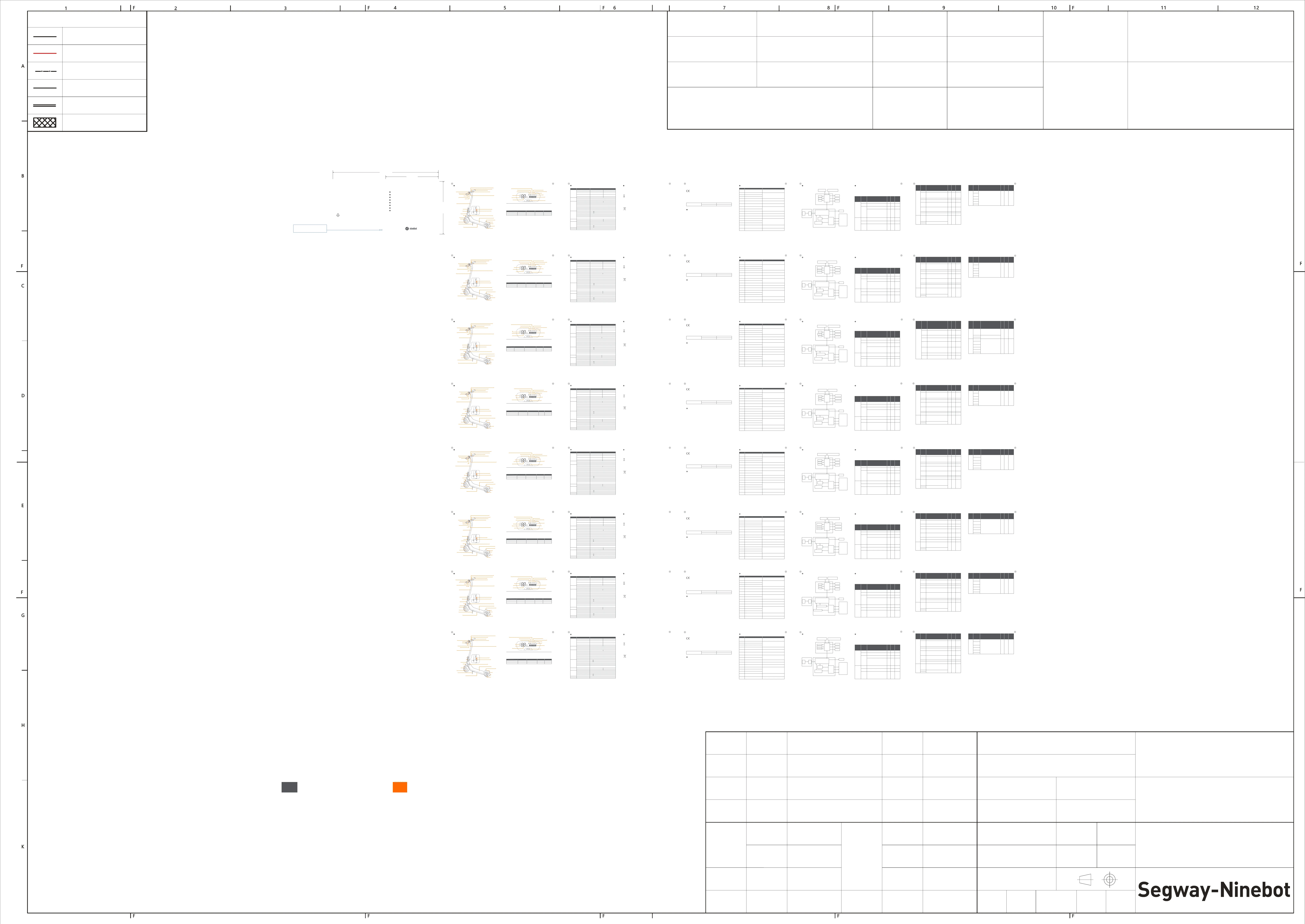 Loading...