The Ninja 250 is a full-function single-rotor radio control model helicopter, designed for both novice and experienced R/C pilots. It incorporates advanced Co-Pilot technology, offering ease of use and robust flight performance.
Function Description:
The Ninja 250 is a high-performance R/C helicopter equipped with state-of-the-art Co-Pilot technology, which provides a two-tier flight aid system. The first tier, active in both Novice and Advanced flight modes, includes 6-axis gyro stabilization for smooth flight patterns and dampening turbulence, as well as altitude hold functionality to maintain a constant height without throttle adjustments. The second tier, Co-Pilot Assist (activated via Button A on the transmitter), offers Auto Take-off, Auto Land, and Emergency Shutdown options.
For new pilots, the Ninja 250 offers a feature-packed flight system with rock-solid 6-axis gyro stabilization, novice and advanced flight modes, and unique auto take-off and land functionality coupled with an advanced altitude hold system. Experienced R/C pilots will appreciate the performance and agility the 250 retains.
Important Technical Specifications:
- Length: 268mm
- Height: 80mm
- Weight: 52g
- Main rotor diameter: 250mm
- Tail rotor diameter: 37mm
- Battery: 300mAh LiPo
- Flight time: 15 minutes
- Stabilization: 6-axis gyro
- Control: Full function single-rotor radio control
- Flight Modes: Novice and Advanced
- Power Source: Wireless LiPo battery (for helicopter), 4x AA batteries (for transmitter, not included)
- Charger: USB charger (supplied)
Usage Features:
- Co-Pilot Assist (Button A):
- Auto Take-off: A momentary press of Button A initiates rotor blades, automatically increases RPM, and lifts the helicopter to approximately 1.5m, where it will hover. Full control is maintained during ascent, but moving the throttle stick will exit Auto Take-off mode.
- Auto Landing: With the helicopter within 10 feet of the ground, a momentary press of Button A will initiate an automatic descent. The motor shuts down upon landing. Full control is maintained during descent, but touching the throttle will exit Auto Landing mode.
- Emergency Shutdown: Press and hold Button A for 3 seconds to activate. This shuts down the rotor completely, allowing the helicopter to fall to the ground, designed for situations where control is lost.
- Flight Modes (Button B):
- Novice Mode: Offers full control with reduced control movements for softer response, ideal for beginners. This is the default mode when the transmitter is switched ON.
- Advanced Mode: Offers full control with full control movement, making the Ninja more reactive to stick input, suitable for experienced pilots.
- Switching between modes is indicated by audible beeps (two for Advanced, one for Novice).
- Manual Take-off: For intermediate and advanced pilots, take-off can be initiated by moving both sticks to the bottom, outermost corners, which starts the motor and allows for controlled RPM increase.
- Altitude Hold: Maintains a constant height during maneuvers without throttle input.
- One Touch Take-off/Landing: Simplifies operation for new users.
- Panic Shutdown Mode: An emergency feature to quickly stop the rotors.
- Low Battery Warning: The LED at the rear of the helicopter flashes when the battery is nearing depletion, providing about 30 seconds to land before the helicopter enters a low battery landing mode and slowly descends to protect the battery.
- Gyro Calibration: If the helicopter drifts, place it on a level surface, power it up, then move both sticks to the bottom left corners and hold. An audible tone and LED changes confirm calibration.
- Flight Trimming: Trim buttons on the transmitter allow fine-tuning of the hover to correct for drift. Best performed in calm conditions or indoors.
- Transmitter Power-up Sequence: Always plug the battery into the helicopter first, then switch ON the transmitter to allow it to find the helicopter's signal.
- Transmitter Power Indicator: An LED on the transmitter indicates battery power. It flashes when batteries are low.
Maintenance Features:
- Ultra Durable Airframe: Constructed with bulletproof nylon reinforced carbon fibre tail boom to withstand impacts.
- Damage-limiting Auto Shutdown Feature: Helps minimize damage during crashes.
- Spare Parts: Includes spare main and tail blades.
- Wireless LiPo Battery: Unique design allows the battery to simply click into place for convenient and fuss-free installation.
- Ball Raced Main Shaft and Swashplate: Ensures operational longevity of the robust composite rotor head.
- Charging: Use only the supplied USB charger. Charge time for a depleted battery is approximately 60 minutes. The LED on the charger illuminates when charging and extinguishes when charged.
- Battery Safety: Never leave unattended while charging, never charge a warm battery, always use a fireproof charge bag, never drop or charge a damaged battery, inspect before use, avoid moisture, and stop charging if the battery or charger becomes hot or changes form.
- Rotor Blade Replacement: Remove with the provided hex wrench, being careful not to overtighten new blades.
- Tail Boom Replacement: Pull the plug backwards, paying attention to direction and aligning the power cord.
- Motor Replacement: Disconnect the plug, then twist the motor left and right while pulling it out.
- Landing Gear Removal/Installation: Pull downwards to remove, press into corresponding holes to install.
- Servo Replacement: Pay attention to connecting rod direction during disassembly and replacement.
- Receiver Replacement: Renew double-sided tape, align with the rack edge, and ensure servo and motor are connected to correct sockets.
- Main Gear Replacement: Pull straight down to remove. Ensure the new main gear is 'right side up' and the pinion aligns.
- Tail Rotor Replacement: Pay attention to direction, ensuring the new rotor goes on the same way as the old one, aligning the hole with the motor shaft.
- General Maintenance: Always keep moving parts clean.
Safety Precautions:
- Not for children under 14 years. This is not a toy.
- User is responsible for safe operation, avoiding danger to self/others and damage to property.
- Maintain a safe distance from persons and property.
- Operate in open spaces, away from vehicles, aircraft, traffic, and people.
- Radio signal is subject to interference; interference can cause loss of control.
- Follow all directions and safety warnings for the helicopter and any optional support equipment.
- Do not expose electronic parts to water or moisture.
- Do not operate with low transmitter batteries.
- Keep the model in sight and under control.
- Use fully charged batteries.
- Keep the transmitter powered ON while the vehicle is powered.
- Remove batteries before disassembly.
- Charging LiPo batteries requires adult supervision.

 Need help?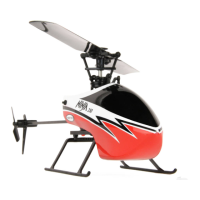

 To Next Page
 General