To view detailed instructional videos regarding these and other features,
please go to www.nissanownersinfo.mobi.
7
QUICK CHARGE IN COLD WEATHER (if so equipped)
It may take more time to charge the Li-ion battery using the quick charger if the
vehicle is parked in a cold location (for example, 32°F [0°C]) for a long
period of time.
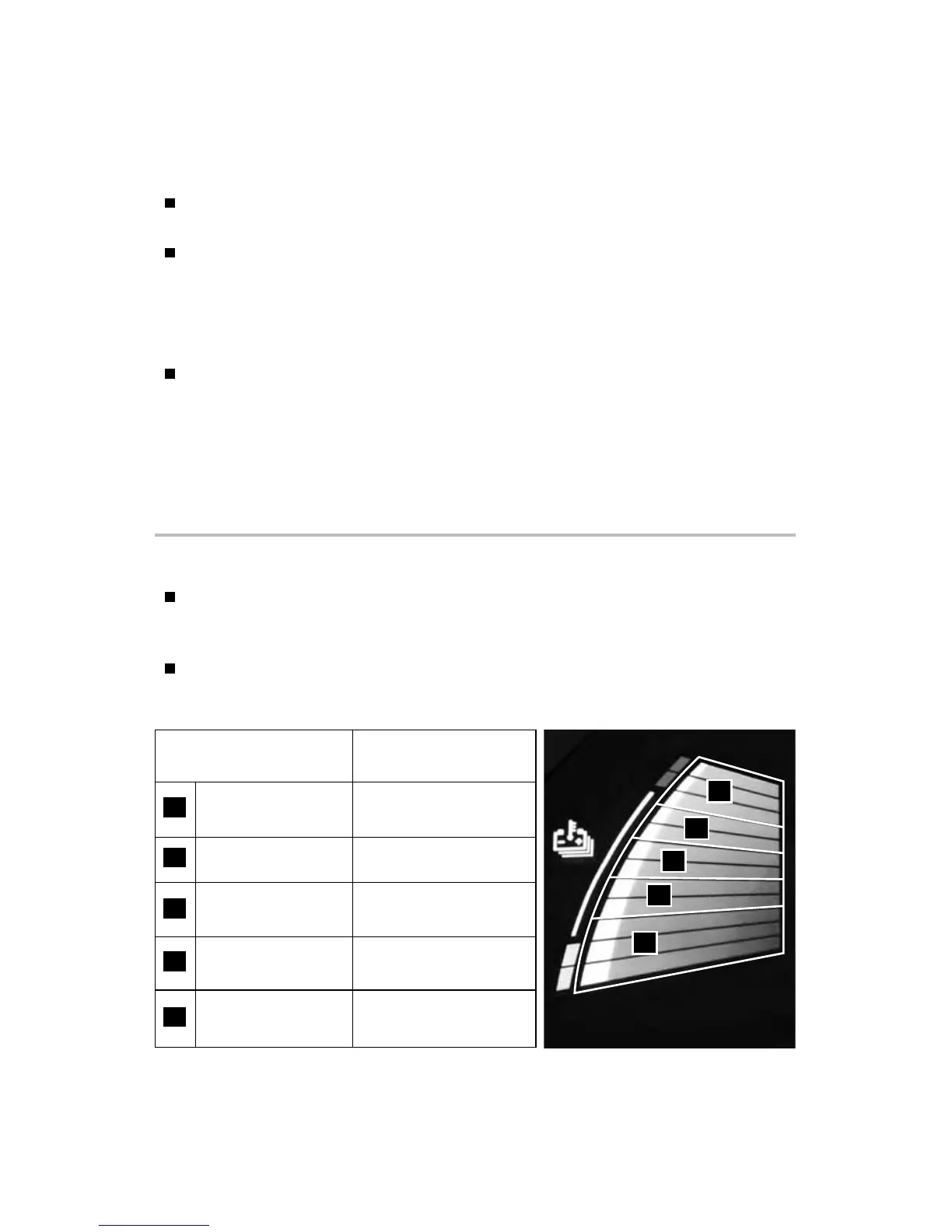
The Li-ion battery temperature gauge can be used to estimate the approximate
time needed to charge the Li-ion battery to 80%.
Please see your Owner’s Manual for important safety information, system limitations, and additional
operating and feature information.
For more information, refer to the “Charging (section CH)” and the “Starting and driving (section 5)” of
your Owner’s Manual.
ESSENTIAL INFORMATION
5
4
3
2
1
Li-ion battery
temperature gauge
Estimated
charge time
COLD WEATHER RANGE AND
PARKING IN EXTREMELY COLD WEATHER
COLD WEATHER RANGE
Vehicle range is reduced when the heater is used and the battery temperature
drops below 77°F (25°C).
Using the climate control system to heat the cabin when the outside
temperature is below 32°F (0°C) uses more electricity (heat pump, if so equipped)
and aects vehicle range more than using the heater at temperatures
above 32°F (0°C).
PARKING IN EXTREMELY COLD WEATHER
Do not store the vehicle in temperatures below -13°F (-25°C) for over seven days.
If the outside temperature is -13°F (-25°C) or lower, the Li-ion battery may freeze,
and it cannot be charged or provide power to run the vehicle.
Please see your Owner’s Manual for important safety information, system limitations, and additional
operating and feature information.
For more information, refer to the “EV overview (section EV)” and the “Starting and driving (section 5)”
of your Owner’s Manual.
More than
approximately
90 minutes
Approximately
30-90 minutes
Approximately
30 minutes
Approximately
30-60 minutes
More than
approximately
60 minutes
3 or less
segments
illuminated
4-5 segments
illuminated
6-7 segments
illuminated
8-9 segments
illuminated
10 or more
segments
illuminated
2
3
4
5
1



 To Next Page