EasyManua.ls Logo

Ocean Signal MOB1 - User Manual

Ocean Signal MOB1
4 pages
Print Icon
To Next Page IconTo Next Page
Loading...
2017517 MOB1OceanSignal
http://oceansignal.com/products/mob1/ 1/4
Images
Specifications
Manuals
Certificates
FAQs
TheworldssmallestpersonallocatingAISMan
OverBoarddevicewithintegratedDSC.
(http://oceansignal.com/wordpress/wpcontent/uploads/rescueMEMOBnetwork
diagram.png) (http://oceansignal.com/wordpress/wp
content/uploads/MT_Damelogo_nominated_RGBsmall.jpg)AIS(Automatic
IdentificationSystem)
IntegratedDSCtransmitter(digitalselectivecalling)*
30%(typ)smallerthancompetitors
Automaticactivation
Simplelifejacketintegration
7yearbatterylife
24+hoursoperationallife
5yearwarranty†
Fastaccuratepositioning
Simplelifejacketint egration
Highintensityst robe
Fastaccuratepositioning
AIS(AutomaticIdentificationSystem)
Automaticactivation
30%smaller
24+hoursoperationallife
5yearwarrant y
7yearbatt erylife
IntegratedDSCtransmitter(digitalselectivecalling)*
Question and Answer IconNeed help?

Do you have a question about the Ocean Signal MOB1 and is the answer not in the manual?

Overview

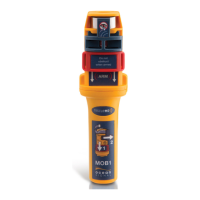
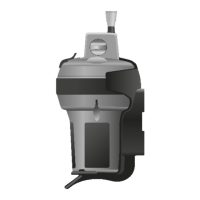
The Ocean Signal rescueME MOB1 is a compact, personal locating AIS Man OverBoard (MOB) device with integrated Digital Selective Calling (DSC) functionality, designed for simple integration into inflatable lifejackets. It is marketed as the world's smallest AIS MOB device with integrated DSC.

Function Description:

The primary function of the MOB1 is to rapidly alert nearby vessels and rescue authorities in the event of a person falling overboard. Upon activation, it transmits an alert to all AIS receivers and AIS-enabled chartplotters in the vicinity, providing precise location data via its integrated GPS. This allows the person's own vessel and any other assisting vessels within a typical 5-mile range (dependent on conditions) to quickly locate the individual. An additional key feature is its ability to activate a DSC alarm on the overboard person's vessel's VHF radio, immediately alerting the crew to the situation. This dual alert system significantly increases the chances of rapid rescue, as visual sighting of a person overboard can be quickly lost, even in moderate seas. The device also incorporates a high-intensity strobe light to ensure maximum visibility in low-light conditions, further aiding in location.

Important Technical Specifications:

  • Dimensions: 134mm (height) x 38mm (width) x 27mm (depth). The device is notably 30% smaller than competitors.
  • Weight: 92 grams.
  • AIS Transmission Transmit Power: 1 Watt.
  • AIS Frequencies: 161.975 MHz / 162.025 MHz.
  • DSC Transmission Transmit Power: 0.5 Watt.
  • DSC Frequency: 156.525 MHz.
  • Messages: Individual Distress Relay Distress Alert (by single call made on press of the activation button).
  • Operational Life: 24+ hours.
  • Battery Life: 7 years.
  • Warranty: 5 years (restricted to two years for commercial applications).
  • Activation: Automatic activation upon lifejacket inflation.
  • First Alert Time: Within 15 seconds of activation.
  • Waterproof: 10m depth.
  • Operational Temperature Range: -20°C to +55°C.
  • Storage Temperature Range: -30°C to +70°C.
  • Standards: RTCM SC11901, EN303 098-1.
  • GPS: Integrated GPS for fast and accurate positioning.

Usage Features:

  • Simple Lifejacket Integration: Designed to be installed within the lifejacket, ensuring it is always with the user and ready for automatic activation.
  • Automatic Activation: The device activates automatically when the lifejacket inflates, eliminating the need for manual intervention in an emergency.
  • DSC Functionality: The integrated DSC transmitter allows for an alarm to be sent to the vessel's VHF radio, providing an immediate alert to the crew. The specific DSC functions allowed are subject to country regulations, with variations including AIS only, AIS + DSC Individual Distress Relay call, and in some regions, All Ships Distress Alert (manual initiation only or upon activation).
  • Compatibility: Most modern AIS plotters and DSC VHF radios comply with the standards required to receive MOB transmissions. However, users are advised to check compatibility, especially with older equipment. Ocean Signal provides a list of tested compatible DSC radios (e.g., ICOM M91, M323, M423, M506; Simrad RS90; Standard Horizon GX1600E).
  • MMSI Programming: The MOB1 can be configured by the user to enter the vessel's DSC MMSI number using downloadable software. This allows the device to specifically alert the user's own vessel. The MMSI number can be reprogrammed multiple times if the user moves to a different vessel, though each reprogramming uses a small amount of battery capacity. Programming requires specific steps, including setting screen brightness to maximum, placing the device over a white square with a rubber programming adaptor, and avoiding bright ambient light conditions.
  • Test Modes: The device includes three test modes:
    • Functional Test: Recommended monthly. Checks battery load, remaining battery life, and electronic circuitry. Does not involve GPS or transmissions.
    • DSC Test: Recommended no more than twice a year. Sends a single DSC transmission to the programmed MMSI, displayed on the vessel's DSC radio, without a Distress or Distress Relay call or position data.
    • AIS Test: Recommended no more than three times a year. Activates GPS, determines position, and makes an AIS transmission displaying the position and "MOB TEST" message. Requires clear sky view for GPS acquisition.
    • The limitation on the number of tests is to preserve the battery's full operational life until its expiry date.

Maintenance Features:

  • Battery Life: A 7-year battery life minimizes the frequency of battery replacement.
  • Warranty: A 5-year warranty provides assurance for the device's reliability.
  • Programming Guidance: Detailed instructions are provided for programming the DSC MMSI number, including troubleshooting tips for common issues like red flashes during programming (e.g., ensuring screen brightness, timely programming initiation, correct device placement, and avoiding bright light).
  • Software Updates: The device can be configured via software, which may include updates or tools for programming.
  • FAQs: A comprehensive FAQ section is available to address common user queries regarding test modes, programming, and compatibility.

Ocean Signal MOB1 Specifications

General IconGeneral
BrandOcean Signal
ModelMOB1
CategorySecurity System
LanguageEnglish

Related product manuals