EasyManua.ls Logo

Oppermann Regelgeräte KRM-1 - User Manual

Oppermann Regelgeräte KRM-1
10 pages
Print Icon
To Next Page IconTo Next Page
Loading...
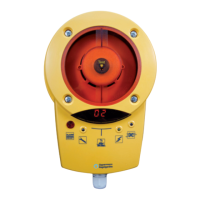
Duct Smoke Detector KRM®
Fire Protection | Data sheet No. 41300 | Version 06-2012 | 1 | 9
Technical Data
Sensor: Scattering RM 3.3 (ALK-E)
Supply voltage KRM-1: 230 V AC ± 10 %, 50/60 Hz
Supply voltage KRM-2/KRM-2-MOD:
24 V AC/DC +15 % / -10 %
Rated current: KRM-1: 30 mA
KRM-2/KRM-2-MOD: 120 mA
Relay outputs: oating
Alarm relay locked: 1 changeover contact, 8 A,
250 V AC or 24 V DC
1 NC, 8 A, 250 V AC or 24 V DC
Contamination relay:
1 NC contact, 6 A, 250 V AC or 24 V DC
Operating temperature:
-20 °C – +50 °C
Permissible ow:
1 – 20 m/s
Permissible humidity:
10 – 95 % non-condensing
Protection class:
IP54, IP65 with WDG
(water resistant housing)
Certication/approvals: VdS approval G210059
according to FprEN54-27
LED display:
% contamination level ashes
at > 70 %
LED in housing:
green operating
blue lack of air ow
yellow failure, electronics,
smoke detector defective,
low voltage
red smoke alarm, including
contamination > 99 %,
ashes at attempts to release
when the sensing chamber is
not empty
Adapter housing: ABS
Air measuring tube:
Aluminium / plastic
shortest length 160 mm
standard length 600 mm
Dimensions:
257 x 166 x 77 mm (L x W x H)
Screw connection:
3 x M16
VdS certication (G210059)
Patented single tube air sampling system
Contamination display in %
and signalling at 100 %
Electronic air ow control
Externally operable reset button in the
housing
Remote reset option via terminals
Long service life, low contamination
Modbus interface (KRM-2-MOD only)
Accessories
Mounting bracket: KS (for insulated / circular ducts)
KS-WDG (for insulated / circular ducts in
combination with WDG)
Housing: WDG – waterresistant housing for
outdoor installation and increasing
protection class to IP65
Function
The KRM duct smoke detector is designed for smoke detection in
ventilation ducts. It constitutes a combination of a smoke detec-
tor with an adapter system, whose measuring tube and housing
have been specially adapted for optimal air ow through the
smoke detector.
The multi-chamber measuring tube in the air duct transports the
air within the air duct along the entire length of the tube, through
the sensing chamber and back into the air duct. Upon detection
of smoke, the sensor reacts immediately and triggers an alarm.
Over time, the sensor becomes contaminated. Because of alarm
threshold tracking, the sensitivity up to total pollution remains
the same. From 70 % contamination upwards, the sensor is trig-
gered and indicates this by ashing. If the sensor is not replaced
the smoke alarm is triggered at 99 % contamination. The contami-
nation level is indicated in a two-line LED display; at > 70 % it
ashes.
To verify operability, the device is equipped with electronic air
ow monitoring, which lights a blue LED at < 1 m/s. The failure
LED illuminates when the smoke sensor or the electronics are
defective, and in the absence of a smoke detector.
The smoke alarm must be released with the reset button.
A functionality test is also possible with the same button.
The operation functions like a smoke alarm.
Furthermore, the same function takes place on restart or when
the bridge circuit between terminals 9 and 10 is opened (remote
release).


Other manuals for Oppermann Regelgeräte KRM-1

Question and Answer IconNeed help?

Do you have a question about the Oppermann Regelgeräte KRM-1 and is the answer not in the manual?

Overview

The Oppermann Regelgeräte KRM Duct Smoke Detector is designed for reliable smoke detection within ventilation ducts. It integrates a smoke detector with an adapter system, featuring a specially adapted measuring tube and housing to optimize airflow through the device.

Function Description

The KRM employs a multi-chamber measuring tube that transports air from the duct, through the sensing chamber, and back into the duct. Upon detecting smoke, the sensor immediately reacts and triggers an alarm. A key feature is its alarm threshold tracking, which maintains consistent sensitivity even as the sensor accumulates contamination. The device provides a contamination display in percentage, with flashing indication when contamination exceeds 70%. If contamination reaches 99%, a smoke alarm is triggered.

The KRM also incorporates electronic airflow monitoring, indicated by a blue LED that illuminates if airflow drops below 1 m/s. A yellow LED signals a failure, indicating a defective smoke sensor or electronics, or the absence of a smoke detector.

Smoke alarms must be reset using a dedicated button on the housing. This button also allows for a functional test. The device's operation mirrors that of a standard smoke alarm. A reset can also be initiated upon restart or by opening the bridge circuit between terminals 9 and 10 (remote release).

Important Technical Specifications

  • VdS Certification: G210059
  • Air Sampling System: Patented single tube system
  • Contamination Display: Percentage display, with signaling at 100%
  • Airflow Control: Electronic
  • Reset: Externally operable button on housing, remote reset option via terminals
  • Service Life: Long, with low contamination
  • Modbus Interface: Available on KRM-2-MOD versions
  • Sensor: Scattering RM 3.3 (ALK-E)
  • Supply Voltage:
    • KRM-1: 230 V AC ± 10%, 50/60 Hz (30 mA rated current)
    • KRM-2/KRM-2-MOD: 24 V AC/DC +15%/-10% (120 mA rated current)
  • Relay Outputs: Floating
    • Alarm relay locked: 1 changeover contact, 8 A, 250 V AC or 24 V DC
    • Contamination relay: 1 NC contact, 6 A, 250 V AC or 24 V DC
  • Operating Temperature: -20 °C to +50 °C
  • Permissible Airflow: 1 to 20 m/s
  • Permissible Humidity: 10-95% non-condensing
  • Protection Class: IP54, IP65 with WDG (water-resistant housing)
  • Dimensions: 257 x 166 x 77 mm (L x W x H)
  • Screw Connection: 3 x M16
  • Air Measuring Tube: Aluminum/plastic, shortest length 160 mm, standard length 600 mm

Usage Features

  • Installation: The KRM should be installed in accordance with local regulations for ventilation systems to ensure reliable smoke detection. It is recommended to position the KRM at the same distance from heating, cooling, and humidity devices as flow sensors. A distance of 3 times the cross-section from fittings, valves, and filters in the flow direction, and 5 times diagonally, is advised. The air collecting tube should always be in the air stream, preferably in the upper third of horizontal ventilation ducts.
  • Airflow Monitoring: The blue LED indicates insufficient airflow (< 1 m/s), prompting a check of the detector's position or the sampling tube.
  • Contamination Indication: The two-line LED display shows the contamination level in percentage. Flashing at >70% indicates a need for maintenance.
  • Alarm and Failure LEDs:
    • Red LED (Smoke alarm): Indicates a smoke alarm or failure.
    • Yellow LED (Failure): Indicates a defective circuit board, missing smoke alarm, or defective smoke detector.
    • Green LED (Power): Indicates supply voltage is on.
  • Resetting Alarms: Press and hold the alarm/reset button for at least 2 seconds until the red LED goes out. The sensor must be free of smoke or test gas for a successful reset.
  • Functional Test: A brief press of the alarm/reset button activates all LEDs and drops out all relays, confirming functionality.
  • Test Opening: A self-closing test opening (14) in the transparent cover allows for testing with Oppermann test gas spray without opening the housing.
  • Modbus Addressing (KRM-2-MOD): Bus addresses (1-99) can be programmed by simultaneously pressing buttons T3+T4 on the circuit board, then using T3 or T4 to adjust the address.

Maintenance Features

  • Operator Responsibility: The operator is responsible for ensuring the ventilation system and smoke sensors are always operational and maintained.
  • Annual Testing: Smoke alarms must be tested at least once a year to ensure good performance.
  • Contamination Signal: All KRM types provide a specific maintenance requirement signal when contamination reaches 70% (display flashes). This digital contamination indicator allows for targeted maintenance.
  • Sensor Replacement: If contamination exceeds 70%, the smoke sensor should be replaced.
  • Cleaning: The sensor can be unscrewed from its base by turning it about 20° to the left, allowing for removal of dirt and dust. The cover, TurboTube measuring tube, and inner housing should also be cleaned.
  • Safety Precautions: Before opening the housing, all supply voltages must be unlocked. Only qualified electricians should open the housing.
  • Maintenance Protocol: After maintenance, a complete functional test of all plant parts must be carried out, and a protocol must be made and signed by the operator.

Oppermann Regelgeräte KRM-1 Specifications

General IconGeneral
BrandOppermann Regelgeräte
ModelKRM-1
CategoryAccessories
LanguageEnglish

Related product manuals