35 GB
ADVANCED INSTRUCTIONS FOR USE
SIGNAL SEPARATION
SIGNAL OVERLAP -
SIGNAL SEPARATION
The transmission signal is measured
and analysed by the ORTOVOX 3+. If
several transmission signals are re-
ceived and these transmission signals
are transmitting at the same time (si-
multaneous transmission signal and
simultaneous transmission break),
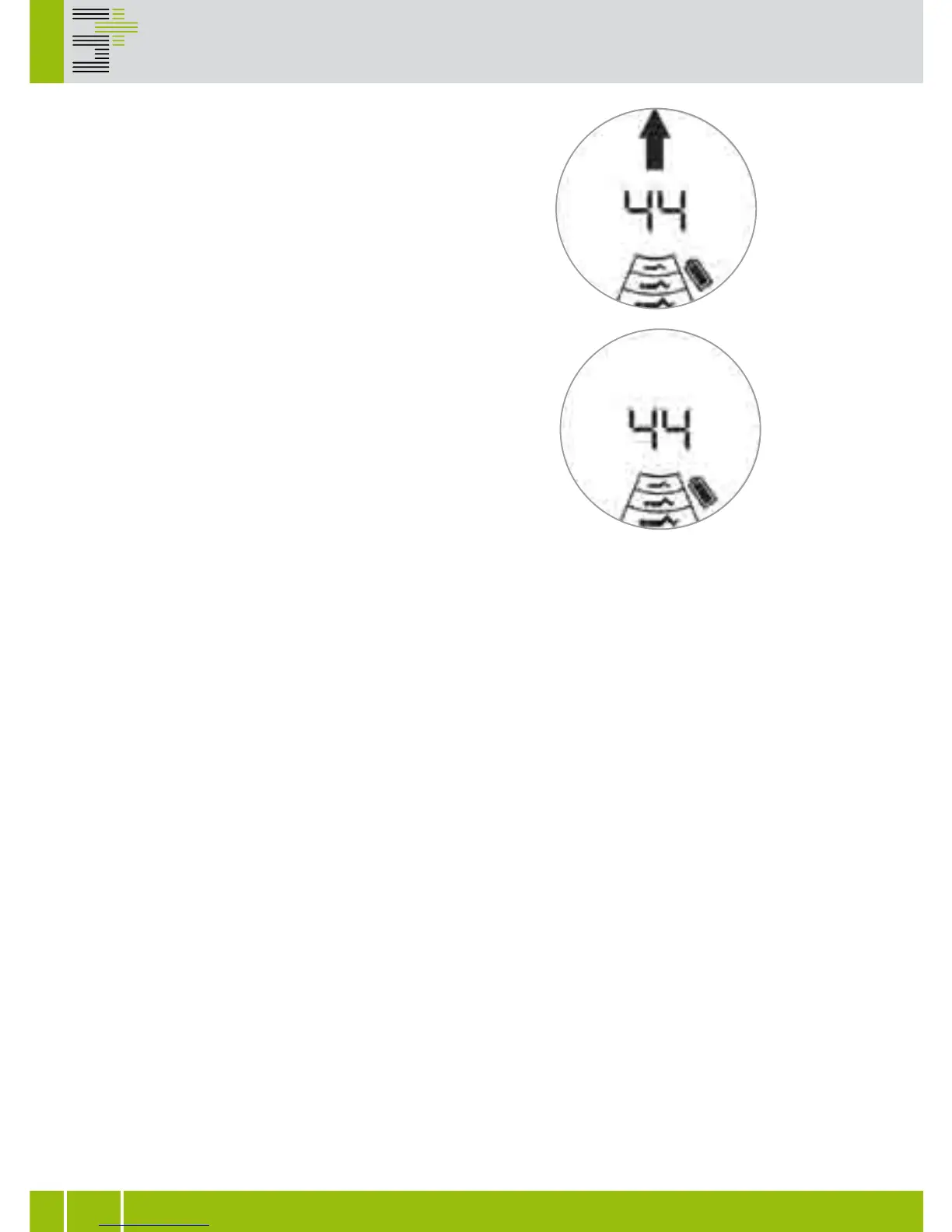
then a signal overlap occurs.
This signal overlap is illustrated with-
out a direction arrow (e.g. “44m” and
3 transmission signals).
IMPORTANT INFORMATION
ABOUT SIGNAL SEPARATION
Signal separation helps you when
searching for one or especially sev-
eral avalanche victims. We would like
to inform you, however, about impor-
tant, physically contingent aspects of
searching for victims:
When accidents happen, several per-
sons are often buried and transmit a
signal at the same time. In this case
– depending on the rhythm of the in-
dividual transmitters – it is possible
for two or even more transmitters to
transmit simultaneously over a long
time. This can lead to signal overlaps,
particularly with analogue appliances
with a long pulse and digital applianc-
es that transmit synchronised pulses.
The signals are overlapped and can no
longer be technically distinguished.
The signal from an individual trans-
mitter cannot be measured either by
analogue or digital means in such a
phase. This can last for up to 30 sec-
onds and longer in the worst cases.
It is necessary to wait until there is a
signal break. This physical phenom-
enon can be solved with the ORTOVOX
3+ using locating strategies:
Applying the ORTOVOX sectors
method (Page 34)



 To Next Page