This document provides assembly instructions for an Outsunny pop-up tent, model A20-169, identified by the product number INafb017V02_US_CA_UK_FR_DE_IT. The instructions are presented in English, French, German, and Italian.
Function Description:
The Outsunny A20-169 is a portable, pop-up tent designed for quick and easy setup and takedown. Its primary function is to provide temporary shelter, likely for outdoor activities such as camping, beach trips, or backyard use. The "pop-up" design implies a spring-loaded or pre-tensioned frame that allows for rapid deployment, while the instructions focus on the method for collapsing and packing the tent back into its carry bag. The tent is designed to be compact when stored, facilitating transport and storage.
Important Technical Specifications (Inferred from components):
- Components: The tent package includes:
- A. Bag x1 (Carry bag for storage and transport)
- B. Tent x1 (The main tent structure)
- C. Nails x8 (Tent stakes, likely for securing the tent to the ground)
- D. Wind rope x4 (Guy lines, for added stability in windy conditions)
- Frame Material: The instructions explicitly mention "fiberglass poles." This indicates that the tent's frame is constructed from fiberglass, a common material for lightweight and flexible tent poles, particularly in pop-up designs due to its ability to retain shape and spring back.
- Structure: The folding mechanism described involves manipulating "circles" formed by the fiberglass poles, suggesting a circular or dome-like structure when erected. The presence of "4 fiberglass poles" at the top of the tent implies a specific configuration for the frame's apex.
- Stability: The inclusion of 8 nails (stakes) and 4 wind ropes (guy lines) highlights the tent's design for ground anchoring and resistance against wind, ensuring stability during use.
Usage Features:
The main usage feature emphasized in the manual is the ease of collapsing and packing the tent. The instructions detail a specific, multi-step process for folding the tent, which is often the most challenging aspect of pop-up tents.
- Setup (Implied): While not explicitly detailed, the "pop-up" nature suggests that setting up the tent involves simply releasing it from its packed state, allowing the frame to expand automatically. The user would then likely secure it with the provided nails and wind ropes.
- Takedown/Folding (Detailed): The manual provides a step-by-step guide for folding the tent:
- Gathering Poles: Begin by gathering all four fiberglass poles at the top of the tent.
- Initial Fold: Bring hands together, folding the top of the tent towards itself.
- Ground Placement: With a firm hold on the bunched poles, lift the tent and place one end on the ground. This should create a circle shape on the ground and another in front of the user.
- Tucking the First Circle: Reach out with the right hand and grab the fiberglass of the circle in front, tucking it down into the tent.
- Folding the Top Circle: As the top large circle is lowered with the right hand, fold it over, away from the user, and tuck it underneath and into the rest of the tent.
- Final Circles: At this point, the user should be holding two smaller circles in their left hand.
- Interlocking Circles: Slide one of these smaller circles underneath the other.
- Packing: Once folded, the tent should be immediately stuffed into the carry bag to prevent it from popping back open.
- Learning Curve: The manual includes a "HINT" (or "ASTUCE" in French, "TIPP" in German, "Consiglio" in Italian) advising users to practice the folding process multiple times. It compares learning to fold the tent to learning to ride a bike, suggesting that once mastered, the skill will be retained for life. This implies that while the process is specific, it is achievable with practice.
Maintenance Features:
The manual does not explicitly detail maintenance features such as cleaning instructions or repair guidelines. However, the emphasis on correctly folding and packing the tent into its carry bag (A. Bag x1) is a crucial aspect of maintenance for pop-up tents. Proper storage in the designated bag protects the tent fabric and frame from damage, dirt, and UV exposure, thereby extending its lifespan. The careful handling of the fiberglass poles during folding, as described, is also a form of preventative maintenance to avoid bending or breaking the frame components. The inclusion of spare parts like nails and wind ropes suggests that these are components that might need replacement or could be lost, implying a degree of modularity for basic repairs or replacements.

 Need help?
 General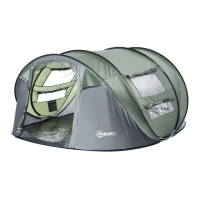

 To Next Page