EasyManua.ls Logo

Ozeanos Eisberg 2 - User Manual

Ozeanos Eisberg 2
24 pages
Print Icon
To Next Page IconTo Next Page
Loading...
Inhalt
1. Achtung wichtige Themen Seite 2
2. Eigenschaften und Teile Seite 3
3. Einstellungen Seite 3
4. Sicherheitsfunktion Seite 4
5. Installation und Einstellung Seite 5
6. Entwässerungsanleitung Seite 6
7. Wartung Seite 7
8. Lagerung des Geräts Seite 7
9. Hinweise zum Service Seite 8
10. Fehlerbehebung Seite 11
11. Zusatz Seite 12
Das in mobilen Klimaanlagen verwendete Kältemittel ist der umweltfreundliche Kohlenwasserstoff R290 (Propan). Dieses
Kältemittel ist geruchlos und ozonfrei. Bitte lesen Sie die Anweisungen sorgfältig durch, bevor Sie den Artikel verwenden
und warten. Die in diesem Handbuch enthaltenen Zeichnungen sind Beispiele. Bitte beziehen Sie sich auf Ihr individu-
elles Modell für weitere Details.
Question and Answer IconNeed help?

Do you have a question about the Ozeanos Eisberg 2 and is the answer not in the manual?

Overview

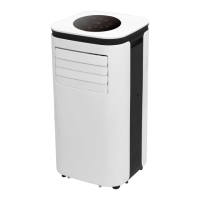
The OZEANOS OT-AC-9000H is a portable air conditioner designed for indoor use, offering a range of functions including cooling, heating, dehumidification, and air supply, along with continuous drainage. This appliance utilizes R290 (propane) as a refrigerant, which is an environmentally friendly hydrocarbon, odorless, and ozone-free.

Function Description:

The primary functions of the OT-AC-9000H include:

  • Cooling: Provides cooling for indoor spaces. The maximum operating temperature for this mode is 7-35 °C (44-95 °F).
  • Heating: Offers heating capabilities. During heating, the machine features an automatic defrosting function.
  • Dehumidification: Reduces humidity in the room. In this mode, the fan automatically operates at low speed, and the sleep mode cannot be activated.
  • Air Supply (Fan Mode): Circulates air without cooling or heating. Users can select between high or low fan speed.
  • Continuous Drainage: Allows for continuous water drainage, primarily applicable in dehumidifying mode.
  • Timer Function: Enables users to set a specific operating time, ranging from 1 to 24 hours, adjustable in one-hour increments.
  • Sleep Mode: In cooling mode, activating sleep mode (by pressing the Up and Fan buttons) sets the unit to operate in an energy-saving and quiet mode. This mode is not available during dehumidifying or fan mode.

Important Technical Specifications:

  • Refrigerant: R290 (Propane), a hydrocarbon that is environmentally friendly, odorless, and ozone-free.
  • Operating Temperature Range (Cooling): 7-35 °C (44-95 °F).
  • Room Size Requirement: The appliance must be installed, operated, and stored in a room with a floor area larger than 7 m².
  • Fuse Parameters: Type: 5ET or SMT, Voltage: 250 V, Current: 3.15 A.
  • Exhaust Hose Length: The exhaust hose should be between 280 mm and 1500 mm. Using extension tubes or replacing it with other hoses is not recommended as it may cause malfunctions or overheating.
  • Compressor Protection: Features a 3-minute delay booting protection function after the compressor is turned off to protect its components.
  • Frost Protection: If the temperature of the EVA pipe sensor is too low in cooling, dehumidifying, or economic power-saving mode, the machine automatically enters a protection status and reverts to normal operation once the temperature rises.
  • Overflow Protection: When the water in the water pan exceeds the warning level, the machine alarms, and the "FULL" indicator light flashes. The compressor stops working until the water tank is emptied.

Usage Features:

  • Control Panel and Remote Control: The unit features an LED display on the control panel and comes with a user-friendly remote control for convenient operation.
  • Installation:
    • Before use, the portable air conditioner should be kept upright for at least two hours.
    • It must be placed on a flat, dry surface, maintaining a distance of at least 50 cm from surrounding objects or walls.
    • The exhaust pipe assembly is inserted into the back panel vent slot.
    • The window sealing plate assembly is mounted to the window, allowing for horizontal and vertical placement.
    • The flat end of the exhaust pipe joints must be snapped into place, and the pipe should not be distorted or turned more than 45°.
  • Drainage Methods:
    • Manual Drainage: When the water pan is full, the machine stops. Users must turn off the machine, unplug it, and carefully move it to drain water from the side water outlet into a container by unscrewing the drainage cover and unplugging the water plug.
    • Continuous Drainage (Dehumidifying Mode Only): In this mode, the drainage cover and water plug are removed, and a drainage pipe is connected to the water outlet, leading to a bucket for continuous water collection.
  • Safety Precautions:
    • Do not attempt to accelerate defrosting or use the appliance for purposes other than those recommended by the manufacturer.
    • Store the appliance in a room without continuous ignition sources (e.g., open flames, gas appliances, electric heaters).
    • Do not pierce or burn the appliance.
    • Keep ventilation openings clear.
    • Ensure the power plug is intact and firmly connected, and the power cord is placed to prevent tripping.
    • Do not place objects into the air inlet or outlet.
    • Do not install or use the air conditioner in bathrooms or other humid environments.
    • Avoid using insecticide sprays or other flammable substances near the unit.
    • Do not place cups or liquids on the unit.
    • If the power cord is damaged, it must be replaced by the manufacturer or qualified personnel.
    • Children should not operate or clean the device without parental supervision.

Maintenance Features:

  • Surface Cleaning: The machine's surface should be cleaned with a wet, soft cloth. Avoid using chemical solvents like benzene, alcohol, or gasoline, as these can damage the surface or the entire unit. For stubborn dirt, a mild detergent can be used.
  • Filter Screen Cleaning: The filter screen should be cleaned every two weeks, especially if it is clogged with dust, as this can reduce the air conditioning's effectiveness.
    • To clean the upper filter screen frame, remove the frame by unscrewing four screws that fix the EVA filter net.
    • Wash the EVA filter screen in warm water (about 40°C / 104°F) with a neutral detergent and dry it in the shade after rinsing.
  • Unit Storage:
    • Before storing, drain all water from the water pan by unscrewing the drainage cover and unplugging the water plug.
    • Turn on the machine in low-wind ventilation mode until the drainage pipe and the inside of the housing are dry to prevent mildew.
    • Turn off the machine, unplug the power plug, and wrap the power cord around the wrapping post.
    • Remove the exhaust pipe and store it properly.
    • Cover the air conditioner with a plastic bag and store it in a dry, dust-free place, out of reach of children.
    • Remove batteries from the remote control and store them properly.
    • Ensure all machine components are stored properly in a dry place.

Servicing Information:

  • Safety Checks: Prior to any work on systems containing flammable refrigerants, safety checks are mandatory to minimize ignition risk. This includes ensuring the work area is controlled, well-ventilated, free of ignition sources, and that appropriate fire extinguishing equipment is available.
  • Refrigerant Checks: The area must be checked with a suitable refrigerant detector before and during work. Leak detection equipment must be non-sparking and intrinsically safe.
  • Electrical Component Checks: Repairs to electrical components require initial safety checks and component inspection. No electrical supply should be connected until faults are dealt with. Capacitors must be discharged safely, and live electrical components or wiring must not be exposed during charging, recovery, or purging. Earth bonding continuity must be ensured.
  • Refrigerant Handling: Only trained service personnel with valid certifications should perform maintenance or repairs involving the refrigerant circuit. Refrigerant recovery and charging procedures must follow strict guidelines to prevent contamination, overfilling, and ensure proper labeling and disposal.
  • Disposal: The machine should not be disposed of with unsorted waste. Local regulations for the disposal of air conditioning machines must be followed.

Ozeanos Eisberg 2 Specifications

General IconGeneral
BrandOzeanos
ModelEisberg 2
CategoryAir Conditioner
LanguageEnglish

Related product manuals