®
Basic Calorimetry Set
6
Part 2: The Specific Heat of Antifreeze
Repeat Part 1 of this experiment, but instead of using the metal samples, heat approxi-
mately 100 g of antifreeze to approximately 60° C. Measure and record the temperature,
then quickly pour the antifreeze into a calorimeter containing cool water and stir until the
highest stable temperature is reached (about 1 minute). Record your data and calculations
on a separate sheet of paper. You will need the following data:
• M
cal
, the mass of the calorimeter,
• M
water
the mass of the calorimeter plus water,
• T
cool
the temperature of the cool water,
• M
total
, the mass of the calorimeter plus water plus antifreeze
• T
final
, the temperature of the water plus antifreeze.
Data and Calculations
Part 1
For each metal tested, use the equations shown below to determine M
water
, the mass of the
water used, ∆T
water
, the temperature change of the water when it came into contact with
the metal sample, and ∆T
sample
, the temperature change of the metal sample when it came
into contact with the water. Record your results in Table 2.1.
M
water
= M
total
- (M
cal
+ M
sample
)
∆T
water
= T
final
- T
cool
∆T
sample
= 100° C - T
final
From the law of energy conservation, the heat lost by the metal sample must equal the heat
gained by the water:
Heat lost by sample = (M
sample
) (c
sample
) (∆T
sample
) = (M
water
) (c
water
) (∆T
water
) = Heat gained by water
c
water
is the specific heat of water, which is 1.0 cal/g K.
Use the above equation, and your collected data, to solve for the specific heats of alumi-
num, copper, and lead. Record your results in the bottom row of Table 2.1.
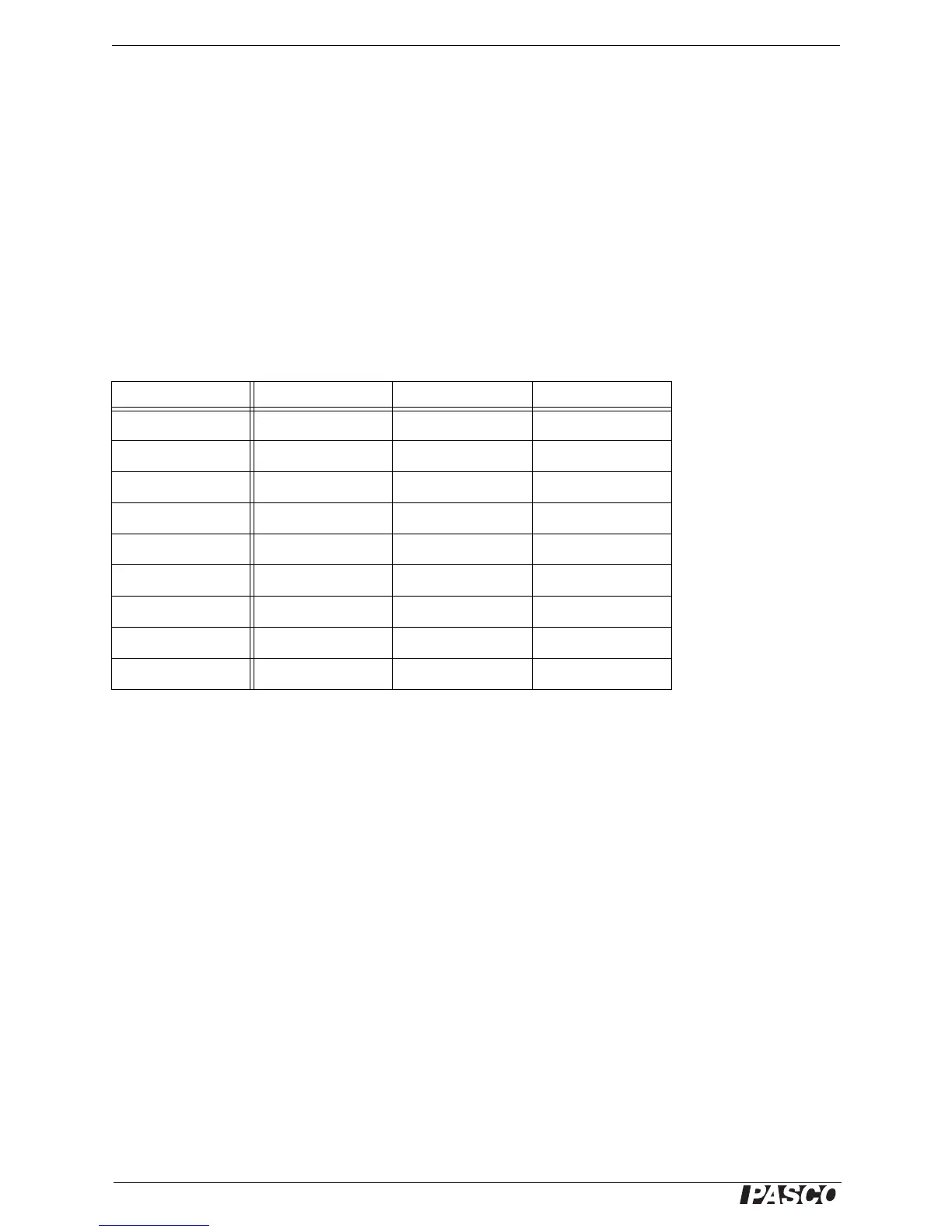
Table 2.1: Data and Calculations (Part 1)
Trial 1 Trial 2 Trial 3
M
cal
M
sample
T
cool
T
final
M
total
M
water
∆T
water
∆T
sample
c



 To Next Page